
Collection Highlights
The Library of Our Predecessors
What library equipment and supplies did our predecessors use? Some things have changed quite a lot while others remain somewhat similar. Let’s take a look at libraries from the past via this 1899 trade catalog.
Supporting Research: A COVID-19 Citation Database

Uncle Tom’s Cabin: Early and Notable Editions
I wrote what I did because as a woman, as a mother, I was oppressed and broken-hearted with the sorrows and injustice I saw, because as a Christian I felt the dishonor to Christianity – because as a lover of my country, I trembled at the coming day of wrath.
The Fix: Reusing Original Leather in a New Rebinding

Art Deco: Picture Collections at the Cooper Hewitt, Smithsonian Design Library
This is the seventh and final post in a series about the Art Deco resources at the Cooper Hewitt, Smithsonian Design Museum library. Each post will highlight primary resources which contain the styles and designs of the Art Deco era.
Pen, Paper, and Mail: Shopping and Corresponding
Today, most people are familiar with online shopping but some might also remember mail ordering. While one method uses computers, the other relies on paper. However, there are similarities. Both allow consumers to shop from the comforts of home, and both require mailing and shipping at some point. Then, items are delivered direct to the customer’s door. The Trade Literature Collection includes a variety of mail order catalogs. Let’s take a look at one from 1907.
Digital Jigsaw Puzzles: Fall Edition
You asked and we delivered. A new set of digital jigsaw puzzles is finally here! We’re so glad you enjoyed our last round of puzzles and hope you find these equally entertaining.
Researching Chinese Literati Painting in the Freer Sackler Library
The summer of 2020, as part of a Smithsonian Libraries’ Wikidata Pilot Project and in response to the Covid-19 pandemic, the Freer Gallery of Art and Arthur M. Sackler Gallery Library offered an all-virtual internship project.
Setting the Thanksgiving Table, 1915 Style
Families have different Thanksgiving traditions. Some may prefer a casual dinner while others plan formal events. Either way, a Thanksgiving meal requires many pieces, everything from individual place settings to serving dishes. How might Great Grandma have set her table for a special occasion in 1915? This trade catalog may give us a glimpse.
A Step Back into 1907 and Some Possible Gifts
As the holidays approach, children often dream of that perfect gift. What did a child dream of in the early 20th Century? Is it very different from today? Perhaps there are some similarities. We may find a few possibilities in this trade catalog.
Lydia Maria Child: Home Economy and Human Rights
Long before Fannie Farmer, Betty Crocker, or Martha Stewart, Lydia Maria Child provided American women with tips and tricks for running a smooth household. Her most successful book, The Frugal Housewife: Dedicated to Those Who Are Not Ashamed of Economy, was first published in 1829 and went through 33 editions. Though Child is often remembered for her domestic guidance, her literary legacy includes a heaping helping of activism.
Amateur Astronomy in the Digital Library
The skies of 2021 will provide quite a few celestial events for the amateur astronomer. National Geographic notes a conjunction of Venus and Jupiter in February, a “Blood moon” total lunar eclipse in March, as well as other astronomical events throughout the year. If you’re a backyard star-gazer with your own telescope, you’re in good company.
The Staple of Libraries Past
With the beginning of a new semester, many students will resume research. Today we might be familiar with electronic resources and online library catalogs, but in the past people searched for and located library materials in a different way. Let’s take a look at the card catalog.
Digital Jigsaw Puzzles: January Edition
Another season, another set of digital jigsaw puzzles! Ahead of National Puzzle Day (January 29th), we’ve put together one more round of images for you to piece together. They include a few snowy scenes as well as some warmer images to brighten your winter months.
The Prickly Meanings of the Pineapple
The pineapple, indigenous to South America and domesticated and harvested there for centuries, was a late comer to Europe. The fruit followed in its cultivation behind the tomato, corn, potato, and other New World imports. Delicious but challenging and expensive to nurture in chilly climes and irresistible to artists and travelers for its curious structure, the pineapple came to represent many things. For Europeans, it was first a symbol of exoticism, power, and wealth, but it was also an emblem of colonialism, weighted with connections to plantation slavery.
Color Our Collections for 2021
Calling all coloring enthusiasts! #ColorOurCollections is back for 2021 and we have a brand new coloring packet just for you. We’ve teamed up with our colleagues at Smithsonian Institution Archives to bring you ten coloring pages to help break your winter boredom. Download them now!
The Garden: A Place to Learn and Experiment
A garden is a place to rest, relax, rejuvenate. It also provides an opportunity to learn about nature. Staff at Smithsonian Libraries and Archives are also learning and developing new skills. Some of these new skills are related to digitization and accessibility of biodiversity literature.
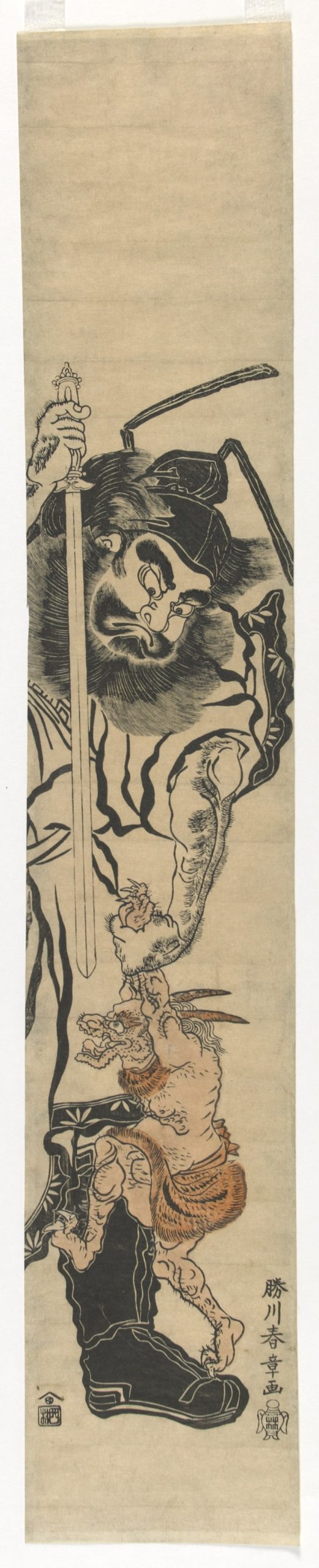
Zhong Kui and the Chinese New Year
Freer’s Marginalia and Mandarin Ducks

Upcoming Events: March and April
We’ll be busy over the next few months and you’re invited. Interested in Women’s History? Want to get a closer look at our collections? Join us for an upcoming event!
Leisure Activities from the Past: Clues from the Trade Literature Collection
As winter winds down and spring approaches, outdoor activities start to look more appealing. How did people a 100 years ago spend their free time outside? The National Museum of American History Library’s Trade Literature Collection offers a few clues to some very recognizable pastimes.
Graceanna Lewis: A naturalist and abolitionist
“To her mind the truths of science seem revealed.”
Digital Jigsaw Puzzles – National Library Week Edition
To celebrate National Library Week and the start of spring, we’ve put together another round of digital jigsaw puzzles! We hope these cheerful florals brighten your screens and bring you a few moments of peace, minus the pollen.
National Library Week Virtual Meeting Backgrounds from Smithsonian Libraries and Archives

An Internship in the Time of Coronavirus
This post was contributed by Natalia Addison, 2020 spring intern with the American Art and Portrait Gallery (AA/PG) Library and a recent Master of Science in Information and Library Science graduate from Clarion University.
Libraries Then and Now: The Ideas We Share
What products or materials come to mind when you think of libraries? The obvious things might be books and shelving, but to keep a library functioning other items are needed as well. Supplies for circulating and tracking books and identifying ownership of books remain largely behind the scenes but are just as important.
New Video Series Highlights Conservation Treatments
Curious about our conservators’ favorite books or trickiest treatments? While they’ve had to step away from the bench during the pandemic, our Preservation Services staff have been hard at work describing some of their remarkable conservation techniques in video form.
Hidden Biodiversity: Exploring Neotropical Fungus Weevils With the Help of BHL
This post was originally featured on the Biodiversity Heritage Library blog.
Meet the Smithsonian’s First Woman Photographer
This post first appeared on the Smithsonian Institution Archives’ blog.
Sailing the Great Lakes in 1897
Are you dreaming of summer vacation? Do you eagerly read guidebooks or search online to learn about cities and sites you’ll visit? How did tourists in the late 19th Century plan their vacations? The Trade Literature Collection at the Smithsonian Libraries and Archives may give us an idea. Perhaps someone in 1897 read this promotional booklet in anticipation of that long-awaited trip.
