
Collection Highlights
Sleuthing Captain America’s Shield
While the Smithsonian is referenced all the time in popular media, nothing goes hand-in-hand with the world’s largest museum complex quite like the world’s largest film franchise: the Marvel Cinematic Universe (MCU). In that fictional world, the Avengers and the Smithsonian have had a somewhat rocky relationship, including a heist by Captain America to steal his old uniform from the National Air and Space Museum.
A Digitization Journey, a Knowledge Journey: Personal and Professional Insights From My Work on Polynesian Researches
Na au iki a me na au nui o ka ʻike: The little and the large currents of knowledge.
Falling for Field Books
A Late 19th Century Camping Experience
Do you remember summer camp as a child? Perhaps you went on a camping trip with your family or maybe you camped out in your own backyard. The Trade Literature Collection located at the Smithsonian Libraries and Archives holds a variety of catalogs. Some illustrate camping equipment. Have you ever wondered what it was like to camp over a century ago? This trade catalog might give us an idea.
How Yellowstone Was Saved by a Teddy Roosevelt Dinner Party and a Fake Photo in a Gun Magazine
A chill rain drizzled over guests arriving at Bamie Roosevelt’s midtown brownstone near the corner of Madison Avenue and East 62nd Street in December 1887. There weren’t many of them, but all had two things in common: they were New York’s most influential and rich social elite, and they all loved hunting big game. All were hand-picked by the h
Identifying Article Metadata in “The Avicultural Magazine”
This blog post was written by Taylor Smith, the 2019 Kathryn Turner Diversity and Technology Intern in the Smithsonian Libraries’ Web Services Department. At the time of her internship, Taylor was an undergraduate Computer Science student at Bowie State University.
Vintage Furniture Finds from the Early 20th Century
Before online outlets and a certain Swedish superstore, imagine decorating and furnishing a new home in the early 20th Century. What did your furniture look like? What curtains or window hangings did you choose? How did you communicate with your neighbors?
Stewards of the Hungerford Deed
When the Smithsonian Institution was founded “for the increase and diffusion of knowledge,” it was difficult to know how impactful this mission would still be 175 years on. To this day, the Smithsonian Libraries and Archives strives to further this goal, sharing our knowledge to make discoveries and expand our understanding together with you, our community of supporters.
Packing for a Vacation in 1907
Imagine it is the early 20th Century and you are packing for summer vacation. What did your luggage look like? Did you pack your clothes in a trunk? What were your options? Today we are familiar with rolling luggage on wheels, but trunks and suitcases over a hundred years ago looked quite different.
Adventures in Advancement and Advocacy
This post was contributed by Martha Ball, who has served as the Advancement Intern during the Summer of 2021. Martha is currently pursuing her M.S. in Library and Information Science at Simmons University, where she is concentrating in Archives Management. Martha’s internship was part of the Smithsonian Libraries and Archives’ 50th Anniversary Internship program, with funding provided by the Secretary of the Smithsonian and the Smithsonian National Board.
New School Year, New Clothes, 1915 Style
The beginning of a school year brings many new things. New classes, new supplies, and perhaps new clothing. What did school outfits look like over one hundred years ago? Let’s take a trip back in time to the year 1915 to find out.
Upcoming Event: At Home with Smithsonian Libraries and Archives – Magnificent Obsessions
Smithsonian Libraries and Archives invites you to join our next free, online webinar: “At Home with Smithsonian Libraries and Archives: Magnificent Obsessions” on Tuesday, October 5th at 5 pm ET.
Early 20th Century Chocolate and the Machines That Made It
October might bring to mind costumes, pumpkins, treats, and candy. But have you ever wondered how all that chocolate is made? What types of machines are used? Let’s travel back to the early 20th Century to learn more about some of those chocolate-making machines.
Tracing Anthropologist Zelia Nuttall Through Smithsonian Collections
Anthropologist Zelia Maria Magdalena Nuttall was an expert in Mesoamerican people and artifacts. A remarkable Mexican American scholar, she helped change the conversation around pre-Columbian cultures. Many of her publications are held in the collections of S
Kitchen Essentials from Centuries Past
What comes to mind when you think of Thanksgiving? Family gatherings, time with friends, relaxing, traveling, or maybe a delicious meal? Those meals require work, and today we have the luxury of modern kitchen appliances. But imagine the time it took to prepare a meal in the 19th Century. This 1868 trade catalog gives us a small glimpse into possible kitchens of the past.
The Varied and Artistic Uses of Decorative Tissue Paper
That time of year is upon us. The season when we see lots of gift bags stuffed with brightly colored tissue paper. The simple act of fluffing a piece of tissue paper and placing it in a bag seems to brighten any present. But how about using tissue paper to create art? This trade catalog from over a century ago might spark our creativity.
ICYMI: Five Most Popular Posts of 2021
There was plenty of news in 2021 and most of it was, well, not great. So, you’ll be forgiven if you overlooked an article or two on this very blog. In case you missed them, here are five of our most popular blog posts of the past year. This assortment highlights interesting collection items as well as the important work of our staff. As we say goodbye (and good riddance?) to 2021, we invite you to cuddle up by the fireplace and catch up.
19th Century Furniture Options for Style and Storage
Every dwelling has its own unique qualities. How do you make your space reflect your personality? The furniture, decorations, and wall hangings all combine to make it feel like home. Let’s flip through the pages of a trade catalog and discover the possibilities of furnishing a home long ago.
Color Our Collections for 2022
Calling all coloring enthusiasts! #ColorOurCollections is back for 2022 and we have ten new coloring pages just for you. Whether you want to bring polychromatic glory to old black-and-white photos or scribble in vintage fashion plates, you’ll find a little something for everyone in our new packet. Download it now!
Unveiling 1915 Spring Fashion Through Mail Order
Today in the 21st Century, we have several options for shopping. Two options that might immediately come to mind are visiting stores to shop in person or ordering online from home. But one nearly forgotten option is the mail order catalog. With the availability of the internet, we might not receive these as frequently as in the past, but browsing the Trade Literature Collection reveals mail ordering has been around for quite some time.
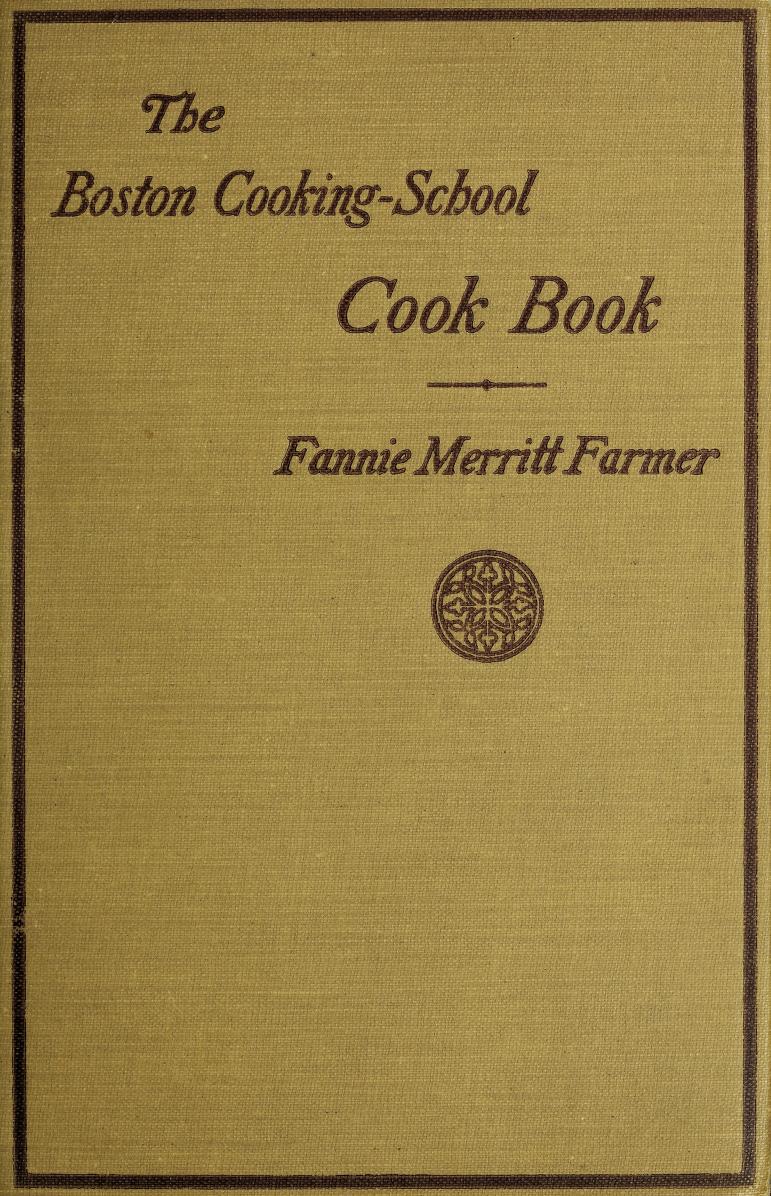
Fannie Farmer Knew Her Pies
Mid-19th Century Reaction to a Laundry Invention
Today the task of laundry is simple. We load machines with clothes, add laundry detergent and softener, and check settings. But essentially, the modern washing machine and dryer do the job for us. However, in the mid-19th century, long before our modern appliances, it was not so easy. Laundry was time-consuming and labor-intensive, so perhaps this pamphlet describing a “really wonderful invention” sounded intriguing.
Join Us for Adopt-A-Book Events in April
Mark your calendar for this year’s Adopt-a-Book events! Join us on April 20th and April 26th, 2022 for a closer look at our collections and the opportunity to support their preservation and acquisition.
Book Pockets and Date Guides: The Intricacies of a Paper-Based Library System
Before we had online circulation systems, barcodes on books, and automated due date reminders, libraries used paper-based systems for everyday tasks. This required book cards, book pockets, charging trays, and the “ca-chunk” sound of a library date stamp.
A 19th Century Encyclopedia Gets a Modern Makeover
Between 1849 and 1851, Johan George Heck published his encyclopedia Bilder-Atlas zum Conversations-Lexicon and the work continues to offer valuable insight into life in the 19th-century.
Meet Serena Katherine “Violet” Dandridge, Suffragist and Scientific Illustrator
Serena Katherine “Violet” Dandridge (1878-1956) was one of the Smithsonian’s first female scientific illustrators and a supporter of women’s suffrage. Dandridge grew up in Shepherdstown, West Virginia, and moved to Washington, D.C. in 1896 to study art.
Cementing Your Home Plans in 1909
When it comes to building a new home, there are so many things to consider. Should it be multi-level or one floor? Will it have a basement? Do you want bedrooms on both floors or only on the second floor? What type of building material will be used? The questions might seem endless. If you were building a house in 1909, in particular one made from cement, this catalog of designs might have provided some inspiration.
A Diary Hidden in a 19th Century Trade Catalog
At first glance, this trade catalog appears to be typical. It provides general information for steamship travelers. But as I turned to the last few pages, I stumbled across something unexpected. It includes a handwritten diary of a passenger.
How to “Save Waste and Win the War” with Sherer-Gillett Grocery Counters
Can a particular kind of retail furniture help grocers save money and prevent food waste? In a World War I era trade catalog, Sherer-Gillett Co. promotes a piece of furniture designed for grocers to install in their stores. It was called the Sherer Counter, a bulk food storage system described as a way to cut down on waste and help with the war effort.
Meet Artist Atlanta Constance Sampson and Her Lifelong “Obsession”
This post was contributed by Isabella Buzynski, 2022 Summer Scholars intern with the American Art and Portrait Gallery (AA/PG) Library. Isabella is currently attending the University of Michigan School of Information for the Master of Science in Information program.
