
Exhibitions related to No name
Primary tabs
Pages
 |
Make the Dirt Fly! Building the Panama CanalFor hundreds of years people dreamed of linking the Atlantic and Pacific Oceans across the narrow neck of land connecting North and South America–the Panama Canal. In 1904, the U.S. government embarked on the largest civil engineering project in history, and today, after more than eight decades of efficient operation, the Panama Canal remains a symbol of human creativity, persistence, and achievement. |
|
|
Make the Dirt Fly! Building the Panama CanalFor hundreds of years people dreamed of linking the Atlantic and Pacific Oceans across the narrow neck of land connecting North and South America–the Panama Canal. In 1904, the U.S. government embarked on the largest civil engineering project in history, and today, after more than eight decades of efficient operation, the Panama Canal remains a symbol of human creativity, persistence, and achievement. |
|
|
Make the Dirt Fly! Building the Panama CanalFor hundreds of years people dreamed of linking the Atlantic and Pacific Oceans across the narrow neck of land connecting North and South America–the Panama Canal. In 1904, the U.S. government embarked on the largest civil engineering project in history, and today, after more than eight decades of efficient operation, the Panama Canal remains a symbol of human creativity, persistence, and achievement. |
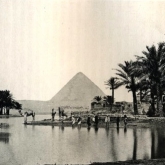 |
Nile Notes of a Howadji: American Travelers in Egypt, 1837 - 1903Travel literature is an increasingly popular research tool for anthropologists, natural scientists, and social historians, as well as an informative and entertaining subject for the armchair traveler. The works displayed here focus on the American travel experience in Egypt, a popular destination for travelers from the time of Herodotus (ca. 420 B.C.). |
|
|
Nile Notes of a Howadji: American Travelers in Egypt, 1837 - 1903Travel literature is an increasingly popular research tool for anthropologists, natural scientists, and social historians, as well as an informative and entertaining subject for the armchair traveler. The works displayed here focus on the American travel experience in Egypt, a popular destination for travelers from the time of Herodotus (ca. 420 B.C.). |
|
|
Nile Notes of a Howadji: American Travelers in Egypt, 1837 - 1903Travel literature is an increasingly popular research tool for anthropologists, natural scientists, and social historians, as well as an informative and entertaining subject for the armchair traveler. The works displayed here focus on the American travel experience in Egypt, a popular destination for travelers from the time of Herodotus (ca. 420 B.C.). |
|
|
Nile Notes of a Howadji: American Travelers in Egypt, 1837 - 1903Travel literature is an increasingly popular research tool for anthropologists, natural scientists, and social historians, as well as an informative and entertaining subject for the armchair traveler. The works displayed here focus on the American travel experience in Egypt, a popular destination for travelers from the time of Herodotus (ca. 420 B.C.). |
|
|
Nile Notes of a Howadji: American Travelers in Egypt, 1837 - 1903Travel literature is an increasingly popular research tool for anthropologists, natural scientists, and social historians, as well as an informative and entertaining subject for the armchair traveler. The works displayed here focus on the American travel experience in Egypt, a popular destination for travelers from the time of Herodotus (ca. 420 B.C.). |
 |
Once There Were Billions: Vanished Birds of North AmericaOnce an amazing diversity of birds–some in breathtaking abundance–inhabited the vast forests and plains of North America. But starting around 1600, species began to disappear, as humans altered habitats, over-hunted, and introduced predators. The story of the last Passenger Pigeon and the disappearance of the Great Auk, Carolina Parakeet, and Heath Hen reveal the fragile connections between species and their environment. |
|
|
Once There Were Billions: Vanished Birds of North AmericaOnce an amazing diversity of birds–some in breathtaking abundance–inhabited the vast forests and plains of North America. But starting around 1600, species began to disappear, as humans altered habitats, over-hunted, and introduced predators. The story of the last Passenger Pigeon and the disappearance of the Great Auk, Carolina Parakeet, and Heath Hen reveal the fragile connections between species and their environment. |
