
Exhibitions related to No name
Primary tabs
Pages
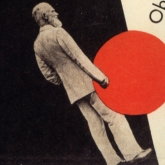 |
Czech Book Covers of the 1920's and 1930's in the Cooper-Hewitt National Design Museum LibraryDuring the period between the two World Wars, the Czechoslovak Republic was an important and prolific center for avant-garde book design. Signed, limited editions showcased experimental design techniques, high-quality materials, and specially commissioned graphics. Book design for the general public, although mass-produced and much more affordable, was similarly innovative and attentive to questions of design. |
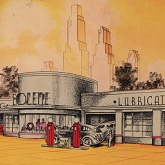 |
Doodles, Drafts & Designs: Industrial Drawings from the SmithsonianHow do ideas evolve into reality? Doodles, Drafts, and Designs: Industrial Drawings from the Smithsonian offers a fascinating glimpse into inventors' sketchbooks, engineers' mechanical drawings, and architects' renderings from the 1830s to the 1990s, to show the origins of some of the most familiar sites and devices of modern-day life. |
|
|
Doodles, Drafts & Designs: Industrial Drawings from the SmithsonianHow do ideas evolve into reality? Doodles, Drafts, and Designs: Industrial Drawings from the Smithsonian offers a fascinating glimpse into inventors' sketchbooks, engineers' mechanical drawings, and architects' renderings from the 1830s to the 1990s, to show the origins of some of the most familiar sites and devices of modern-day life. |
|
|
Doodles, Drafts & Designs: Industrial Drawings from the SmithsonianHow do ideas evolve into reality? Doodles, Drafts, and Designs: Industrial Drawings from the Smithsonian offers a fascinating glimpse into inventors' sketchbooks, engineers' mechanical drawings, and architects' renderings from the 1830s to the 1990s, to show the origins of some of the most familiar sites and devices of modern-day life. |
|
|
Doodles, Drafts & Designs: Industrial Drawings from the SmithsonianHow do ideas evolve into reality? Doodles, Drafts, and Designs: Industrial Drawings from the Smithsonian offers a fascinating glimpse into inventors' sketchbooks, engineers' mechanical drawings, and architects' renderings from the 1830s to the 1990s, to show the origins of some of the most familiar sites and devices of modern-day life. |
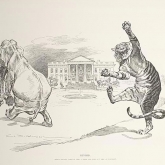 |
Drawing from Life: Caricatures and Cartoons from the American Art / Portrait Gallery CollectionThe Smithsonian Institution Libraries has a substantial collection of cartoon and caricature books, including rare and special collections titles which date from 1800. Numbering over 600 volumes, this growing collection has a strong focus on works by American artists - the oldest dating to the Civil War period. |
|
|
Drawing from Life: Caricatures and Cartoons from the American Art / Portrait Gallery CollectionThe Smithsonian Institution Libraries has a substantial collection of cartoon and caricature books, including rare and special collections titles which date from 1800. Numbering over 600 volumes, this growing collection has a strong focus on works by American artists - the oldest dating to the Civil War period. |
 |
Fantastic WorldsTravel with us to the surface of the moon, the center of the earth, and the depths of the ocean — to the fantastic worlds of fiction inspired by 19th-century discovery and invention. Now open at the National Museum of American History in Washington, DC. |
|
|
Fantastic WorldsTravel with us to the surface of the moon, the center of the earth, and the depths of the ocean — to the fantastic worlds of fiction inspired by 19th-century discovery and invention. Now open at the National Museum of American History in Washington, DC. |
|
|
Fantastic WorldsTravel with us to the surface of the moon, the center of the earth, and the depths of the ocean — to the fantastic worlds of fiction inspired by 19th-century discovery and invention. Now open at the National Museum of American History in Washington, DC. |
|
|
Fantastic WorldsTravel with us to the surface of the moon, the center of the earth, and the depths of the ocean — to the fantastic worlds of fiction inspired by 19th-century discovery and invention. Now open at the National Museum of American History in Washington, DC. |
|
|
Fantastic WorldsTravel with us to the surface of the moon, the center of the earth, and the depths of the ocean — to the fantastic worlds of fiction inspired by 19th-century discovery and invention. Now open at the National Museum of American History in Washington, DC. |
|
|
Fantastic WorldsTravel with us to the surface of the moon, the center of the earth, and the depths of the ocean — to the fantastic worlds of fiction inspired by 19th-century discovery and invention. Now open at the National Museum of American History in Washington, DC. |
 |
Fold, Pull, Pop and TurnPaper Engineering: Fold, Pull, Pop, Turn presents more than 50 examples of action-packed constructions and inspired works of art spanning 500 years. We hope exhibition visitors will experience these rarely seen treasures as their creators intended—as remarkable works that calculate, educate, entertain, and amaze. |
|
|
Fold, Pull, Pop and TurnPaper Engineering: Fold, Pull, Pop, Turn presents more than 50 examples of action-packed constructions and inspired works of art spanning 500 years. We hope exhibition visitors will experience these rarely seen treasures as their creators intended—as remarkable works that calculate, educate, entertain, and amaze. |
 |
From Horses to Horsepower: Studebaker Helped Move a NationStudebaker's long standing commitment to quality and value made it one of the automotive giants prior to the Great Depression, often being among the first manufacturers to introduce new technology or safety features, such as four-wheel hydraulic brakes in 1925. Barely surviving the 1930s, Studebaker resumed its innovative heritage with some of the first new designs to follow World War II. Postwar Studebaker automobiles, largely due to their association with Raymond Loewy, are still considered to be classics of modern industrial design. |
|
|
From Horses to Horsepower: Studebaker Helped Move a NationStudebaker's long standing commitment to quality and value made it one of the automotive giants prior to the Great Depression, often being among the first manufacturers to introduce new technology or safety features, such as four-wheel hydraulic brakes in 1925. Barely surviving the 1930s, Studebaker resumed its innovative heritage with some of the first new designs to follow World War II. Postwar Studebaker automobiles, largely due to their association with Raymond Loewy, are still considered to be classics of modern industrial design. |
|
|
From Horses to Horsepower: Studebaker Helped Move a NationStudebaker's long standing commitment to quality and value made it one of the automotive giants prior to the Great Depression, often being among the first manufacturers to introduce new technology or safety features, such as four-wheel hydraulic brakes in 1925. Barely surviving the 1930s, Studebaker resumed its innovative heritage with some of the first new designs to follow World War II. Postwar Studebaker automobiles, largely due to their association with Raymond Loewy, are still considered to be classics of modern industrial design. |
 |
From Smithson to Smithsonian: The Birth of an InstitutionThis exhibition highlights the life of James Smithson, the English scientist who bequeathed his fortune to the United States to establish an institution "for the increase and diffusion of knowledge." The exhibition tells of the retrieval of the bequest from Great Britain, and describes the controversy this bequest provoked in the United States, up until the 1846 founding of the Smithsonian Institution. |
|
|
From Smithson to Smithsonian: The Birth of an InstitutionThis exhibition highlights the life of James Smithson, the English scientist who bequeathed his fortune to the United States to establish an institution "for the increase and diffusion of knowledge." The exhibition tells of the retrieval of the bequest from Great Britain, and describes the controversy this bequest provoked in the United States, up until the 1846 founding of the Smithsonian Institution. |
|
|
From Smithson to Smithsonian: The Birth of an InstitutionThis exhibition highlights the life of James Smithson, the English scientist who bequeathed his fortune to the United States to establish an institution "for the increase and diffusion of knowledge." The exhibition tells of the retrieval of the bequest from Great Britain, and describes the controversy this bequest provoked in the United States, up until the 1846 founding of the Smithsonian Institution. |
|
|
From Smithson to Smithsonian: The Birth of an InstitutionThis exhibition highlights the life of James Smithson, the English scientist who bequeathed his fortune to the United States to establish an institution "for the increase and diffusion of knowledge." The exhibition tells of the retrieval of the bequest from Great Britain, and describes the controversy this bequest provoked in the United States, up until the 1846 founding of the Smithsonian Institution. |
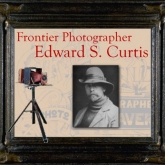 |
Frontier Photographer: Edward S. CurtisEdward S. Curtis (1868-1952) left an indelible mark on the history of photography in his 20-volume life's work, The North American Indian. |
|
|
Frontier Photographer: Edward S. CurtisEdward S. Curtis (1868-1952) left an indelible mark on the history of photography in his 20-volume life's work, The North American Indian. |
