
Libraries' Blog


Digital Jigsaw Puzzles: National Library Week 2022
To celebrate National Library Week and a new spring season, we’ve put together another round of digital jigsaw puzzles. This time we’re featuring a variety of soothing natural history-related scenes.
Play them right here on our blog or use the links to play full screen. Each puzzle is set at about 100 pieces but they are customizable to any skill set. Click the grid icon in the center to adjust the number of pieces. For this batch, all of the images are freely available in the Biodiversity Heritage Library, a consortium effort to digitize biodiversity literature, based at the Smithsonian Libraries and Archives.
Miss our previous puzzles? Find them here.
“Sea Dragons”, Marvels of the Universe (1911).
Marvels of the universe: a popular work on the marvels of the heavens, the earth, plant life, animal life, the mighty deep was first published by Hutchinson and Company as a periodical between 1911-1912 “in about 24 fortnightly parts”. These Sea Dragons were noted as “Painted by Seppings Wright.”
Play online: https://jigex.com/joCHo
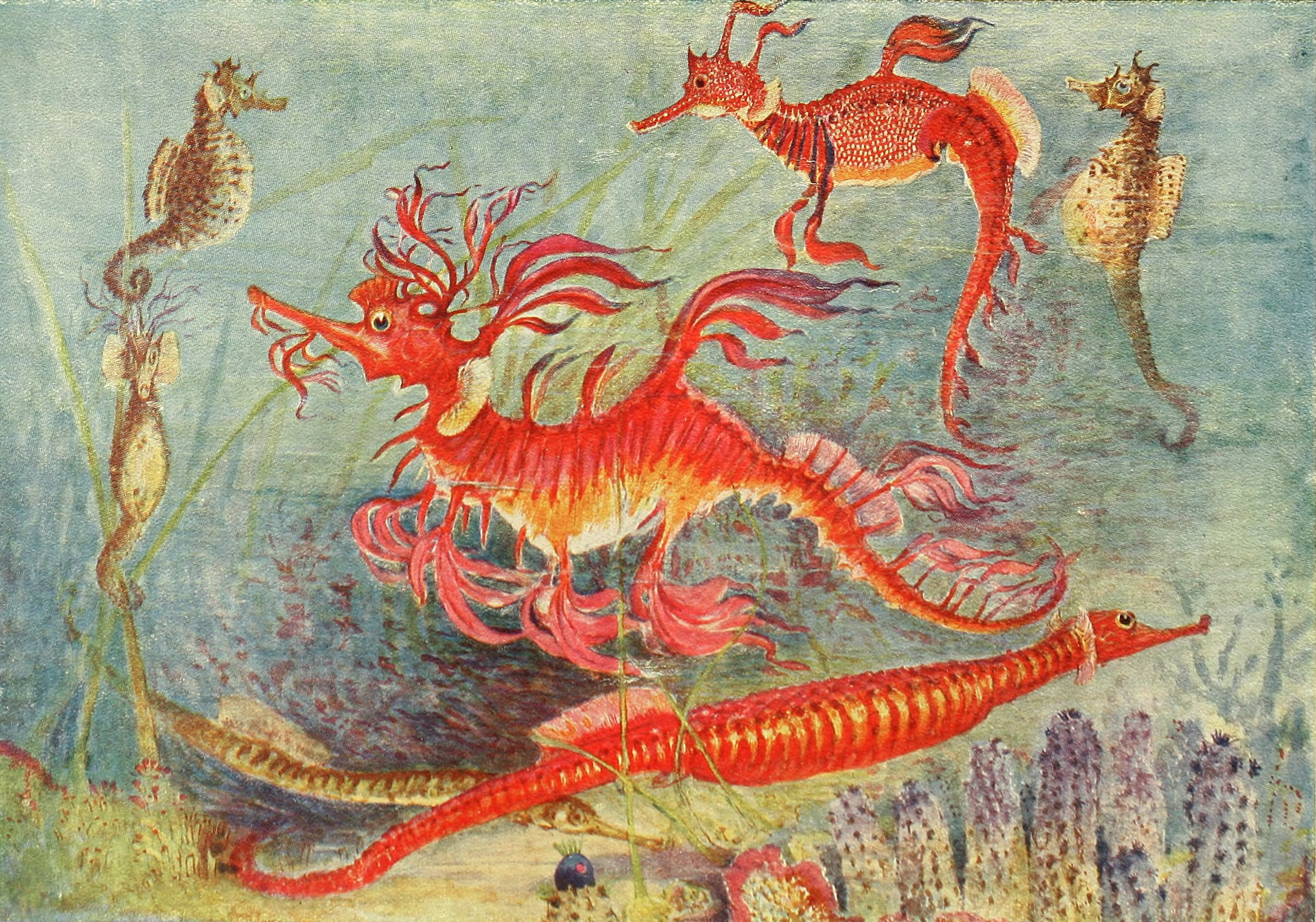 “Sea Dragons”, Marvels of the Universe (1911).
Jigsaw Puzzle
“Erycynids”, Animate Creation (1885).
Animate Creation is an adaptation of Reverend John George Wood’s natural history publication Our Living World. This version, published in 60 parts by S. Hess, was specifically revised for an American audience and incorporated material from several sources, including the Smithsonian’s Spencer F. Baird and Robert Ridgway. This plate of butterflies was likely reproduced from a lithograph by L. Prang & Co.
Play online: https://jigex.com/nXFZn
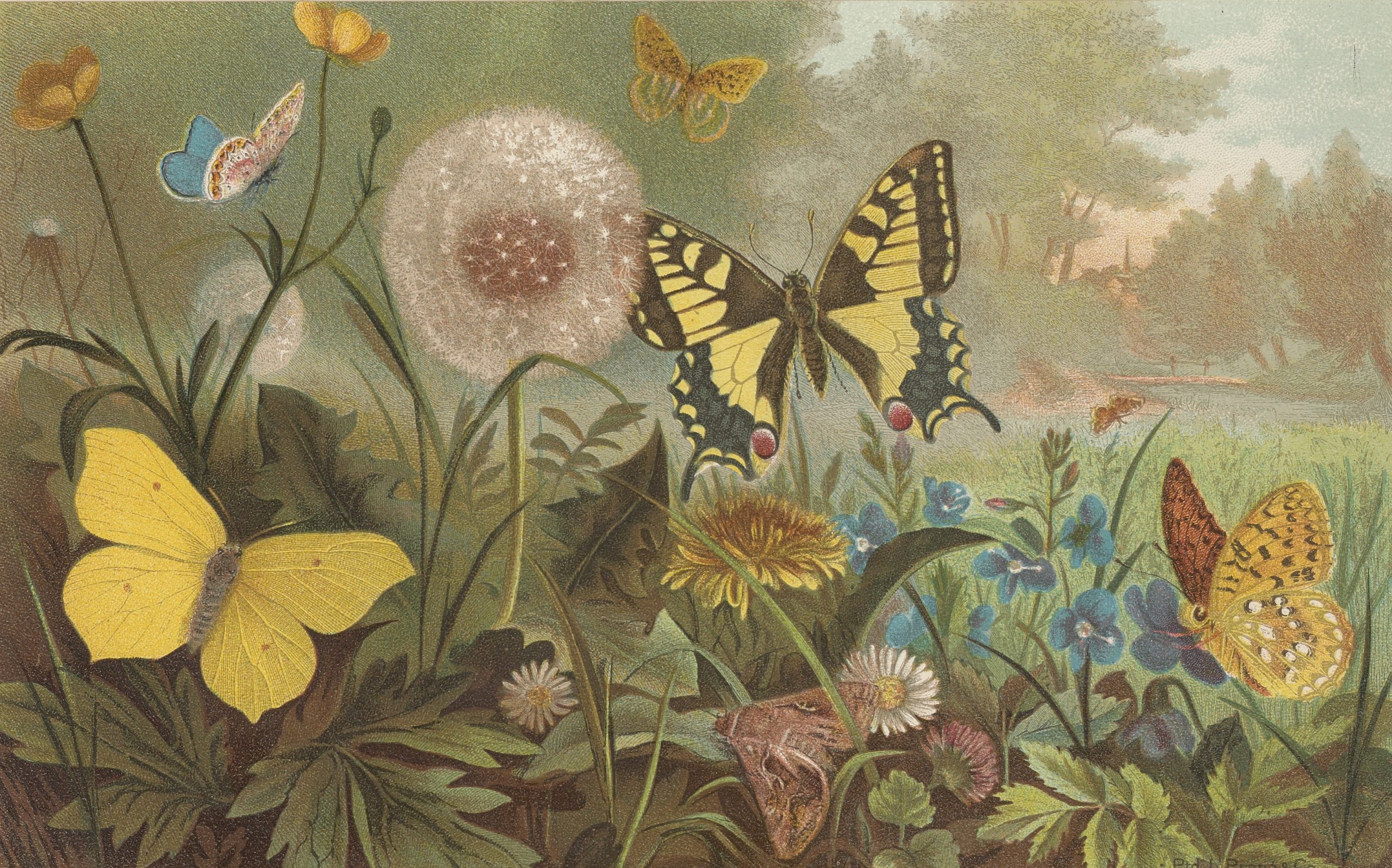 “Erycynids”, Animate Creation (1885).
Jigsaw Puzzle
“Landschnecken”, Brehms Tierleben (1876-1879).
Brehms Tierleben is a zoological encyclopedia first published in the 1860s. Alfred Edmund Brehm (1829–1884) was a German zoologist who commonly wrote articles for popular scientific magazines. Brehm was commissioned to produce a 10-volume encyclopedia, which was published by the Bibliographisches Institut from 1864-69. This second edition included new illustrations by Gustav Mützel, the brothers August and Friedrich Specht and others.
Play online: https://jigex.com/HJmoG
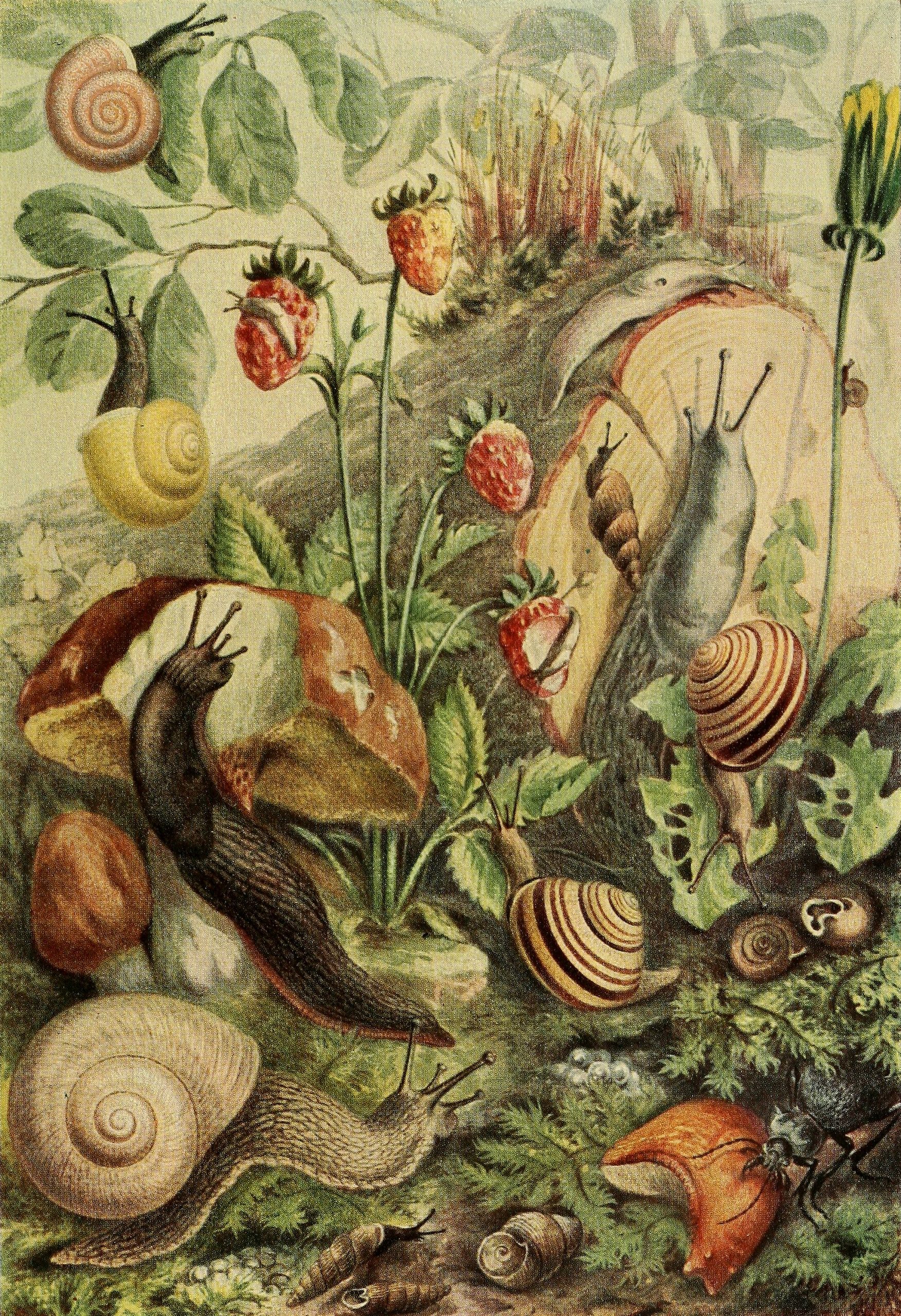 “Landschnecken”, Brehms Tierleben (1876-1879).
Jigsaw Puzzle
“Sea Anemones”, The World of the Sea [1869].
The World of the Sea [1869] is an English translation by Rev. H. Martyn Hart of Alfred Moquin-Tandon’s Le Mon de le Mer. This particular copy was owned by Smithsonian Curator of Mollusks William Healey Dall.
Play online: https://jigex.com/aRFwE
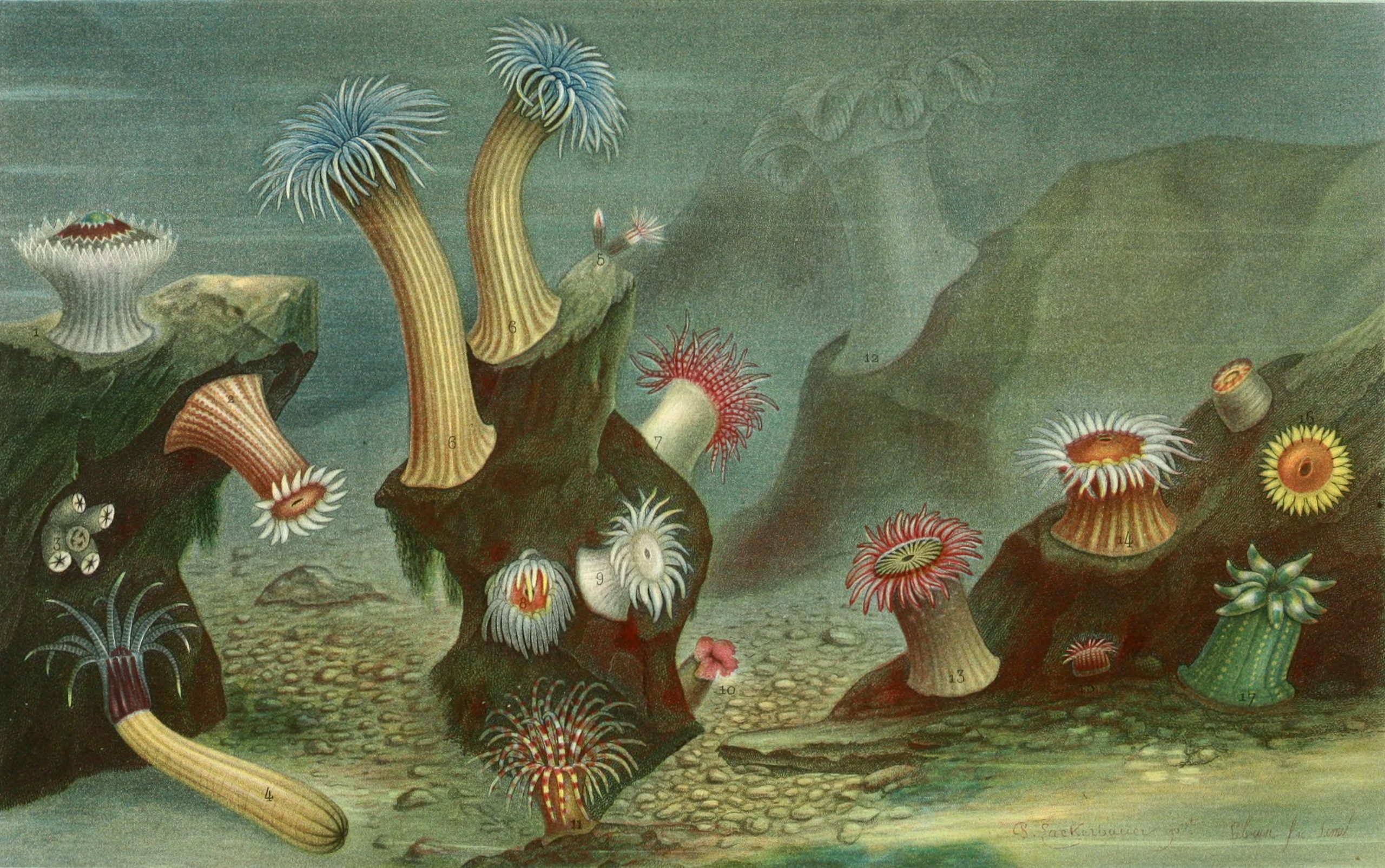 “Sea Anemones”, The World of the Sea [1869].Jigsaw Puzzle
“The Laurel Tree of Carolina”, The natural history of Carolina, Florida and the Bahama Islands (1734-1747).
Mark Catesby’s 1729-47 work “The Natural History of Carolina, Florida, and the Bahama Islands” is the first major illustrated publication on the flora and fauna of North America. The work contains 220 plates painted, etched, and hand-colored by Catesby himself. It was published in eleven parts and was one of the most expensive publications of the eighteenth century.
Play online: https://jigex.com/3iSKJ
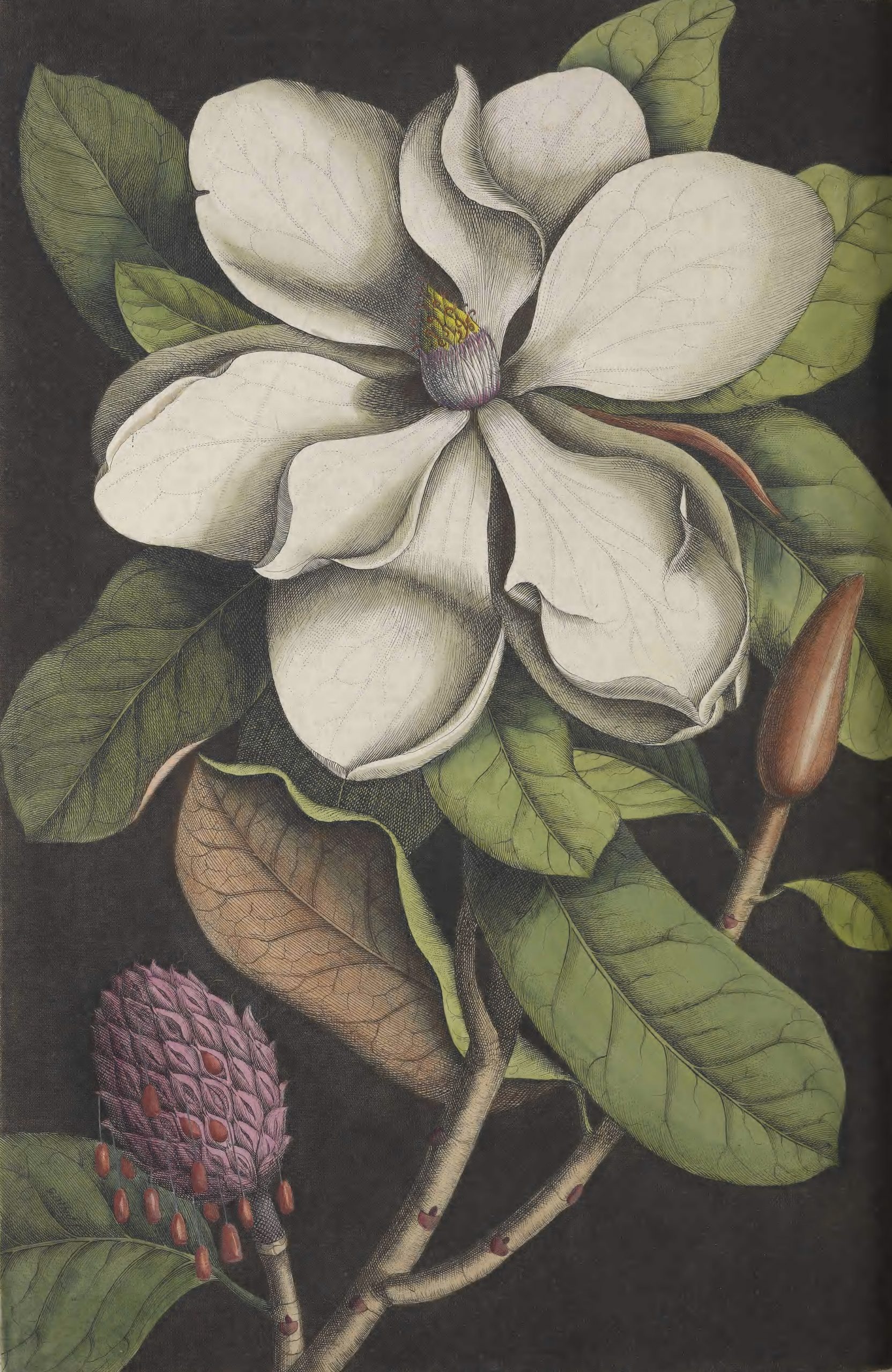 “The Laurel Tree of Carolina”, The natural history of Carolina, Florida and the Bahama Islands (1734-1747).
Jigsaw Puzzle
“Great Spotted Woodpeckers”, Birds in flight (1922).
British bird artist Roland Green contributed the illustrations to “Birds in Flight” (1922), including this pair of woodpeckers. The book was written by William Plane Pycraft, an ornithologist and comparative anatomist who worked for decades in the Zoological Department of the British Museum.
Play online: https://jigex.com/3fZv2
 “Great Spotted Woodpeckers”, Birds in flight (1922).
Jigsaw Puzzle
Sea slug illustration, Notes and description of specimens collected on the Philippine Expedition of the Steamer Albatross, circa 1908.
This colorful nudibranch is the work of artist Kumataro Ito. Ito accompanied Paul Bartsch, an assistant curator of the Smithsonian’s division of mollusks, when he set sail aboard the USS Albatross on a trip throughout the Philippines in 1907.
Play online: https://jigex.com/EHoSf
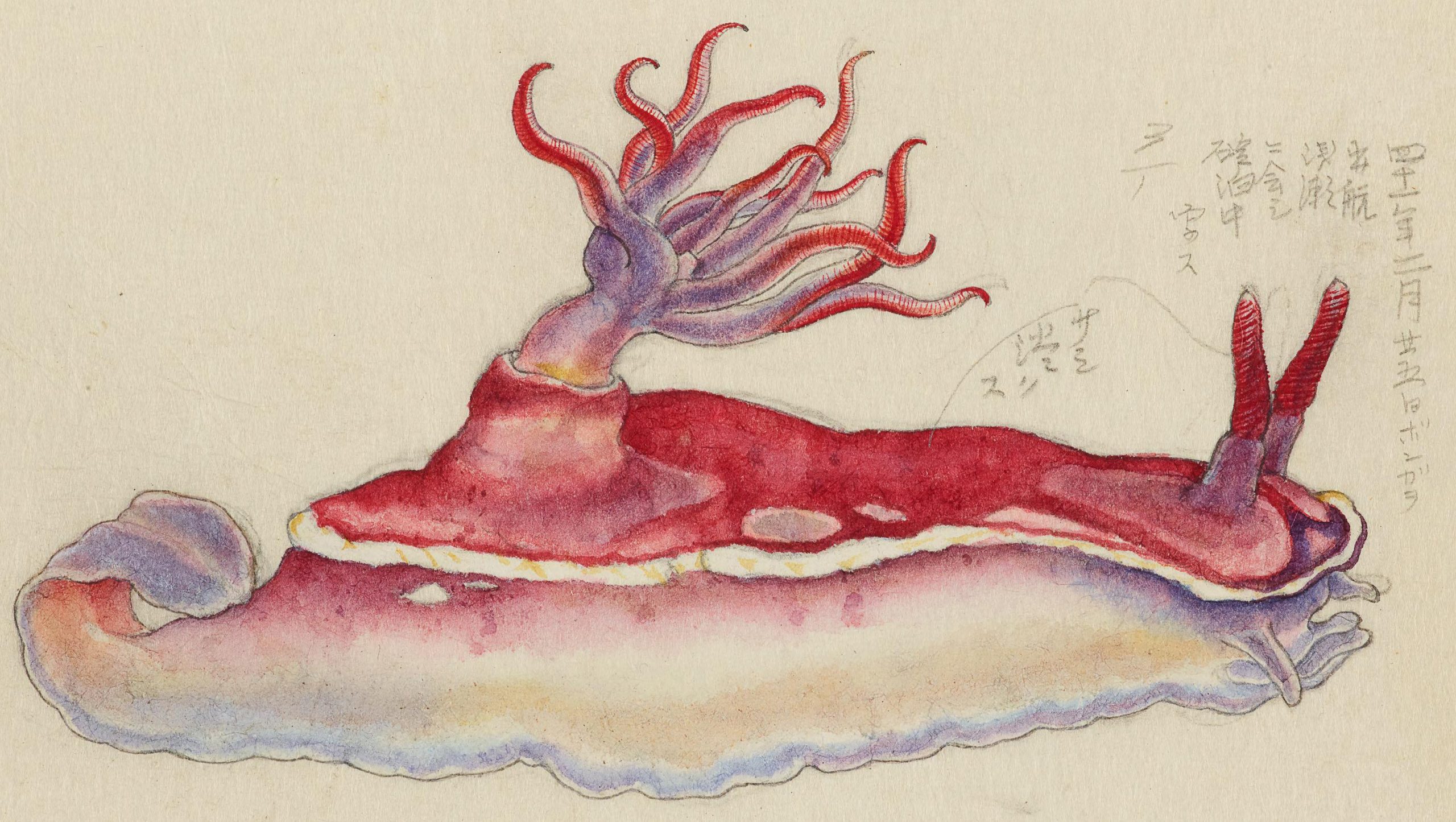 Sea slug illustration, Notes and description of specimens collected on the Philippine Expedition of the Steamer Albatross, circa 1908.
Jigsaw Puzzle
Book Pockets and Date Guides: The Intricacies of a Paper-Based Library System
Before we had online circulation systems, barcodes on books, and automated due date reminders, libraries used paper-based systems for everyday tasks. This required book cards, book pockets, charging trays, and the “ca-chunk” sound of a library date stamp.
The Trade Literature Collection at the National Museum of American History Library holds a variety of Library Bureau catalogs. These trade catalogs illustrate everything from large pieces of furniture, such as card catalogs and shelving, to smaller supplies, like book cards and date stamps. One of these is titled Library Supplies, Catalog no. L 1018 (1918) by Library Bureau.
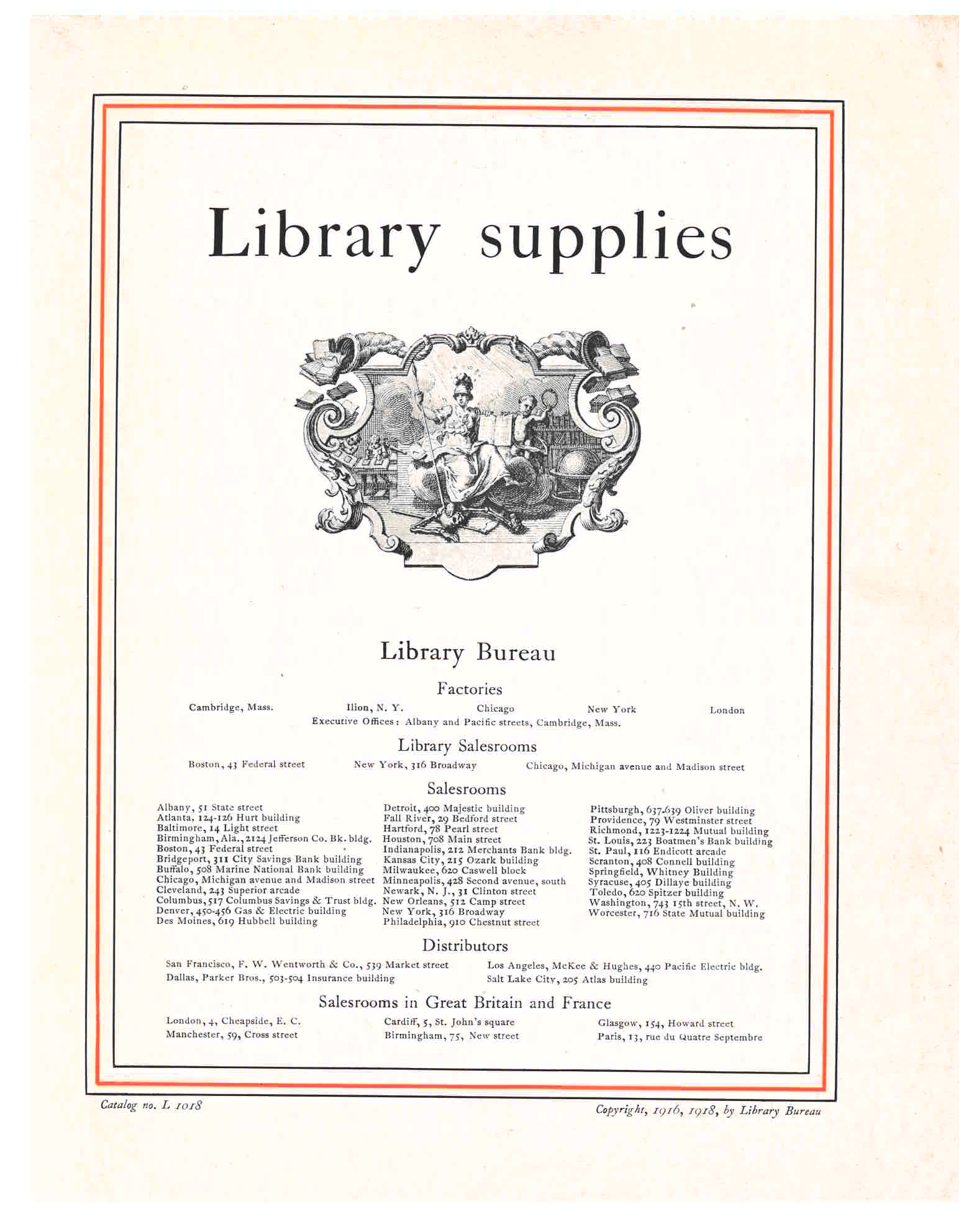 Library Bureau, Cambridge, MA. Library Supplies, Catalog no. L 1018 (1918), title page.
Just like today, early 20th century libraries recognized the importance of an accurate and quick method for tracking borrowed materials. As this trade catalog states on page 17, “The system should be so simple in operation that the business at the charging desk may be transacted rapidly, in order to avoid undue detention of borrowers and the accumulation of crowds during the busy hours of the day.”
Library staff often multi-task. Among other duties, they handle questions, concerns, and needs of several library users while also discharging and charging books. The Browne System, which is described on the page below, appears to take that into account. It includes a suggestion for temporarily checking-out a book so the library user does not have to wait while the full process is completed.
 Library Bureau, Cambridge, MA. Library Supplies, Catalog no. L 1018 (1918), page 19, explanation of the “Plan of Use” for Browne System and L. B. Simplified charging system.
So how did the Browne System work? It required that every book had a book card. The book card included bibliographic information, such as title, author, and call number. This information was typically noted at the top of the card, as shown in the illustration below. Depending on the style, book cards were available in six colors, including white, buff, blue, salmon, fawn, or green.
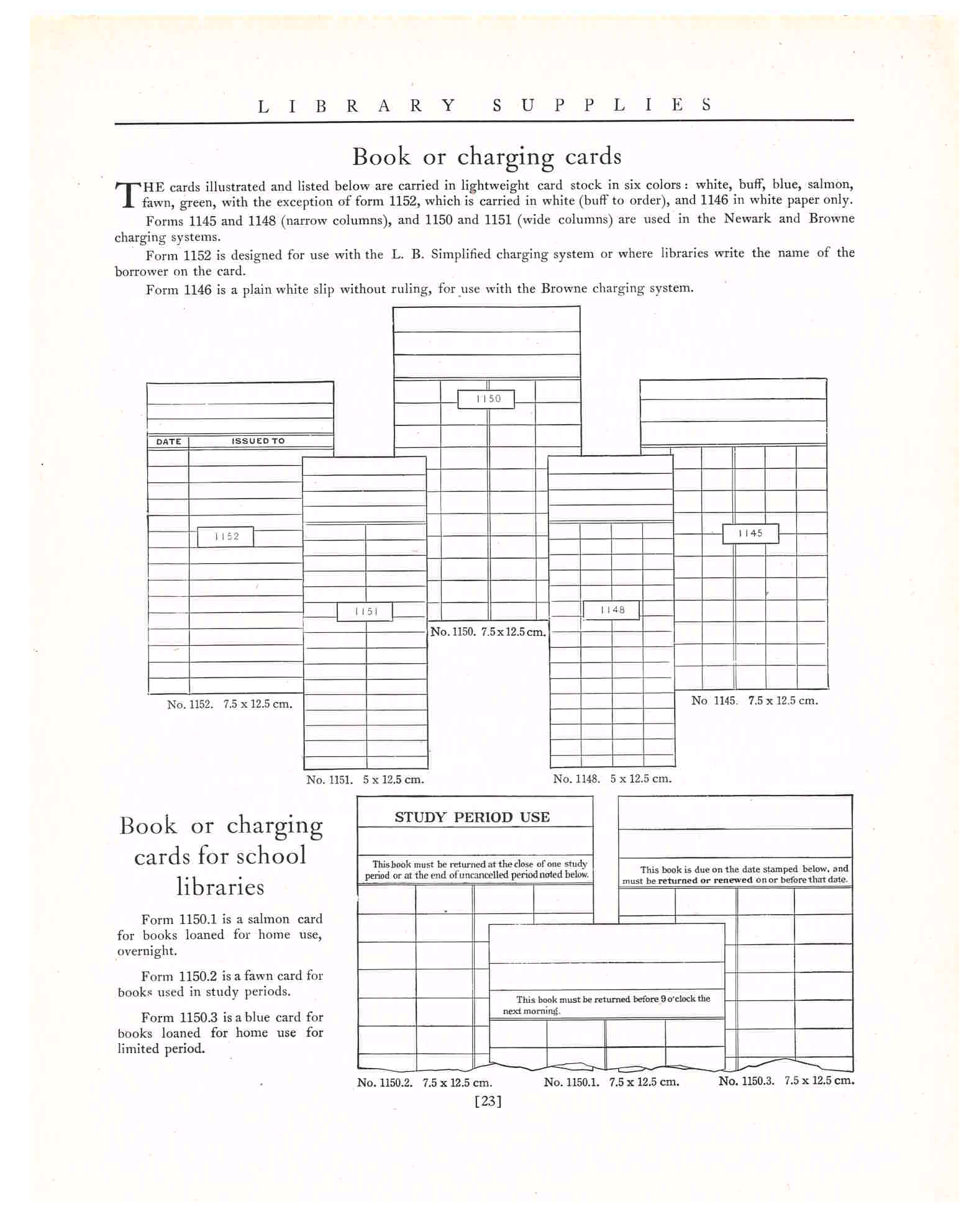 Library Bureau, Cambridge, MA. Library Supplies, Catalog no. L 1018 (1918), page 23, book or charging cards.
The book card was inserted into a book pocket which was pasted inside the back cover of the book. As illustrated below, book pockets came in a variety of designs and sizes. If desired, a library could choose to have their rules and regulations printed on the book pocket. This provided a convenient way to remind borrowers of their responsibilities and share rules of the library, such as limits on number of borrowed books, renewals, and overdue fines.
 Library Bureau, Cambridge, MA. Library Supplies, Catalog no. L 1018 (1918), page 24, book or card pockets.
In addition, some libraries might have pasted a separate date slip inside the book for stamping due dates. Some date slips included information about overdue fines. The date slip, shown below (bottom left), includes space for the title, author, and call number followed by boxes for stamping due dates. According to the catalog, this date slip should be pasted to the “right-hand edge of the last fly leaf of the book, opposite the back cover.”
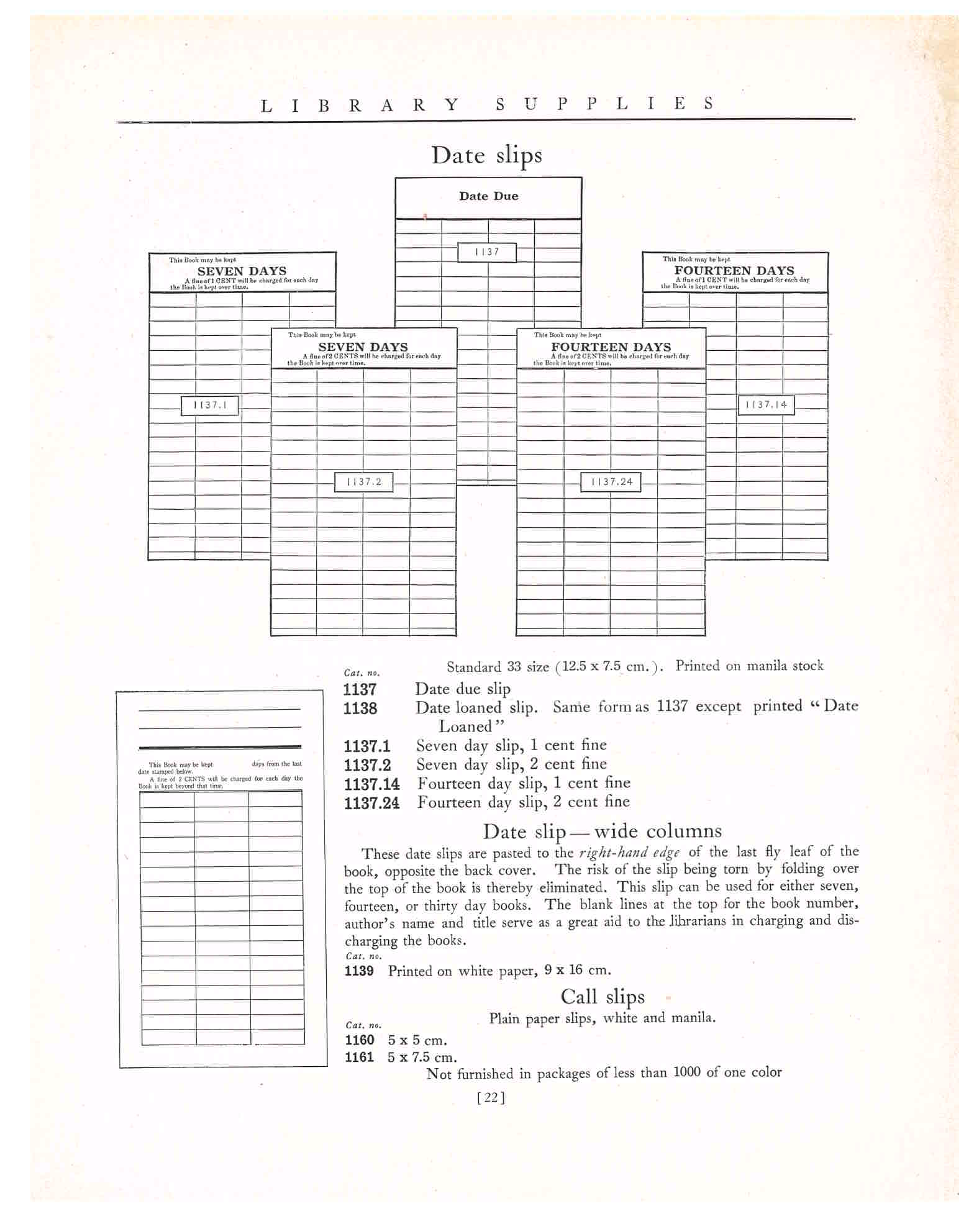 Library Bureau, Cambridge, MA. Library Supplies, Catalog no. L 1018 (1918), page 22, date slips.
When a library user wished to check-out a book, library staff removed the book card from its book pocket and placed it inside the borrower’s pocket. Examples of borrower’s pockets with spaces for borrower’s number, name, and address are shown below. The borrower’s pocket held book cards of all books, arranged numerically by call number, currently checked out to that user. The due date for the book was stamped on either the book pocket or the separate date slip inside the book to remind the user when it was due.
 Library Bureau, Cambridge, MA. Library Supplies, Catalog no. L 1018 (1918), page 25, book or card pockets that can be used as borrower’s pockets.
The borrower’s pocket was placed in a charging tray behind a date guide corresponding to the due date of the book(s). The library had the option of also stamping the due date on the book card, but that was not necessary if the borrower’s pocket was placed behind the correct date guide. Various styles of guides for charging systems are illustrated below, including numerical guides for tracking due dates and alphabetical guides for filing unused borrower’s pockets.
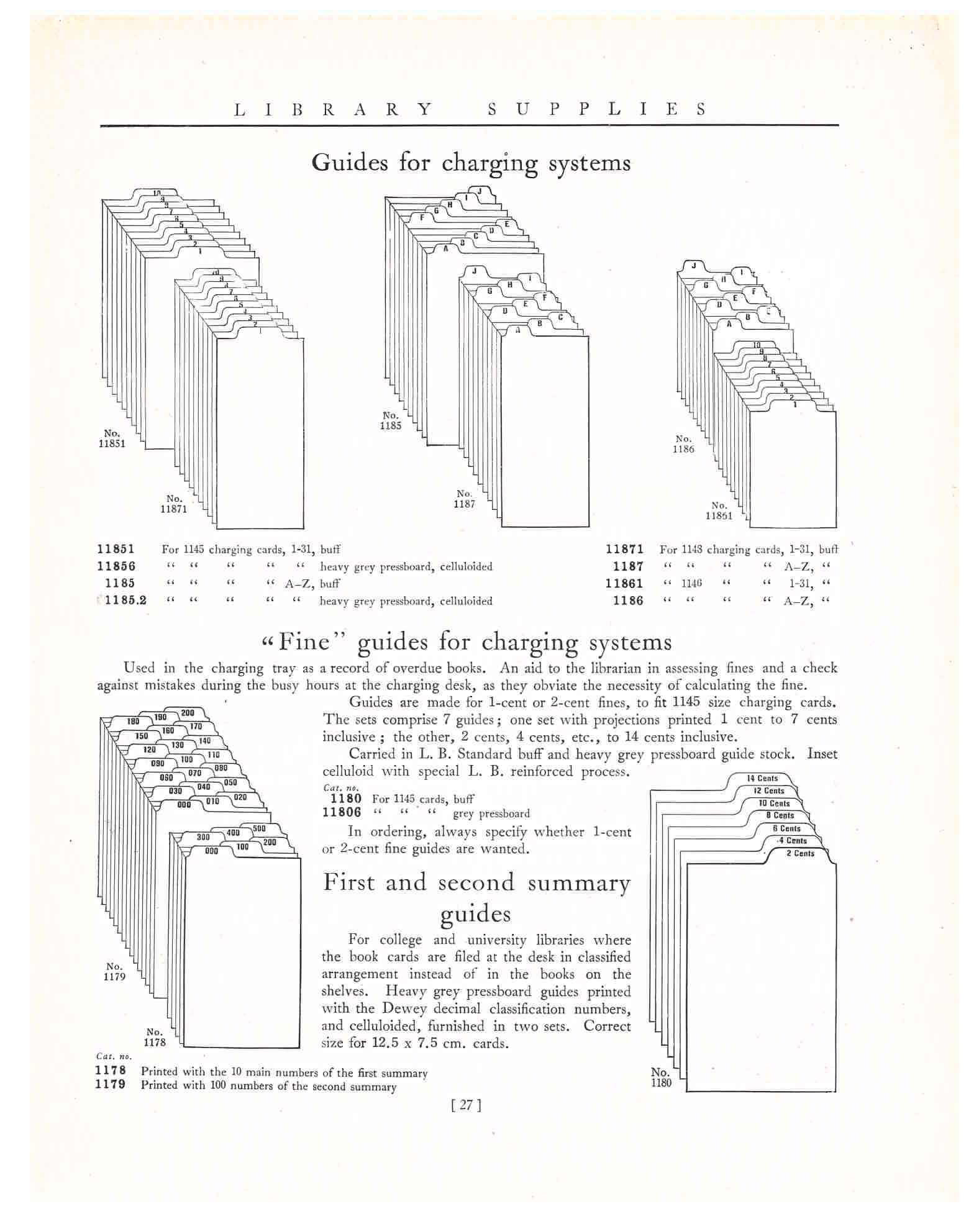 Library Bureau, Cambridge, MA. Library Supplies, Catalog no. L 1018 (1918), page 27, guides for charging systems.
When a book was returned, library staff referred to the due date stamped on the book pocket or date slip of the book. They retrieved the borrower’s pocket from behind that date in the charging tray. Next, the book card was removed from the borrower’s pocket and inserted into the book pocket of the returned book. At this point, the book was checked-in and ready to re-shelve. The borrower’s pocket was filed in alphabetical order in a tray to make it available the next time the user wished to borrow a book.
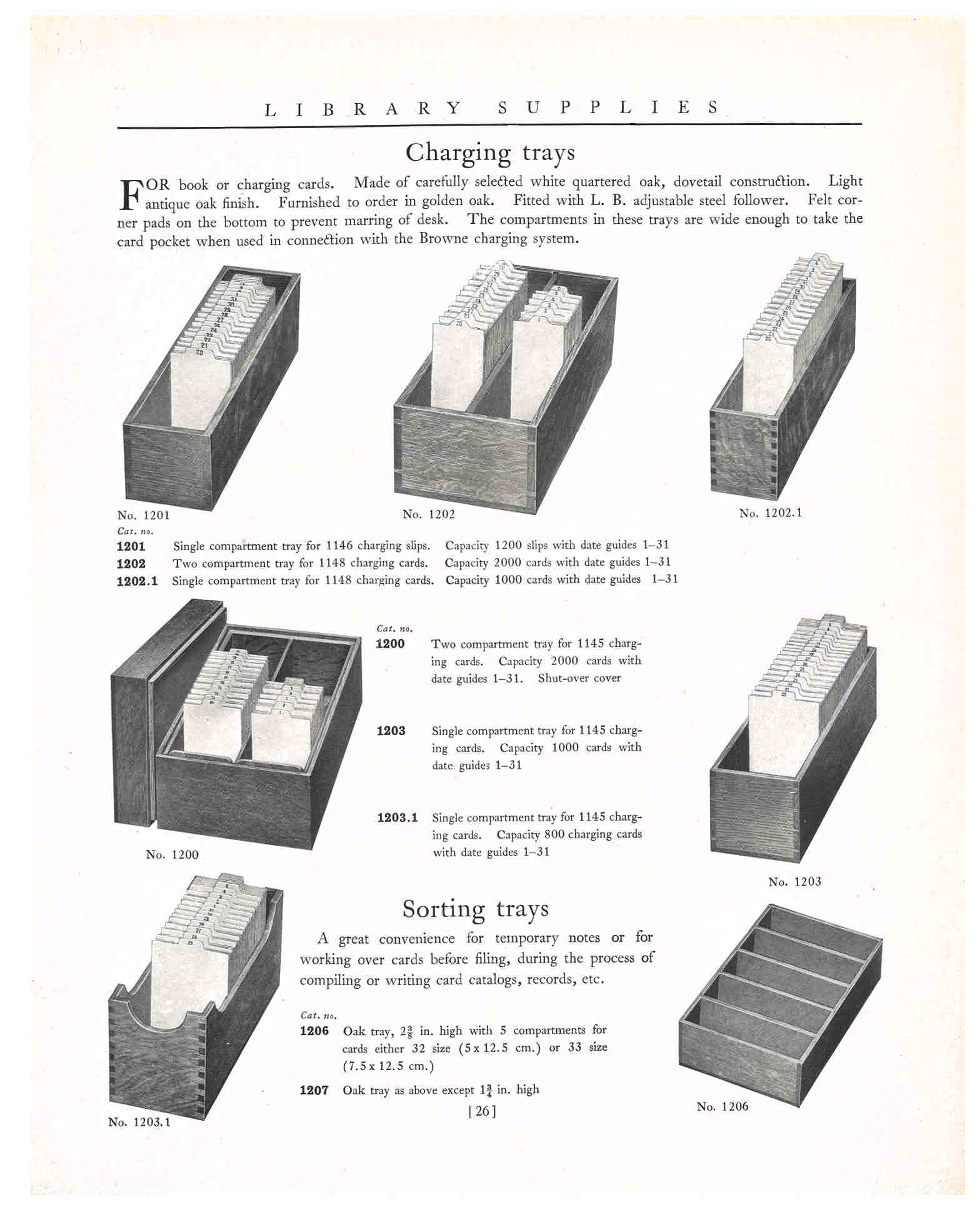 Library Bureau, Cambridge, MA. Library Supplies, Catalog no. L 1018 (1918), page 26, charging trays and sorting trays with numerical and alphabetical guides.
But what if a user returned a book and immediately wanted to check-out another book? The returned book might not have been checked-in yet. Being mindful of the user’s time, staff had an option to temporarily check-out a book.
The Browne System suggested removing the book card from the book pocket of the book the patron wanted to check-out and placing it inside the returned book. This provided a temporary check-out. Later, as time allowed, the check-in process of the returned book was completed by removing the book card from the borrower’s pocket and placing it in the pocket of the returned book.
To complete the check-out of the other book, the book card was removed from the returned book, inserted into the borrower’s pocket, and filed in the charging tray behind the correct due date. This way, the user did not have to wait while the full process was completed.
All of these supplies and many more were manufactured at the factories of Library Bureau in Ilion, NY, Cambridge, MA, and Chicago, IL. At the time this catalog was printed, those factories were devoted to steel working, woodworking, and a combination of card and woodworking. This provided a way for libraries to order standard equipment and supplies.
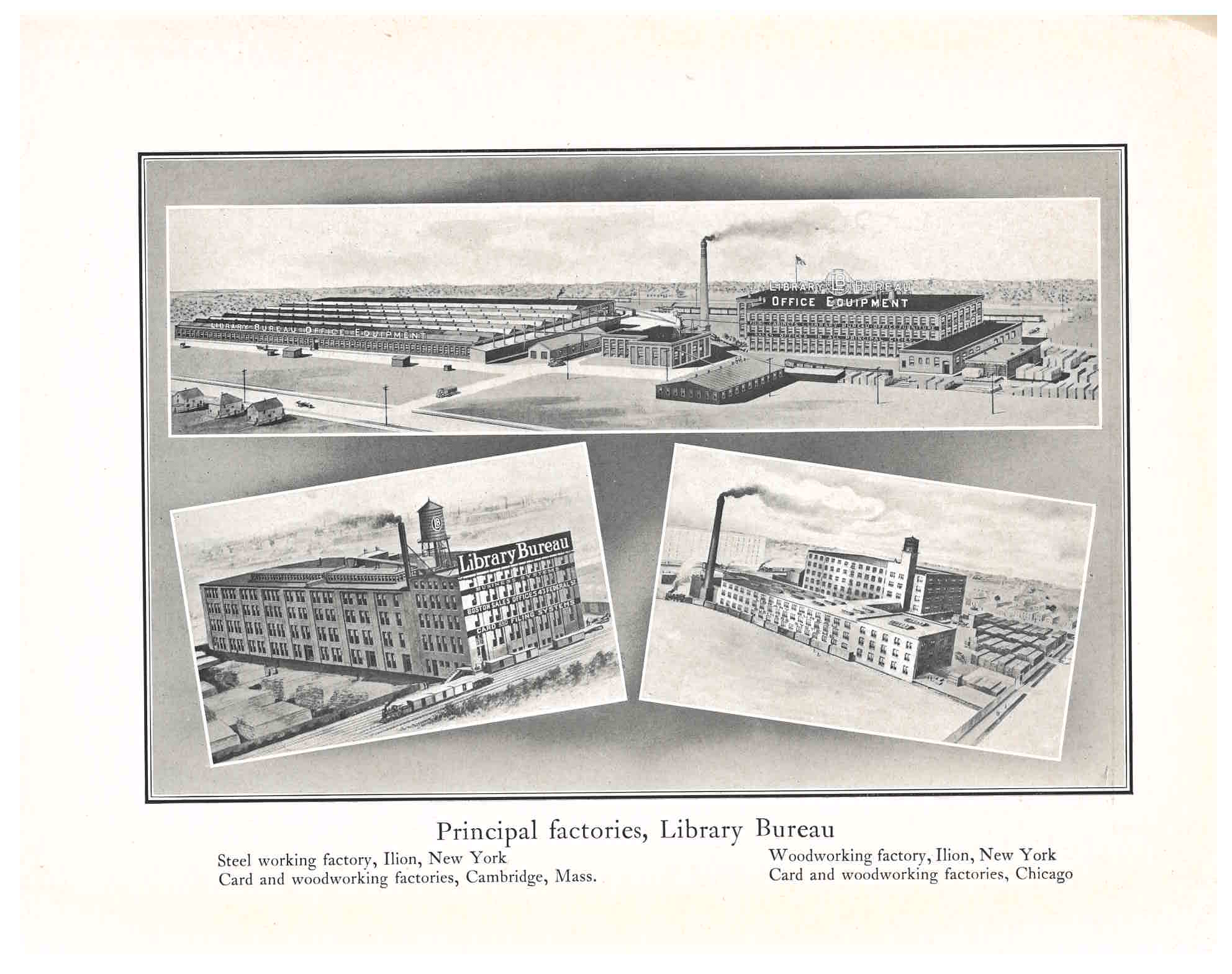 Library Bureau, Cambridge, MA. Library Supplies, Catalog no. L 1018 (1918), unnumbered page [2], Principal factories of Library Bureau.Library Supplies, Catalog no. L 1018 (1918) by Library Bureau is located in the Trade Literature Collection at the National Museum of American History Library. Interested in more library equipment and charging systems? Take a look at a past post highlighting more library equipment and a system from 1899 that might have been used during epidemics.
Looking Forward with “Women at Work”
Last month, the Smithsonian Libraries and Archives hosted Women at Work, which celebrated the lives and work of women both past and present, as well as challenged attendees to advocate for change for women in the workplace. This program, sponsored by Deloitte, featured stories of diverse women throughout history to inspire participants. This was followed by a discussion with a panel of incredible women who are leaders in their respective fields.
As the country continues to face down a global pandemic, the program recognized the continuing trend of limited access for women in the workplace. Host Gabriella Kahn pointed out that there has been a long tradition of women being allowed in the workplace in the midst of great need; however, once the crisis has passed, women are kicked out of these positions. The presentation provided several examples of this from throughout history. Many of the stories shared during the program can be found in our Women in America: Extra and Ordinary educational resources. Some are also featured in the FUTURES exhibition at the Arts and Industries building through early July.
 Panelists for “Women at Work”. From left to right: Dr. Jedidah Isler, Jennifer Klein, Beth Meagher, Julie Su, moderator Ellen Stofan.
During the panel discussion, Beth Meagher, the Vice Chair of the Federal Health Sector at Deloitte, commented on the importance of recognition and resilience for women in the workplace. She asked the vital question, “How do you assert yourself in a way that you are able to really capture the impact of what you’re doing and also be collaborative?”
Dr. Jedidah Isler, the Assistant Director of STEM Opportunity and Engagement for the White House Office of Science and Technology Policy, was struck by the boundless courage of the women who paved the way, particularly with Sophie Lutterlough and her “insatiable curiosity.” Speaking of the fact that Sophie was underemployed for 14 years because of racist hiring practices in the Smithsonian at the time, she remarked, “It seemed eerily familiar to the stories of many women, particularly women of color, who are underemployed or kept from jobs which their expertise should allow them to employ. But her persistence and courage to ask for what she wanted and to start where she could are a testimony to her personal fortitude. I think it’s our job as policymakers and decision-makers to ensure that the structural barriers that led to her underemployment are faced and removed so subsequent generations don’t have to face that similar thing.”
For Jennifer Klein, Director of the White House Gender Policy Council, the only silver lining to come out of the COVID-19 pandemic has been paying attention to the plight of workers in professions that have been largely female-dominated, such as care workers: “For the first time, this country is more focused on the caregivers who have been historically women of color and have been historically undervalued, underpaid, with lower wages and fewer benefits.” The first national gender strategy that the Biden Harris administration has created examines the intersection between gender and other forms of discrimination. Joining the conversation about care workers, Julie Su, Deputy Secretary of the US Department of Labor, pointed out, “We’ve seen women leave the workforce in great numbers during the pandemic due to the lack of affordable care, and at the same time, we cannot make that about decreasing the wages and the quality of childcare workers.”
The Great Resignation, so on the forefront of the social consciousness, was another topic of discussion during the panel. Ms. Meagher astutely pointed out, “The Great Resignation is in some ways the Great Reimagination.” So much change and upheaval allow room for employees to rethink who they want to work for and what they want to do. Hybrid work is transforming the modern workplace, and Deloitte is one of many organizations trying to think through flexibility.
Ms. Klein observed that care work is at the center of the Great Resignation and that women have been overrepresented in sectors where we have seen job loss, such as retail and hospitality. Dr. Isler also weighed in on this issue, reminding the participants that resignation is not always a voluntary thing. Especially for women in science and technology, contract and temporary positions, typically filled by women of color, are often the first to go in an economic crisis. In her words, “We constantly have to be thinking about the layers and the overlapping barriers that folks are facing, and that this Great Resignation, as we call it, does not look or feel the same across the board.”
Likewise, Ms. Klein stated that if you want to address the pay gap, you have to address all areas. The gender strategy that she and her team are working to implement outlines a comprehensive government-wide approach to promoting gender equity and equality. It includes ten strategic priorities that are intentionally broad in scope, from economic security, gender-based violence, and health education to climate change, science and technology, democracy, and participation in leadership. The purpose of these priorities is to allow the Council to go deep and fully understand these issues—they are inherently linked and must be tackled in concert.
With the legacy of past women to guide and the wisdom of present women to lead, the future of the working woman is in good hands. In the words of Dr. Isler, “Girls, girls of color, LGBTQ+ women, and women with disabilities all come here with curiosity and excitement and questions about the world. It is our job to make sure they can answer those questions without undue barriers.”
Smithsonian Libraries and Archives & Wikidata: Chinese Ancestor Portrait Project
This is the third part of a series sharing Smithsonian Libraries and Archives’ work with linked open data and Wikidata. For background and overview of current projects, see the first two posts in the series.
As part of the Smithsonian Libraries and Archives participation in the Program for Cooperative Cataloging (PCC) Wikidata Pilot Project Wikiproject , we established the Chinese Ancestor Portrait Project (CAPP). Through this initiative, we set out to create Wikidata for 90 Chinese ancestor portraits in the collections of the Freer Gallery of Art and Arthur M. Sackler Gallery of the National Museum of Asian Art. You can see a list of these ancestor portraits on the PCC Wikdata Pilot Project page. One thing we wanted to do as part of our CAPP project was upload the images for these ancestor portraits.
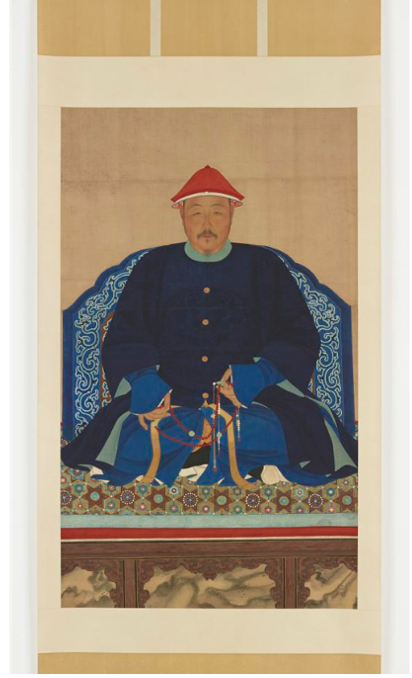
Initially, our primary issue was Creative Commons licensing for digital images of the paintings. Wikimedia Commons only accepts freely licensed content or content that is in the public domain. While the Smithsonian is in the process of marking materials without copyright and other restrictions with a CC0 license in support of our Open Access initiative, not all collections have been fully researched and updated. Many of the ancestor portraits have not yet been assigned a CC0 license. However, some of the images for these paintings were previously uploaded onto Google Arts and Culture, and many Wikipedians had already grabbed those images and uploaded them to Wikimedia commons. Our solution was to work with the image set that was cleared by the National Museum of Asian Art for CC0, as well as the previously uploaded images, and then describe the paintings we could not use with a set of core and extended Wikidata properties.
Step 1: Creating sitter Wikidata item identifiers (Q#s) and pages
We began by creating Wikidata pages for the people represented in our portraits, or sitters. Early in the process, members of the Wikidata team decided on a core-properties to be used for sitters. These core properties, known as P numbers, correspond to basic biographical data that help to describe the people represented in our paintings.
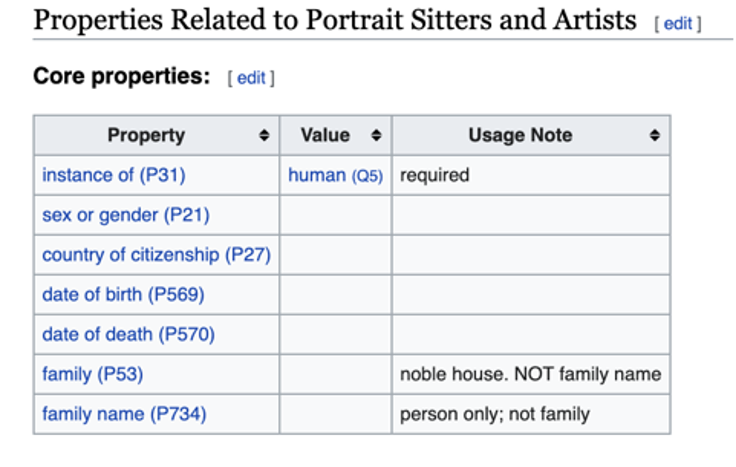 Screenshot showing core property fields of portrait sitters and artists
We grabbed as many extended properties as we could find through our research. This included additional biographical information about familial relationships, birth, death, location, accomplishments, rankings, etc.
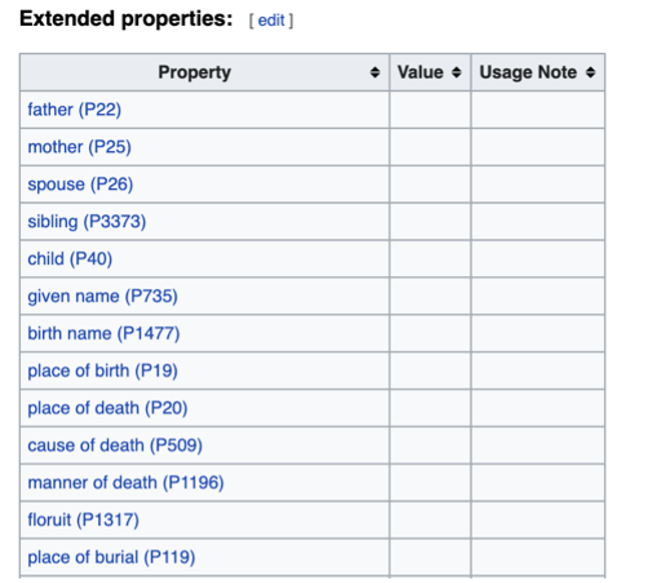 Screenshot showing extended property fields of portrait sitters and artists.
Step 2: Creating Painting Q#s/pages
The next step was to create Wikidata pages for the paintings themselves. This establishes them as separate independent entities, using an entirely different set of core and extended properties related to artwork. Information was taken from public-facing Smithsonian sites like the National Museum of Asian Art collections website and the Smithsonian Collections Search website. These properties are common descriptors for museum catalogs and curatorial notes, creating a shared vocabulary across institutions.
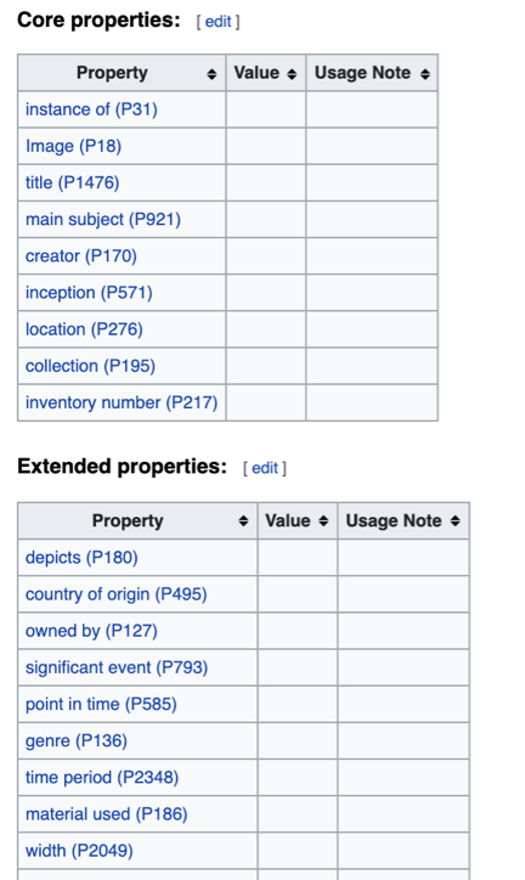 Screenshot showing core and extended property fields of paintings.
Step 3: Uploading to Wikimedia commons
Example 1: Previously uploaded portraits
Once the team had created Wikidata pages for each of the sitters and each of the paintings, I started by using painting titles and sitter names to comb through Wikimedia Commons. Once found, I used the Template:Artwork to augment existing data in the item summary on the commons page. The template includes much of the same information as our core properties and allows us to redirect searchers to our own catalog for better images and more information. This is particularly important because these portraits were often wrongly attributed to other collections outside of the Smithsonian.
 Screenshot showing blank Template:Artwork
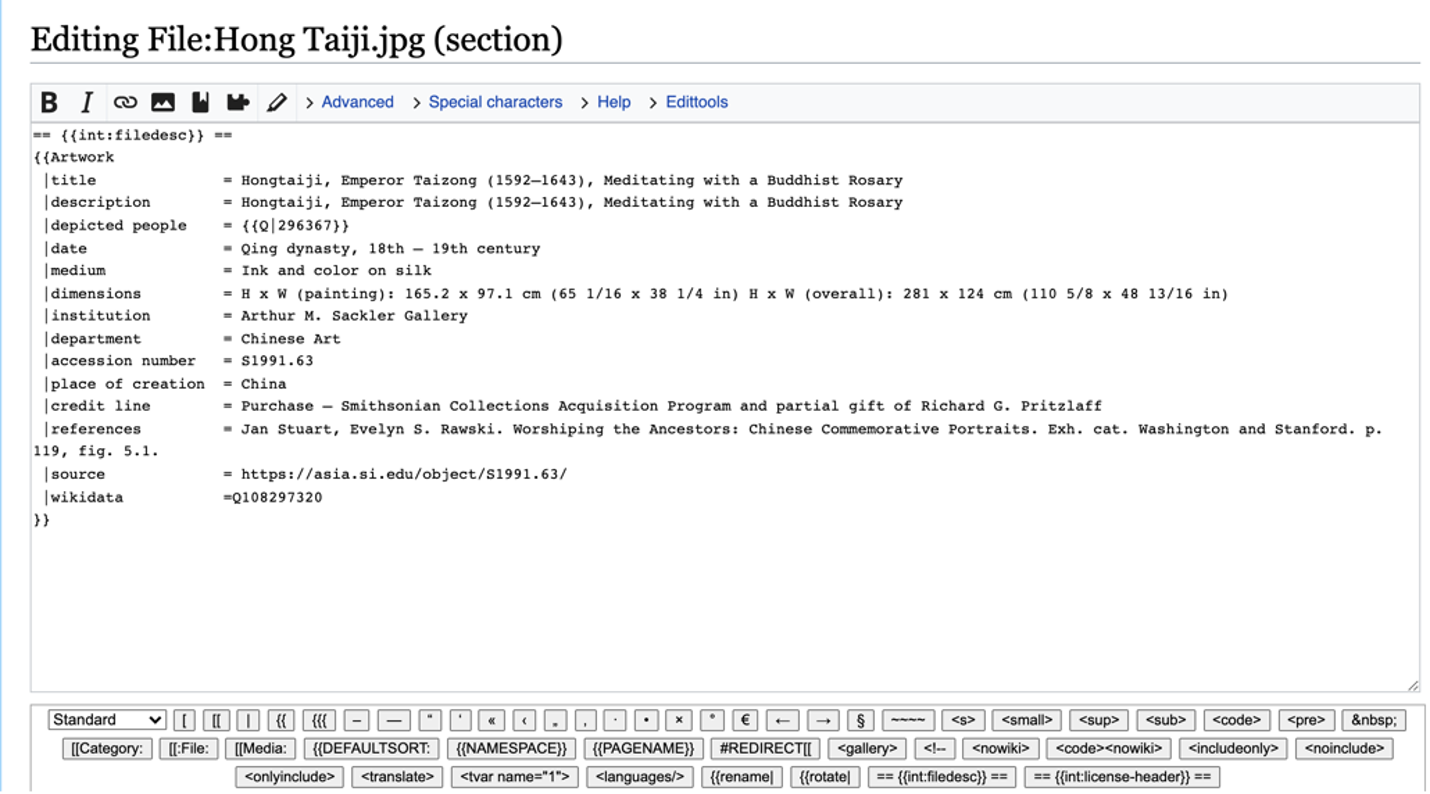 Screenshot showing template with information from Collection Search Center notation
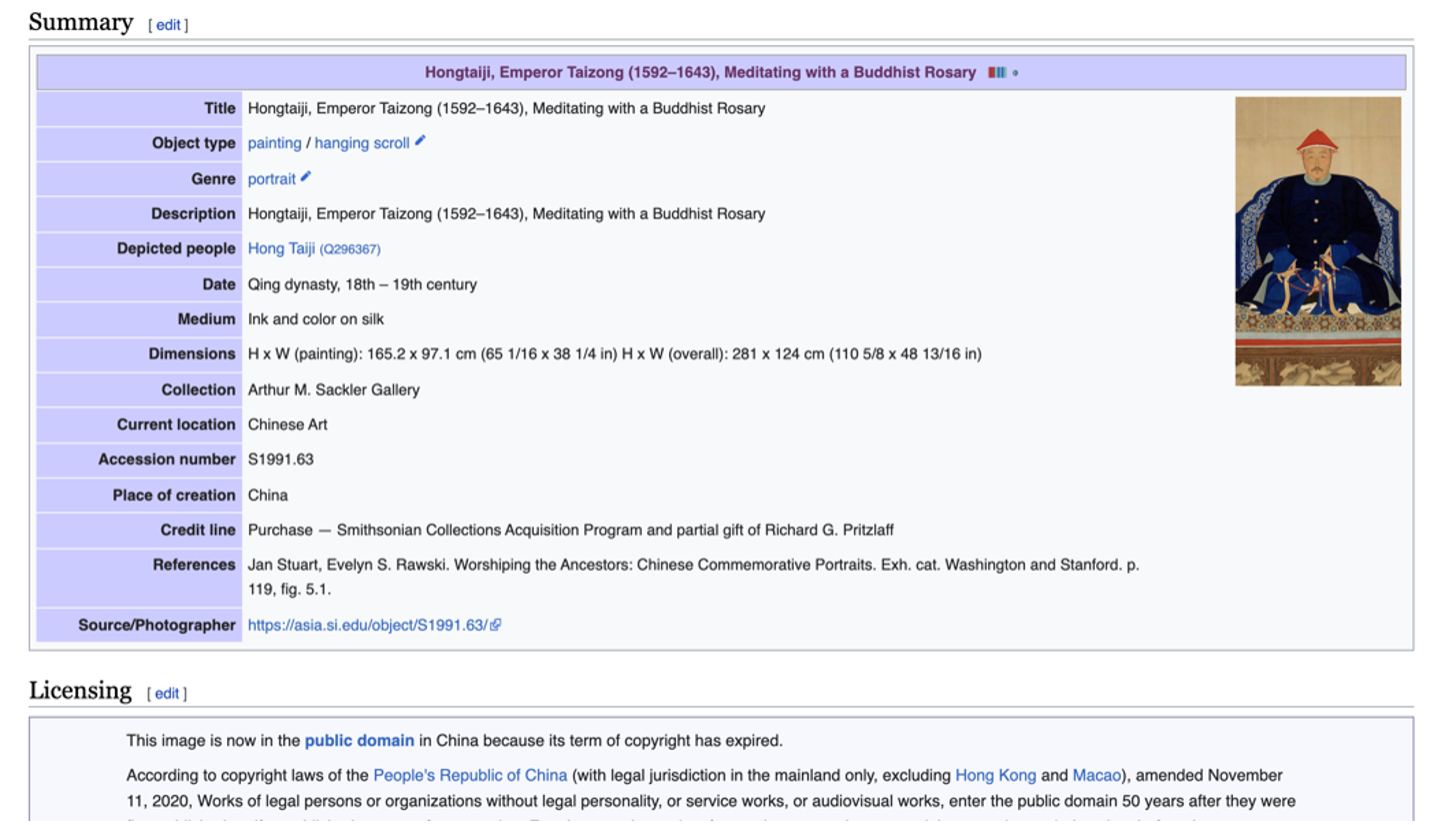
Notice that the inclusion of the Wikidata Q# for the sitter (Q|296367) populates a hyperlink to the Wikidata sitter page!
Example 2: Uploading new images to Wikimedia Commons
First, I needed to grab the hi-res images from the public-facing Smithsonian collections sites. Again, I only uploaded those images that already had a CC0 license. Using the Commons “Upload File” tab, I would upload them image, and then enter in the corresponding web address for the image, as well as any available artist information and the CC0 license.
The next step was to add basic description information. I kept the description short, usually including the title, time period, medium and accession number.
 Screenshot showing basic descriptive date for image in Wikimedia Commons.
The following page asks for optional metadata using Wikidata P#s. Again, I referred to the core and extended properties we established for the painting Q#s. Wikimedia commons links this structured metadata back to Wikidata, pulling relevant Q# values where applicable. Users need only search for the value in the box provided.
The last step was to edit the summary info box on the resulting commons page for the image using template:artwork again. You can view the sample completed page here.
Step 4: Linking the Pages
After the Commons page is created, I linked the Commons images to both the paintings Q#s and the sitter Q#s through Wikidata. In both pages, I added the statement Image and searched for the title of the uploaded file. This can sometimes pull a lot of different images, especially since we were dealing with many important and well-known historical figures who have multiple likenesses in existence. It was best to actually save and input the exact file name. The result of adding the image to these pages is that it links the Wikidata page to the Commons page, and allows searchability through either portal. Ideally, rather than having to enter this data by hand, it would be better if future updates to these platforms could pull the structured data in from Wikidata and populate it in the Wikimedia Commons.
The end result of this project is that all of these pages “talk to each other” because of structured data and provide new discovery access points for objects in Smithsonian collections. By its very nature, new and improved access and discovery mechanisms are possible, connecting objects (works and persons) found in the Smithsonian collections and beyond. In searching through English (and sometimes Chinese) language Wikidata and Wikimedia Commons you can now find the portraits, sitters, and their descriptive metadata. More importantly, we provide the accession numbers and links to our Smithsonian-hosted collections sites to help researchers find and use our collections.
Join Us for Adopt-A-Book Events in April
Mark your calendar for this year’s Adopt-a-Book events! Join us on April 20th and April 26th, 2022 for a closer look at our collections and the opportunity to support their preservation and acquisition.
Each year, Smithsonian Libraries and Archives (formerly Smithsonian Libraries) staff organize Adopt-a-Book events where items are “put up for adoption,” and interested supporters can adopt an item by way of a donation. The adopted item serves as an emblem of their commitment to that backing. Many who choose to adopt an item pick a book or archival document that speaks to their personal interests, like a dedicated home baker who might adopt a historical cookbook, or an avid gardener who might choose an illustrated botanical catalog.
In the past, events have been held in person, and attendees were able to see the items available to be adopted up close and to hear about the books directly from Smithsonian staff. Last year, in a virtual format, the Smithsonian Institution Archives joined the events for the first time, bringing our collections from the Smithsonian’s history to Adopt-a-Book audiences.
The Smithsonian Institution Archives is taking the lead for 2022’s virtual events! With that role, we are also expanding the types of items up for adoption. Our archival collections (and our library collections, for that matter) don’t hold just books—and not just paper-based items, either. This year we are excited to include photographic collections and audiovisual materials alongside field journals, correspondence, and botanical illustrations from the Archives, as well as a variety of books from eight library locations.
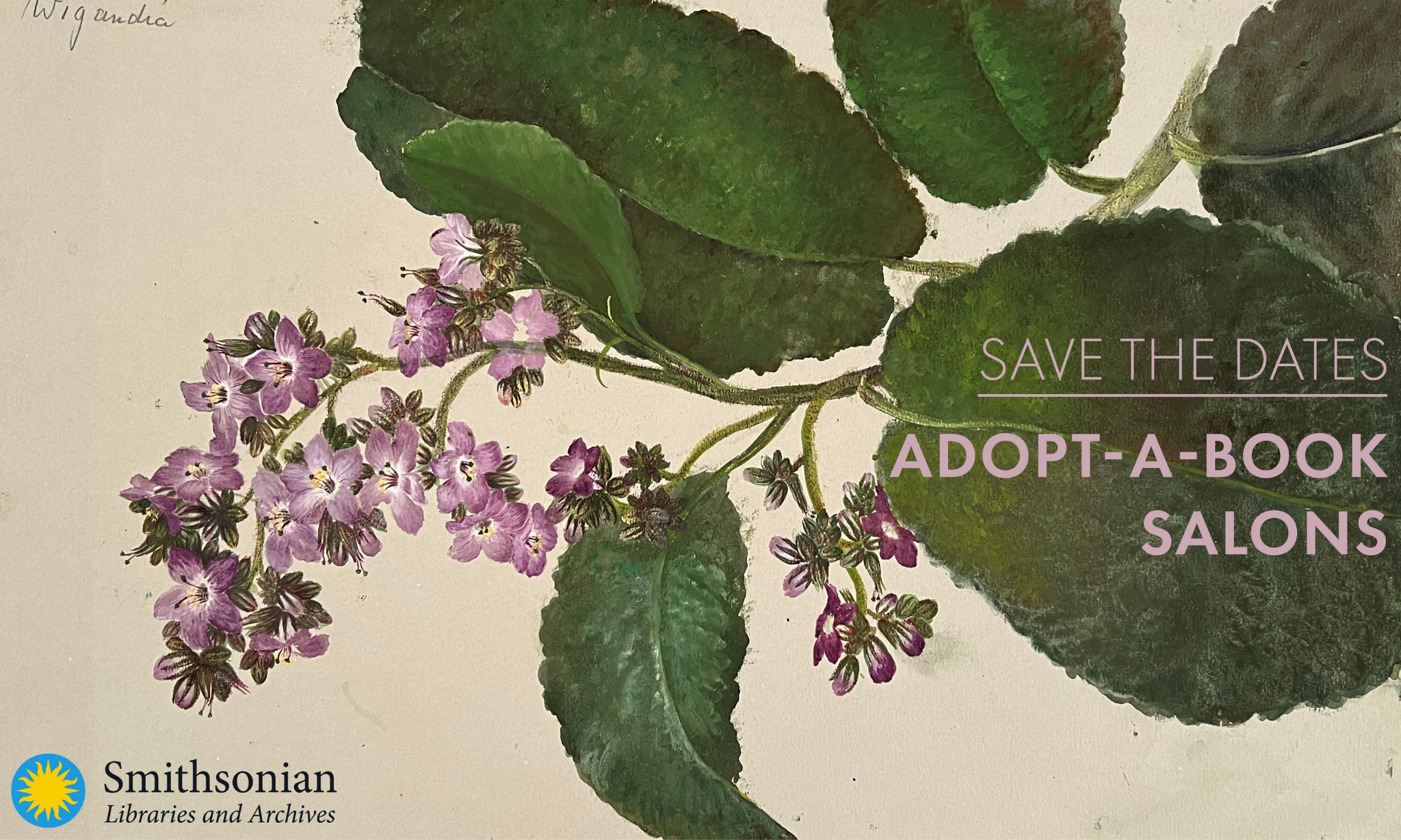 Adopt-a-Book Salons Save the Date graphic, featuring Adelia Gates botanical illustration, Smithsonian Institution Archives, Record Unit 7312.
One of the items I am most excited to feature from the Archives is a drawing from the architectural records of the Smithsonian. Done on translucent paper by the architectural firm Babb, Cook & Willard, the drawing was used to sketch out design elements of an elevator in Scottish-American steel tycoon and philanthropist Andrew Carnegie’s turn-of-the-century New York City mansion, now the Cooper Hewitt Smithsonian Design Museum. The elevator depicted was among the first of its kind in New York residences and is now kept in the collections of the National Museum of American History. The drawing is also interesting because of a large ink spill that obscures part of the detail, which has caused large losses and widespread embrittlement of the paper. We don’t know how the ink got spilled over the drawing, but it’s fascinating to imagine Carnegie consulting the elevator’s details at his desk and becoming distracted or startled—knocking over his inkpot in the process!
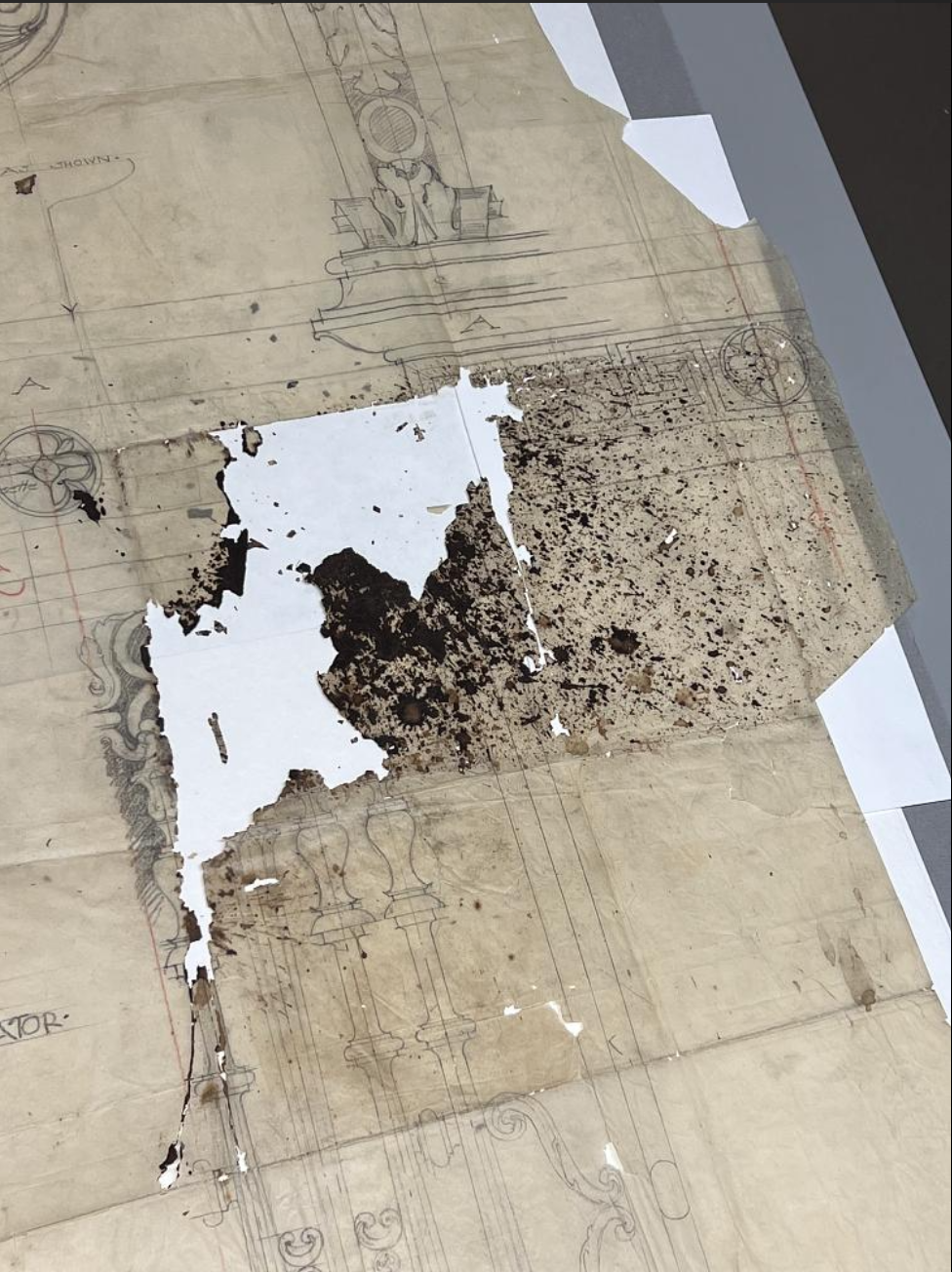 The large area of loss, or missing drawing, in this elevator diagram appears to have been caused by an ink spill. Smithsonian Institution Archives, Record Unit 637. Image courtesy of William Bennett.
Some of the items available for adoption have been previously featured on The Bigger Picture. Check out our related resources below for links to posts describing those collections!
We are excited to host two different evening opportunities for members of the public to learn more about our collections and have an opportunity to adopt something that catches their eye. The breadth and depth of the Libraries and Archives collections will be on display, and we will celebrate the ways that they intersect and complement each other as they tell the story of the United States and of the larger world. Come join us!
Wednesday, April 20, 2022 at 5:30 PM
Tuesday, April 26, 2022 at 5:30 PM
Related Resources
- “Navigating Treatment of the Dawson Map” by William Bennett, The Bigger Picture, Smithsonian Institution Archives
- “Aww: Cute Baby Animals and Other Field Book Surprises” by Mignonette (Mig) Dooley Johnson, The Bigger Picture, Smithsonian Institution Archives
- “To Post-it or Not to Post-it” by Kirsten Tyree, The Bigger Picture, Smithsonian Institution Archives
- “The National Park that Never Was” by William Bennett, The Bigger Picture, Smithsonian Institution Archives
Mid-19th Century Reaction to a Laundry Invention
Today the task of laundry is simple. We load machines with clothes, add laundry detergent and softener, and check settings. But essentially, the modern washing machine and dryer do the job for us. However, in the mid-19th century, long before our modern appliances, it was not so easy. Laundry was time-consuming and labor-intensive, so perhaps this pamphlet describing a “really wonderful invention” sounded intriguing.
It proposed a method “to accomplish a large family wash before breakfast” without machines and without rubbing. The folded pamphlet is titled Twelvetree’s Washing Pamphlet (ca 1850) by H. Twelvetree, and as we can reason from one of the testimonials found within, H. Twelvetree was most likely Harper Twelvetree (or Twelvetrees).
It does not provide step-by-step instructions, details, or illustrations to describe this new method for washing clothes. Instead, it provides only general information about the plan along with testimonials and references of those who tried it. We might call this folded pamphlet an advertising circular, as it encourages mid-19th century readers to inquire for more information and to obtain the details from H. Twelvetree.
 H. Twelvetree, New York, NY. Twelvetree’s Washing Pamphlet (ca 1850), front cover/unnumbered page [1], general information about washing plan.Since this particular item does not share that detailed information, we might be wondering a few things. What can this advertising circular reveal about the plan itself? How can a “large family wash” be accomplished before breakfast in the mid-19th century? And what did people at the time think of this idea?
Twelvetree’s Washing Pamphlet (ca 1850) explains that this method was discovered by Professor Leibig who, for a sum of money, gave permission for the proprietor, H. Twelvetree, to use it. The washing plan combined “economy of time and money, with safety and simplicity.” Ordinary individuals, high officials, and institutions were already using it. There is also a mention that the washing plan had been tested by hundreds of editors of newspapers and periodicals, including some who are listed as references in the list below.
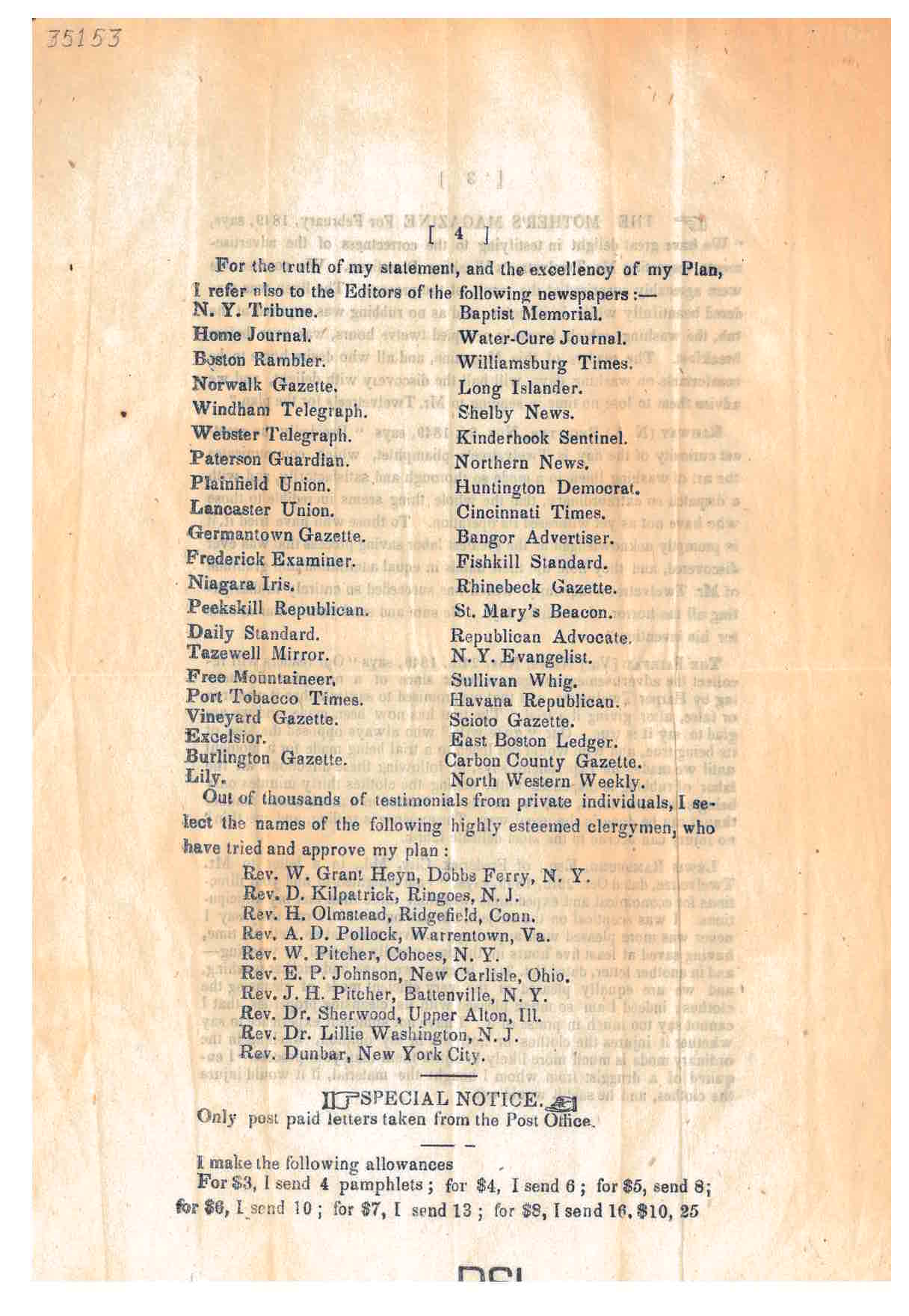 H. Twelvetree, New York, NY. Twelvetree’s Washing Pamphlet (ca 1850), page 4, list of references including newspaper editors and clergymen.
The pamphlet shares a few basic components of the plan. It required no rubbing, no machines, and no extra washing utensils. Previous knowledge was not necessary. It required water, but the substance used for washing was cheaper than soap. It did not include acid, turpentine, or camphene. It did not have an unwelcome odor. And, as the pamphlet claims, it would not injure those performing the wash or destroy the fabric being washed.
There are also two pages of testimonials which provide more information, particularly in regards to how people felt about using this new method. Similar emotions and feelings are found throughout the testimonials. Several mention their initial hesitation or skepticism but then share their surprise, delight, and satisfaction with the results. They mention advantages for their households, such as labor-saving and time-saving benefits in addition to the plan’s ability to efficiently and thoroughly wash clothes.
One of the testimonials is an excerpt from The Fairfax [Va.] News printed on November 24, 1849. It mentions an advertisement from the previous week in which they announced their trial of “a new plan of washing by Harper Twelvetree.” It continues by stating:
“The trial has now been made, and we are glad to say it is true. Our “gude wife,” who always opposed the idea of its being true, and who would not listen to a trial being made for a moment until we made the experiment, says, by following these directions, all the labor of rubbing is dispensed with, boiling the clothes thirty minutes only being substituted for it, and the article is washed in a much neater manner than it can be done in the usual way…”
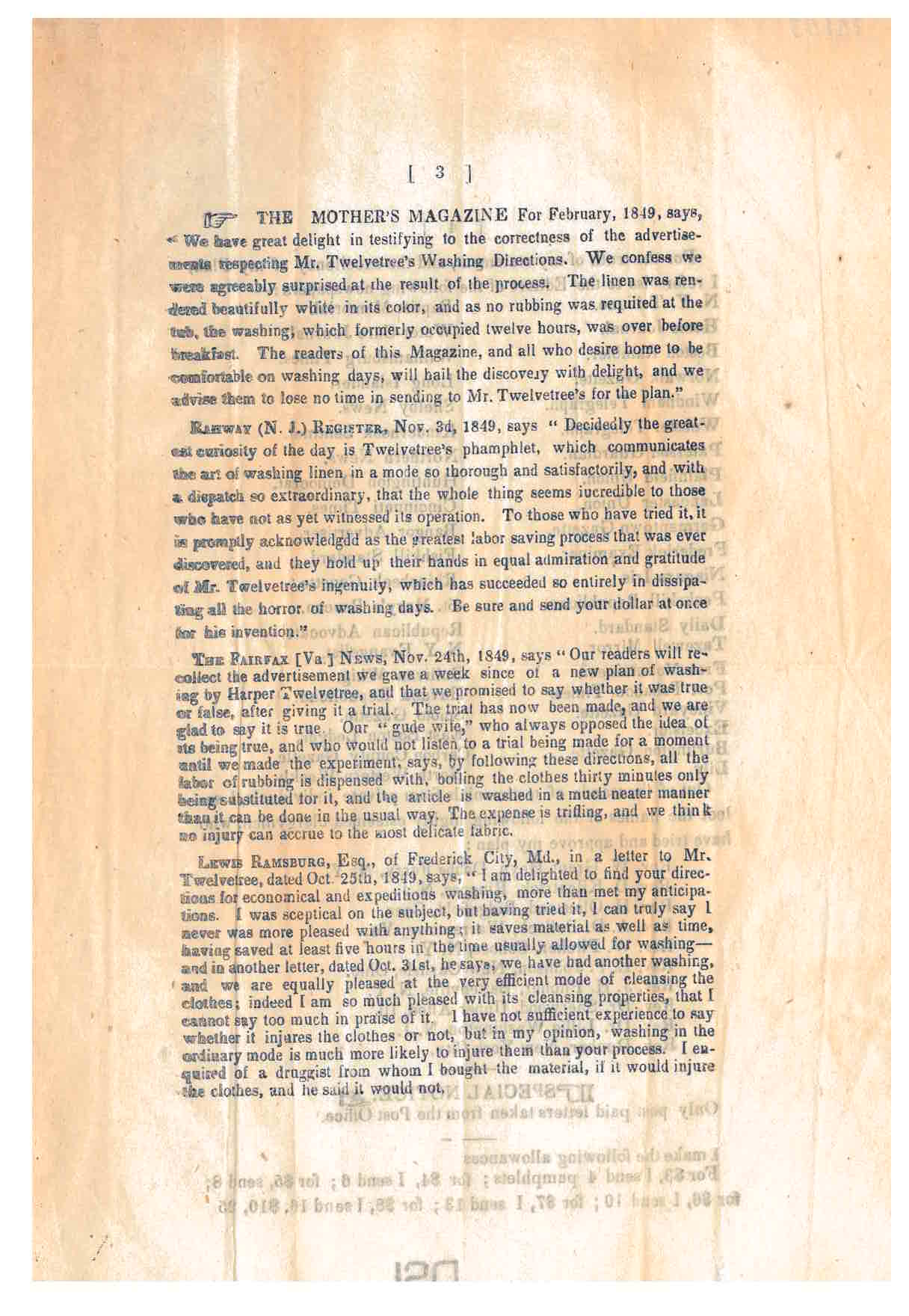 H. Twelvetree, New York, NY. Twelvetree’s Washing Pamphlet (ca 1850), page 3, testimonials of those who used “Mr. Twelvetree’s Washing Directions.”
The main purpose for this new idea might have been to wash clothes, but as some of the people found, there was a hidden benefit as well. On the first page, the pamphlet briefly suggests saving both soap and labor by re-using the same water for cleaning the house. Even though it does not go into great detail, we learn a bit more from a testimonial on the next page.
On March 13, 1850, Clementina Collier of Albany writes about an unexpected result of accidentally spilling water that had already been prepared with the ingredient to wash clothes. Due to this accident, Clementina Collier learned “that part of the floor on which the water was spilled looked much whiter than usual.” The testimonial continues:
“This induced me to try your plan for flooring, and I found it to succeed so well that I now have all my housecleaning done that way. It saves soap and the labor of scrubbing, and makes the wood of a better color. My plan is, after I have washed my clothes, to save the water, which then answers the purposes for flooring, wainscoting, &c…”
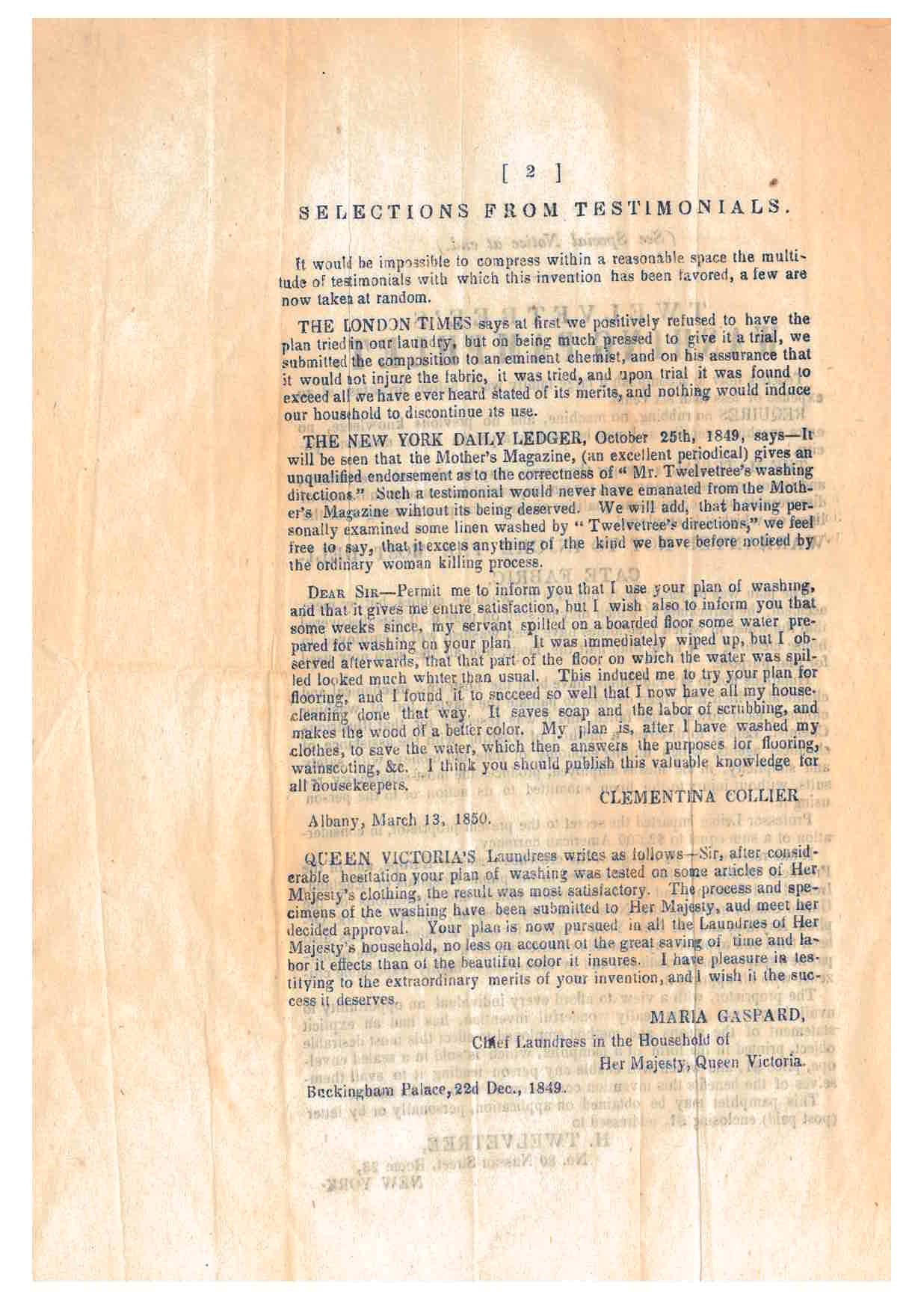 H. Twelvetree, New York, NY. Twelvetree’s Washing Pamphlet (ca 1850), page 2, testimonials of those who used “Mr. Twelvetree’s Washing Directions.”
This particular item might not describe the laundry method in great detail, but as an advertising circular, its purpose was to arouse curiosity in the hopes that people would want to learn more. It certainly inspired our curiosity and sent us on a hunt to learn more about Twelvetree’s washing tools. We found this image of a “Twelvetrees’ Villa Washer” from Cook’s Handbook for London (1881) from the University of Michigan’s collections.
 Advertisement for Twelvetrees’ Villa Washer, Cook’s Handbook of London (1881). Courtesy of University of Michigan.
Twelvetree’s Washing Pamphlet (ca 1850) by H. Twelvetree is located in the Trade Literature Collection at the National Museum of American History Library. Interested in learning more about laundry in the 19th Century? A past blog post highlighting a Thomas Bradford & Co. trade catalog provides a glimpse into washing machines and related equipment in 1878.
Turning a Quarantine Into a Journey With Xavier de Maistre
 Porthole of “Journey Round My Room” by Xavier de Maistre, photographs and special edition box by Ross Anderson, Arion Press, 2007
In a love letter to his apartment, Xavier de Maistre writes of his walls, windows, and furniture in Journey Round My Room, as if he would rather be there than anywhere else in the world. Joyful descriptions of the objects and activities in his room, such as the “quiet pleasure conveyed to his soul” during the act of dusting a painting, or the ruminations on his bed and its “agreeable colors” (rose and white) that add “not a little to the pleasure” of lying in it. As he alights his focus on particular objects, he recounts stories and memories they evoke, such as an entire chapter dedicated to just his traveling coat, “made of the warmest and softest stuff I could meet with. It envelops me entirely from head to foot, and when I am in my arm-chair, with my hands in my pockets, I am very like the statue of Vishnu one sees in the pagodas of India.”
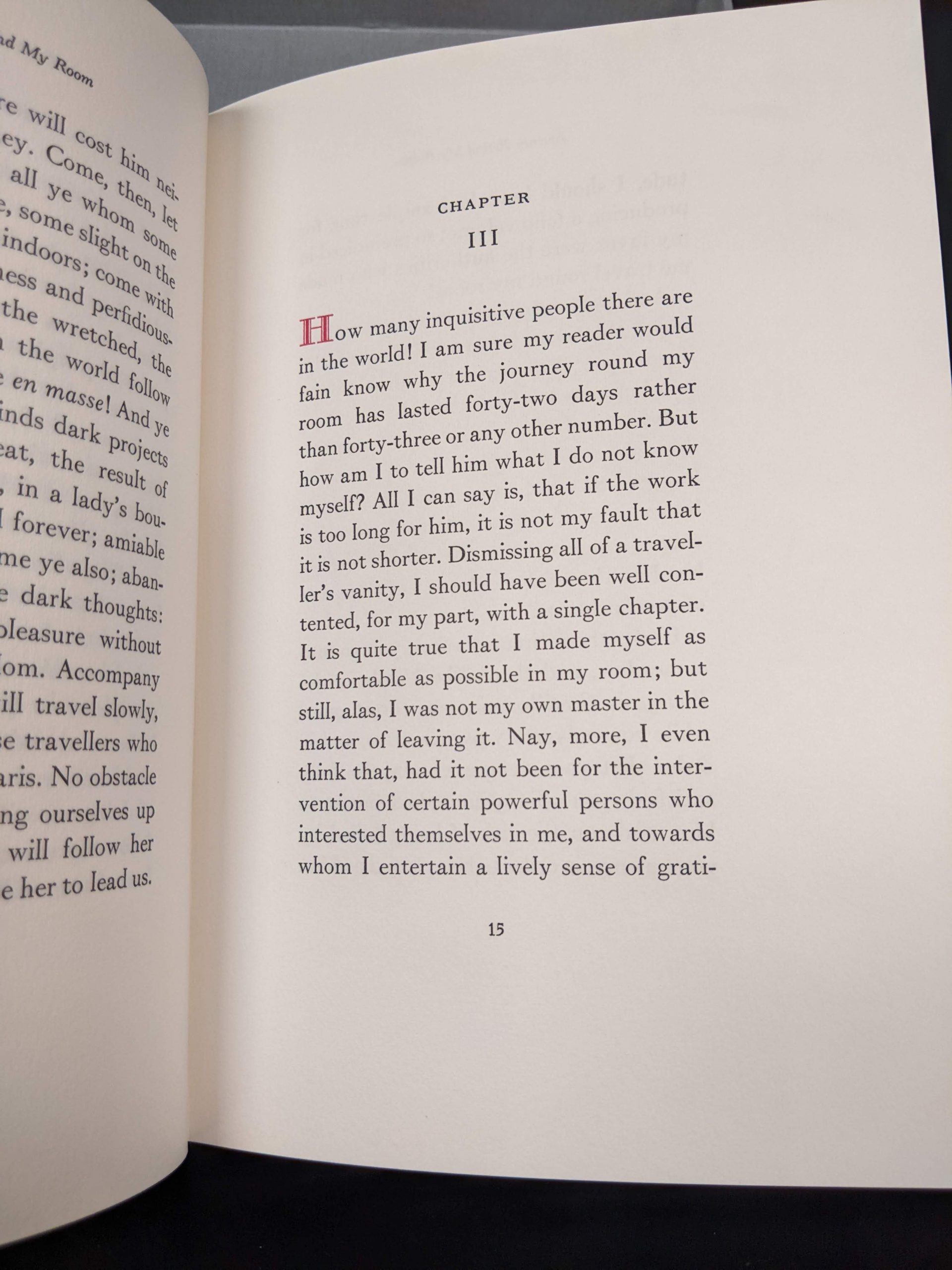 A journey of 42 days, Chapter III, “Journey Round My Room” by Xavier de Maistre, photographs and special edition box by Ross Anderson, Arion Press, 2007
De Maistre’s work is nearly 200 pages of such contented observations of his small space. As the world has spent more than two years enmeshed in the COVID-19 pandemic in periods of isolation in our homes, Journey Round My Room may feel like a familiar experience in 2022. However, this work was written in 1790, during the time of the French Revolution, by a soldier sentenced to house arrest for 42 days, a literal quarantine.
A young soldier, de Maistre engaged in an illegal duel, and as punishment, was placed under house arrest in Turin, seeing only the servant who brought his meals (and dressed him and made his bed—quite decadent.) It was during this confinement to just his own room that de Maistre wrote this love letter to his surroundings. Likely an attempt to thwart boredom and unhappiness at his situation, his writings were a whimsical travel diary of his close quarters, published by his brother in 1794 as Voyage Autour de ma Chambre.
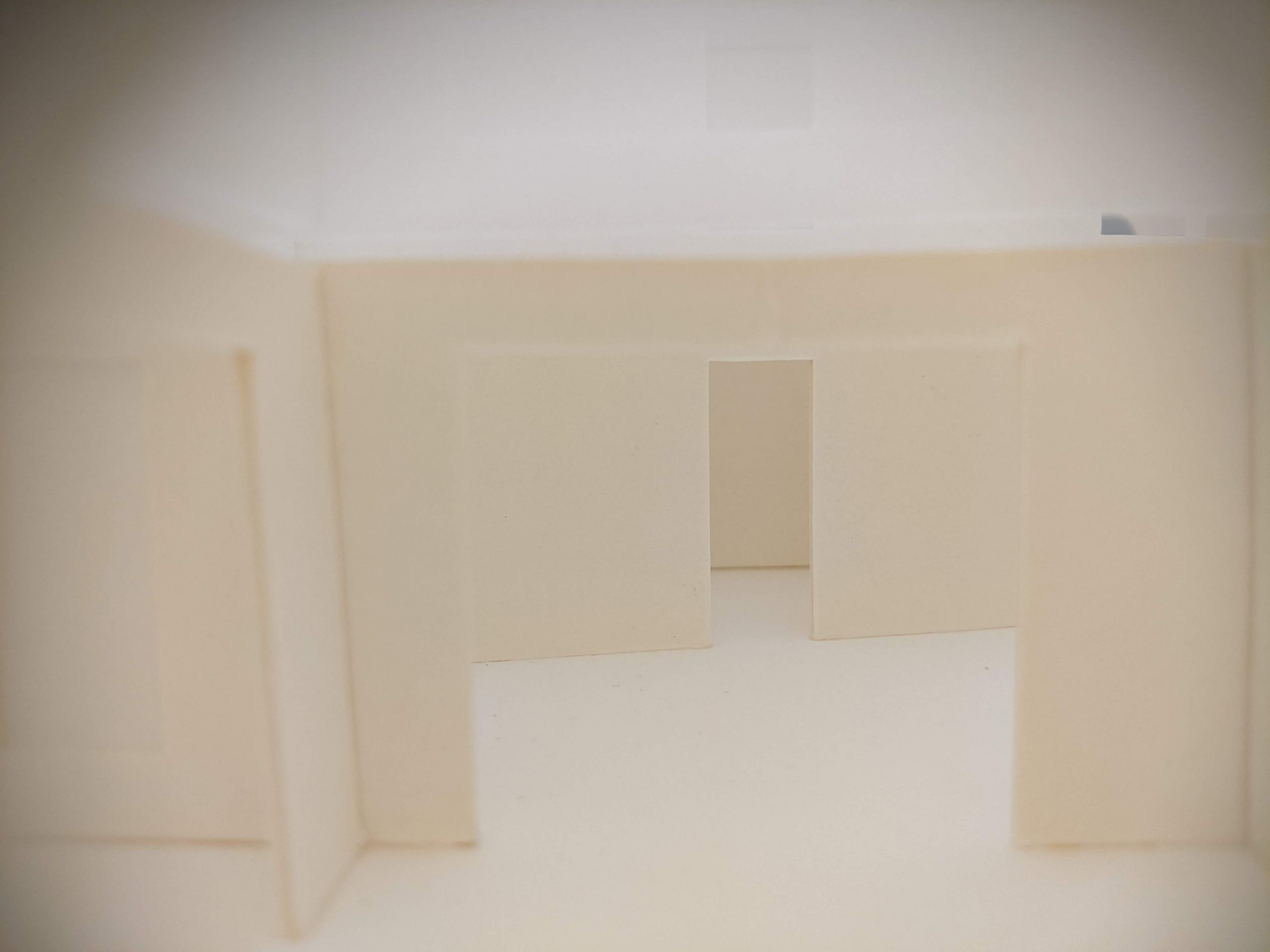 “Rooms” inside the shadowbox model of the special edition cover, “Journey Round My Room” by Xavier de Maistre, photographs and box by Ross Anderson, Arion Press, 2007
The Smithsonian Libraries and Archives has a beautiful copy of the 2007 Arion Press edition of Journey Round My Room, as a part of the recent gift to the American Art and Portrait Gallery Library from collector Dr. Ronnyjane Goldsmith. The book is bound in pink and white cloth, a nod to the “agreeable” rose-colored surroundings of de Maistre himself. Ross Anderson contributed more than a dozen ghostly photographs of a generic room, using a low-resolution cell phone, and printed in gray tones on translucent paper.
Of particular note for the Smithsonian’s copy is the limited special edition’s housing—a 3-dimensional apartment for the viewer to “journey” through, via portholes along the sides. Similar to a shadowbox, inside is a small white model, and each peephole allows a restricted viewing of the tiniest doors, windows, and walls of de Maistre’s imagined rooms. The cover forms the “ceiling”, made of translucent plexiglass that allows diffused light to make interesting shadows on the halls and doorways. Only 30 of the edition with this special box were created, designed by Anderson, himself an architect. The work adds to the Smithsonian’s collection of American fine press publications and is an amazing example of creativity in bookbinding.
 Box and bound book, “Journey Round My Room”by Xavier de Maistre, photographs and special edition box by Ross Anderson, Arion Press, 2007
De Maistre’s reflections during a period of solitude provide a timely addition to our own, a strangely prescient reminder to take joy in simple observations, and that there are many ways to travel, not the least of which is through one’s imagination.
The Hewitt Sisters’ Diaries: Conservation and Digitization Behind-the-Scenes
This post was written by Katie Wagner, Senior Book Conservator, David Holbert, Digital Imaging Specialist, and Jacqueline E. Chapman, Head, Digital Library and Digitization. Learn more about the diaries of the Hewitt Sisters in a previous post by Jennifer Cohlman Bracchi.
In February 2020 the Smithsonian Libraries and Archives was awarded an American Women’s History Initiative grant to conserve and stabilize the 23 diaries kept by the Hewitt sisters during their travels. These diaries would eventually be featured in the Cooper Hewitt, Smithsonian Design Museum’s exhibition, Sarah and Eleanor Hewitt: Designing a Modern Museum.
To support their long-term preservation, research use, and future exhibition, the diaries would be stabilized and rehoused by a contractor focused exclusively on this detailed conservation work. Afterwards, the items would be digitized by our Digitization team to provide broad access and to prevent unnecessary handling of the fragile objects.
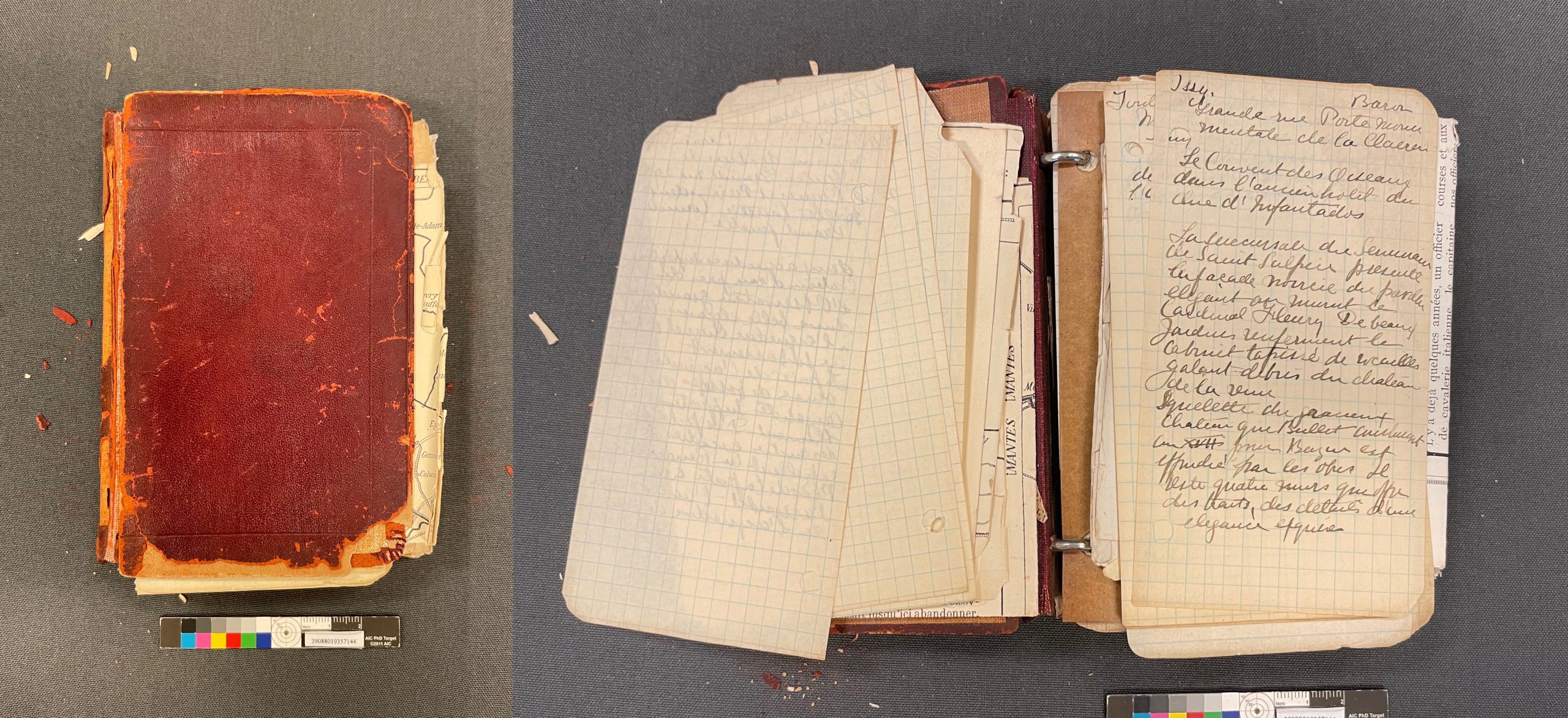 Left: A Hewitt Sisters’ diary binder, displayed closed prior to treatment. Right: A Hewitt Sisters’ diary binder, displayed open prior to treatment
What started as an exciting and straightforward project for a contractor to work on-site alongside our Preservation team, became a more challenging operation when just a month later pandemic safety protocols came into place.
To complicate matters, prior to the pandemic, six of the 23 volumes had already been sent from their usual location at the Cooper Hewitt, Smithsonian Design Library in New York City, to our Book Conservation Lab (BCL) in Landover, MD in preparation for the exhibition. With the closure of our on-site facilities during the pandemic, retrieving and relocating the remaining volumes to the BCL was not immediately possible.
The decision was made to hire two contractors, one near the Landover location and one in New York, to conserve the diaries in their own studios, prioritizing the six diaries needed for the exhibition. The complex physical nature of these diaries demanded an innovative approach to rehousing them to maintain the integrity of the original format.
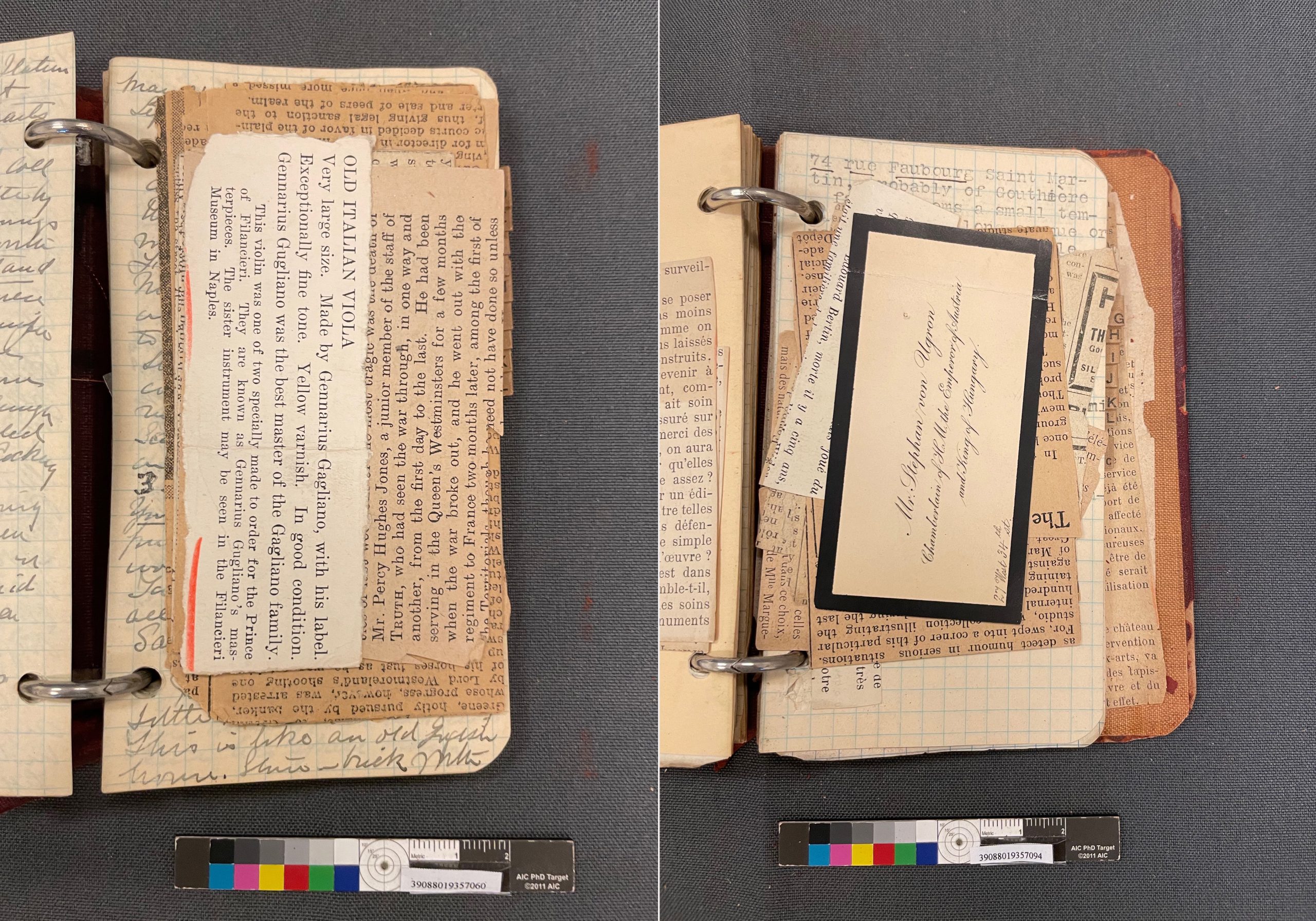 Left: An example of ephemera found in one of the diaries, prior to treatment. Right: A calling card found in a diary, prior to treatment
Most of the diaries were housed in commercial two-ring binders covered in leather that had degraded over time. Covers were detached, and in some cases, missing. The diaries included many scraps of ephemera from acidic newspaper clippings to calling cards, to sketches. The inclusion of these items caused some of the binders to become overfilled leading to detached pages.
Smithsonian Libraries and Archives conservators worked closely with the contractors to ensure that both the pages and the ephemeral pieces maintained their original order for research purposes, preserving both the physical pages and pieces as well as the intellectual content and associations between the ephemera and the diary pages.
Each page of each diary was placed in Mylar L-sleeves and bound in a post-binding. This allowed us to retain the original order and for researchers to readily access the volumes without having to touch the fragile pages directly. The ephemeral pieces were flattened and stored separately (as many were too large for binding once unfolded) and all the elements of the original binding were housed in an acid-free double tray box.
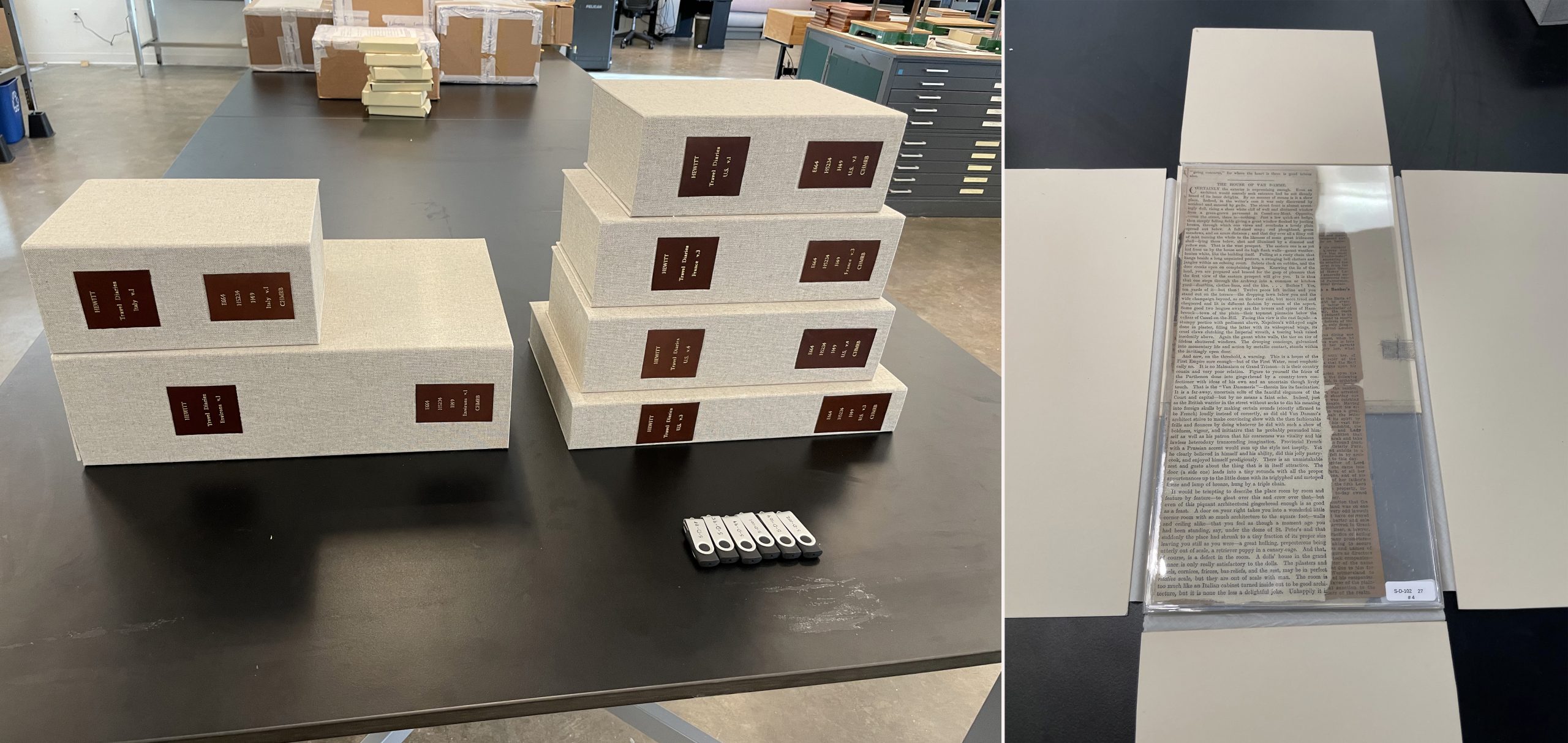 Left: The six Hewitt Sisters’ Diaries after treatment, in new clamshell box housing, with 6 thumb drives of the photos and documentation of the conservation process. Right: An example of some of the ephemera from the diaries flattened and in mylar sleeves after treatment in a four-flap enclosure
After treatment, the diaries were ready for their time under the cameras and care of our Digitization team at our Imaging Center (IC) located in the same building as our BCL. A new challenge arose: digitization could not begin until November 29th, and the diaries needed to be back at the Cooper Hewitt by December 17th. With special permission from our Emergency Operations Group, and with numerous safety protocols in place, Digital Imaging Specialist David Holbert returned to the IC to complete this phase of the project. With extensive treatment photos and notes from the contract conservator, we were able to prepare for the imaging process in advance.
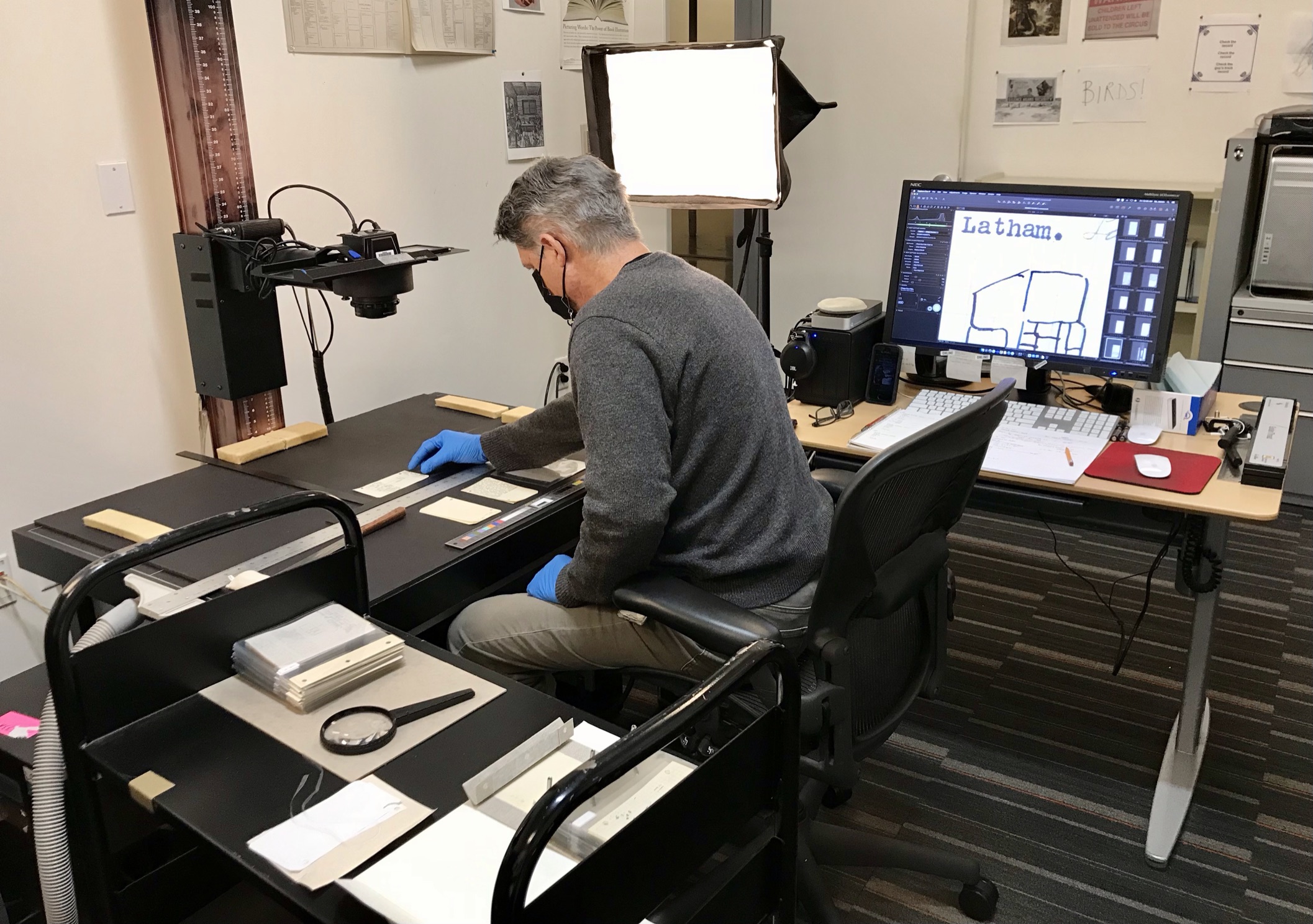 David Holbert in the process of digitizing the diaries at the Imaging Center
Due to their rarity and fragility, the diaries were digitized on ‘copy stand’ equipment, with a camera attached to a motorized column that can be raised and lowered. The majority of the pages were approximately the same size (6” x 4”). This allowed for an efficient workflow, with limited adjustments to the camera position. Once the correct height on the column was set for a captured image to meet resolution requirements, and in proper focus, the camera could remain at the same location for imaging each diary page.
Capturing the front and back of each page, while monitoring for focus, went quickly. But, because the pages were unnumbered, extra care needed to be taken to ensure that the original order was maintained during this work. The careful removal and re-insertion of each fragile page out of and into their protective Mylar L-sleeves proved to be the most time-consuming part of the process.
 A treated diary mid-imaging, showing the new post binding and mylar sleeves.
The oversized ephemera, pre-flattened and also housed in Mylar sleeves, were set aside and imaged separately after completing the more standardized diary pages. More camera adjustments were needed for this work, with ephemeral pieces of varying size.
The image capture process took roughly 80 hours and was completed in time for the diaries to make their return trip to New York for final exhibition preparations and installation. However, the images still required post-production work before they could be uploaded for online viewing. The images needed to be cropped, the RAW files processed into TIFFs, and page-level metadata applied to each image.
Importantly, because the original placement of these ephemeral pieces within each diary had been recorded in the conservation process, the digital surrogates of the diaries are able to reflect the original order and appearance of the diaries rather than their current housing. The digital images of each piece of ephemera were able to be inserted where the physical ephemeral pieces were originally found in each diary.
Post-production work and uploading the diaries’ digital surrogates to the Internet Archive and our Digital Library took another approximately 40 hours. All six diaries were available online by December 21st, and can be viewed in our Digital Library. In total, the diaries amounted to 1,816 images.
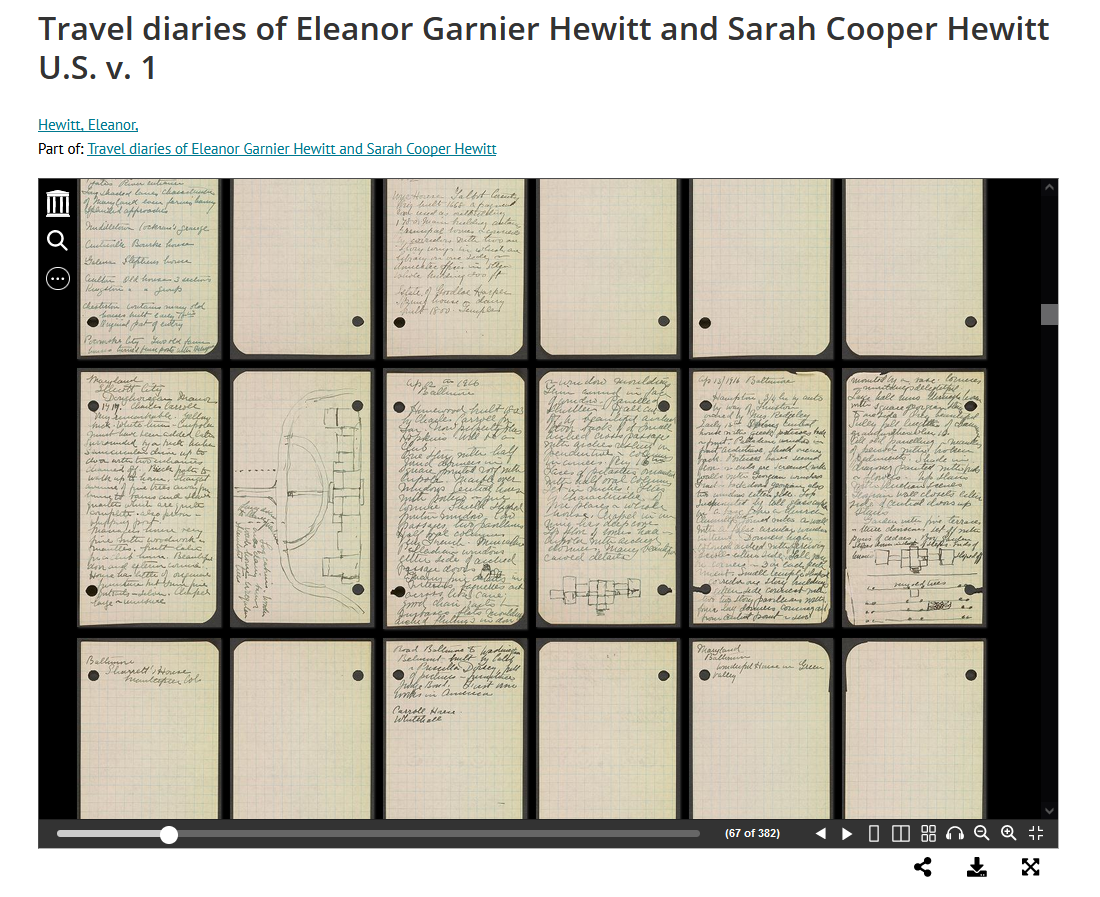 A thumbnail view of a selection of digitized pages from Hewitt Sisters’ Diary U.S. v.1 in our Digital Library
With these first six diaries now complete, we now turn to the remaining 17 which will go through a similar workflow for conservation and digitization. In the meantime, we are able to celebrate the opening of the Cooper Hewitt Museum’s exhibition where pages from the diaries are now safely on display.
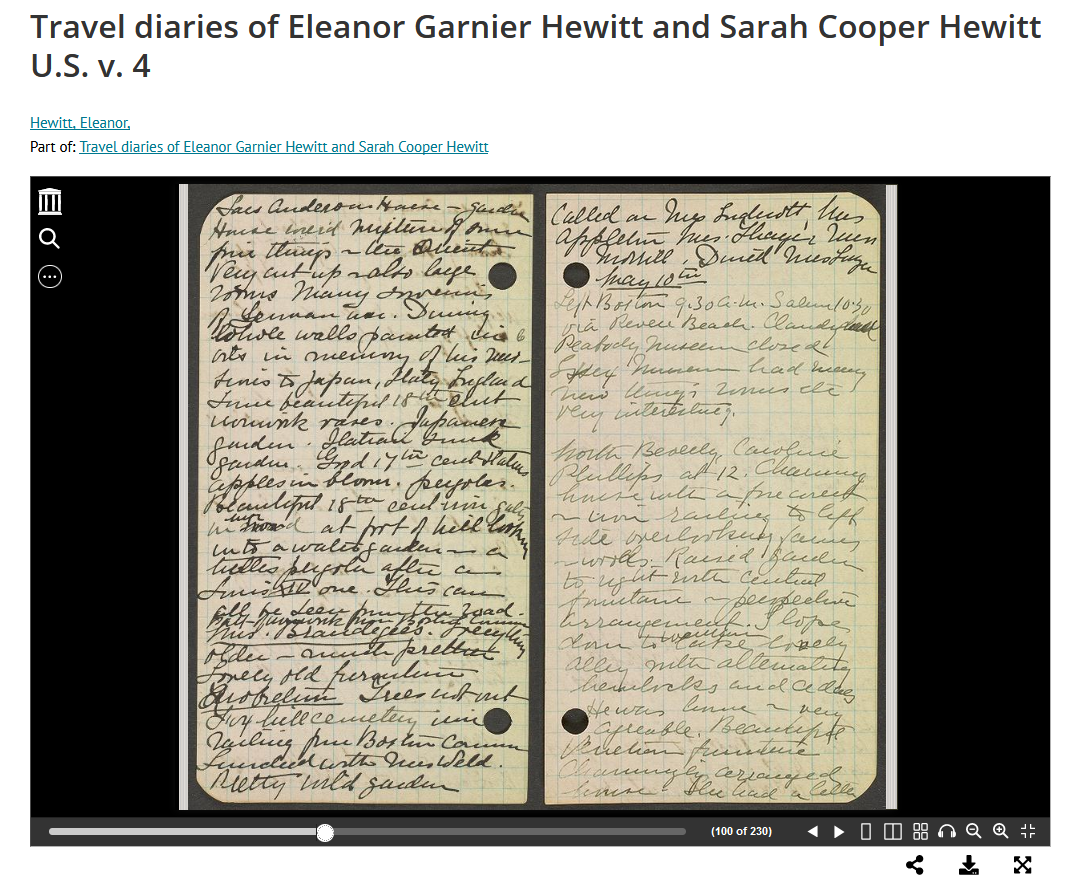 A view of the book-viewer experience of Hewitt Sisters’ Diary U.S. v.4 in our Digital Library.
Additionally, we have uploaded three of the diaries from this first batch of six to the Smithsonian Transcription Center where volunpeers (volunteer transcribers) will lend their skills and time to augmenting these images by providing searchable text, rendering them even more accessible. We look forward to sharing more diaries as the project continues, and hearing from readers, researchers, and volunpeers about their own travels through the sisters’ diaries, as we together unlock their contents and illuminate Sarah and Eleanor’s lives in their own words.
Gilded Age Girls: Exploring the Travel Diaries of Sarah and Eleanor Hewitt
Curious what might life have really been like for two wealthy, unattached New York City sisters at the turn of the 20th century? Fictional sisters Ada and Agnes from HBO’s new series, The Gilded Age, could have been inspired in part by real sisters, Sarah (1859-1930) and Eleanor (1864-1924) Hewitt. Also known as “Sallie” and “Nellie”, without them the Cooper Hewitt, Smithsonian Design Museum, and its library, would not exist. A new exhibition celebrating this remarkable duo, Sarah and Eleanor Hewitt: Designing a Modern Museum, includes select pages from their never-before-seen travel diaries. Even better than seeing those few pages in person, now you can travel right alongside these two intrepid women from the comfort of your own home through six recently digitized volumes of their diaries. Plus, you can help transcribe their contents to make them even more accessible to researchers around the world!
 Diaries of Sarah and Eleanor Hewitt, on display in Sarah and Eleanor Hewitt: Designing a Modern Museum.
Cooper Hewitt, Smithsonian Design Museum is the only Smithsonian unit founded by women. Granddaughters of industrialist and philanthropist, Peter Cooper (1791-1883), Sarah and Eleanor were pioneering women of significant means who shared their grandfather’s spirit of contributing to the greater good of American society through education. In 1895, the Hewitt sisters created the first museum of decorative arts and design in the United States—the Cooper Union Museum for the Arts of Decoration. They also started a night school that worked closely with the museum’s collection, establishing an active space for design education that helped shape the American aesthetic.
 Left: Photograph of Sarah Cooper Hewitt. Collection of Edward Parmee. Right: Portrait of Eleanor Garnier Hewitt. Cooper Hewitt, Smithsonian Design Museum, Bequest of Erksine Hewitt, 1938-57-737.
Sarah and Eleanor’s museum became what is now Cooper Hewitt, Smithsonian Design Museum. Since becoming a part of the Smithsonian in 1968, Cooper Hewitt has told the story of its founders, yet a key component remained locked away in twenty-three diaries held in the library. Due to their extremely fragile condition, access to the diaries was restricted and their contents were unknown. To help reveal what Sarah and Eleanor documented, in 2020, Cooper Hewitt Museum and Smithsonian Libraries and Archives received a joint Smithsonian American Women’s History Initiative award to support the conservation and digitization of Sarah and Eleanor’s travel diaries to make them truly accessible for the first time.
 Open page from Travel diaries of Eleanor Garnier Hewitt and Sarah Cooper Hewitt U.S. v. 1.
These small notebooks contain over four thousand pages of hand-written and typed notes mostly by Eleanor, recording their travels across Europe, the United States, and Mexico from 1913 to 1924. The Hewitt sisters kept detailed notes of their journeys to cities, towns, and villages as well as detailed descriptions and illustrations of architecture and gardens they visited along the way. Text entries are interspersed with sketches of buildings and objects, alongside inserted ephemera including newspaper clippings, note cards, hand-written correspondence, and maps. It was during these travels that the sisters amassed what became the core of the museum’s collection.
Now, with the support of Smithsonian’s Transcription Center, we invite you to not only explore these diaries, but also to help unlock their content for researchers, historians, and visitors worldwide by making them keyword searchable. As with all Transcription Center projects, we’re looking for digital volunteers to help transcribe the contents of these unique diaries to help increase their accessibility and usability.
The three diaries available in the Transcription Center are focused on the Hewitts’ travels in the U.S., including sketches and photos taken along the way:
There is no telling what these diaries might reveal and how others might use this information now that they can finally be seen!
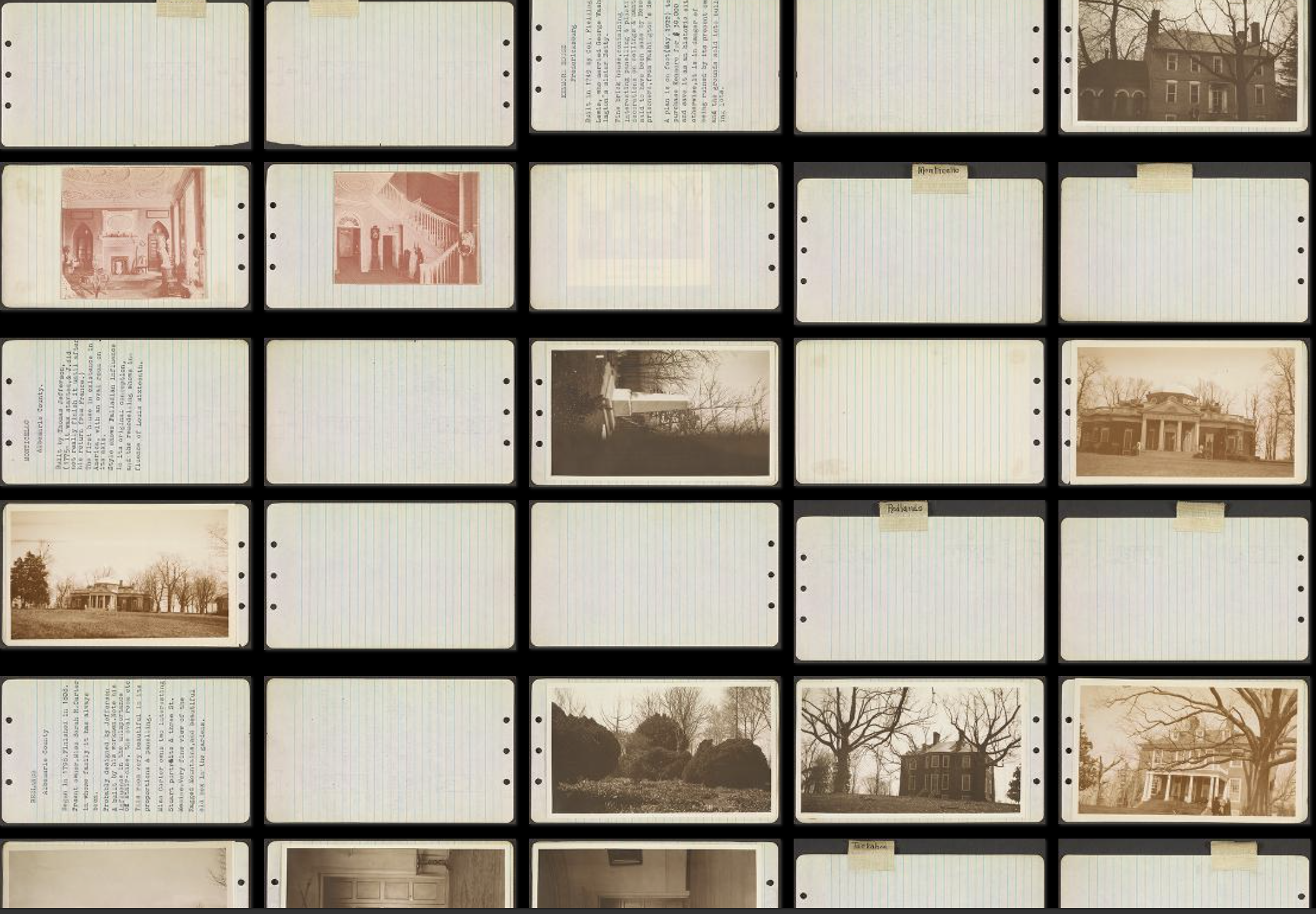 Screenshot of digitized pages from Travel diaries of Eleanor Garnier Hewitt and Sarah Cooper Hewitt U.S. v. 3.
Stay tuned for our next blog post highlighting the extensive conservation treatment and digitization process of the diaries.
Further Reading:
Masinter, Margery and Matthew Kennedy, “Meet the Hewitts” blog series, CooperHewitt.org (2013-2019).
Naples, Richard. “Designing Women: The Hewitt Sisters and the Remaking of a Modern Museum“, blog.library.si.edu (October 2015).
Fannie Farmer Knew Her Pies
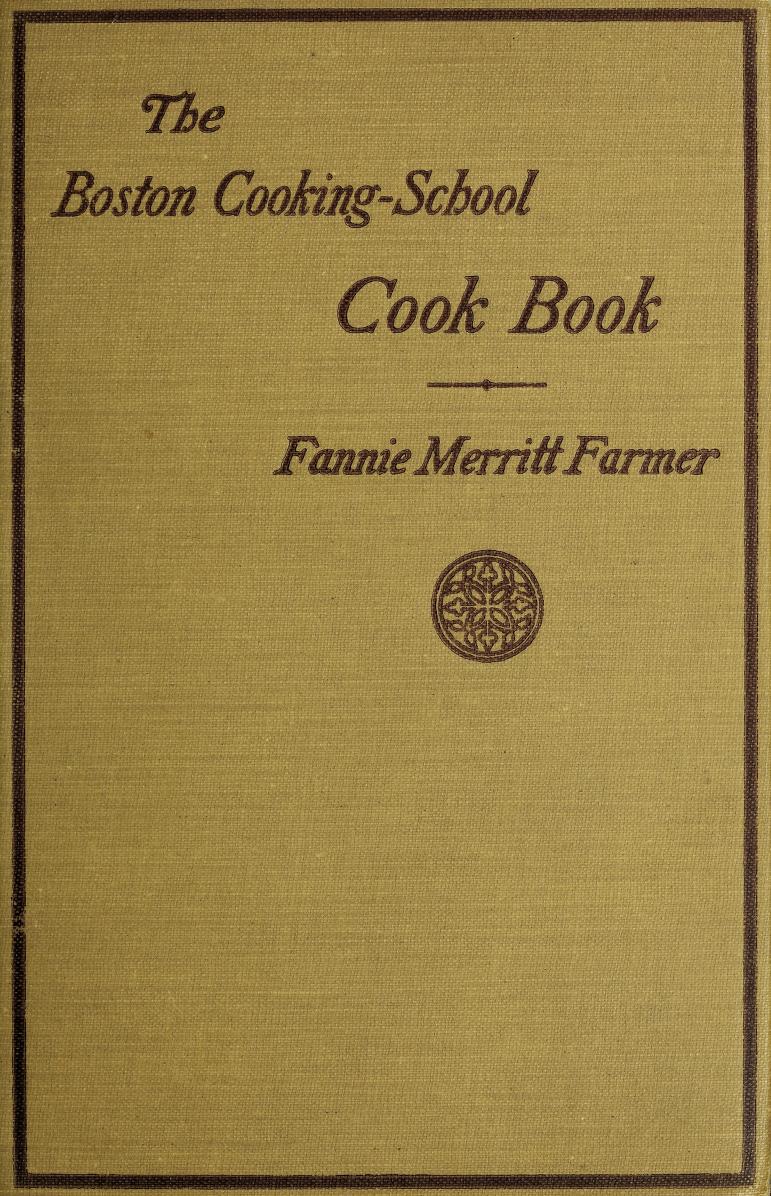 Cover, The Boston Cooking-School Cook Book (c.1918).
Fannie Merritt Farmer, who was born in 1857, suffered a paralytic stroke in her teenage years that stalled her dreams of a formal education. After she regained the ability to walk, she worked as a governess and developed an interest in nutrition and cooking. At the age of 30, Farmer enrolled at the Boston Cooking School, a philanthropic endeavor to help young women learn a socially acceptable trade at a time when there were limited options. Farmer did so well that she joined the staff upon graduation and became principal just two years later.
Farmer first published The Boston Cooking-School Cook Book in 1896 and it would become a household staple for over a hundred years. The book includes recipes of course, but also nutritional information on common ingredients, tips about party-planning, housekeeping advice, and even health and safety information. Farmer wanted to share recipes but was also the science behind them, explaining cooking processes and including more precise measurements than many previous cookbooks. She hoped her book would “awaken an interest through its condensed scientific knowledge which will lead to deeper thought and broader study of what we eat”. Farmer was an early Alton Brown!
This 1919 edition, from the collection of the National Museum of American History Library, is thought to be the last one written solely by Fannie Farmer herself. It features more than 130 illustrations of recipes, table decorations, and utensils. Our copy was previously owned by Florence E. Sparks, who added some of her own handwritten recipes on the endpages and tucked loose recipes inside. This copy was adopted through our Adopt-a-Book program by Clarice J. Peters in 2016 which supported the book’s digitization.
In honor of Pi Day (March 14th, i.e. 3/14), our staff tried two different recipes, both with tasty results. Read on for pie inspiration from Fannie Farmer and The Boston Cooking-School Cook Book. Or dig into the book online to find your next dish!
Lemon Meringue Pie
Tested by Anne Evenhaugen
 Left: Lemon Meringue Pie. Right: Lemon Pie IV recipe from The Boston Cooking-School Cook Book (c.1918).
Baker’s Note: We chose to make Lemon Pie IV (page 470) with the associated Meringue II (page 480). It didn’t require many ingredients—eggs, sugar, and lemon. We cut a few corners, for example, instead of following one of Fannie’s “paste” recipes, we used store-bought crust dough. And instead of beating our eggs for our meringue with a “silver fork,” we used our stand mixer! But otherwise, we followed the recipe nearly to the letter, with a moderate oven (that is 375 F for the modern reader!). The verdict of our family was that Farmer’s recipe was delicious. Even the person who normally doesn’t like lemon meringue said it was great–not too sweet! I would make this again since it was so easy, and both kids helped.
Lemon Pie IV
Ingredients:
- 3 eggs
- 2/3 cup sugar
- ¼ cup lemon juice
- Grated rind of ½ lemon
Directions:
- Beat eggs slightly, add sugar, lemon juice, grated rind, and water.
- Bake in one crust in moderate (375 F.) oven
- Cool slightly, cover with Meringue II (see below).
- Return to oven to bake meringue (about 8 minutes)
Meringue II
Ingredients:
- Whites from 3 eggs
- ½ teaspoon lemon extract or 1/3 teaspoon vanilla
- 7 ½ tablespoons powdered sugar
Directions:
- Beat whites until stiff.
- Add four tablespoons of sugar gradually and beat vigorously.
- Fold in remaining sugar and add flavoring
Blueberry Pie
Tested by Erin Rushing
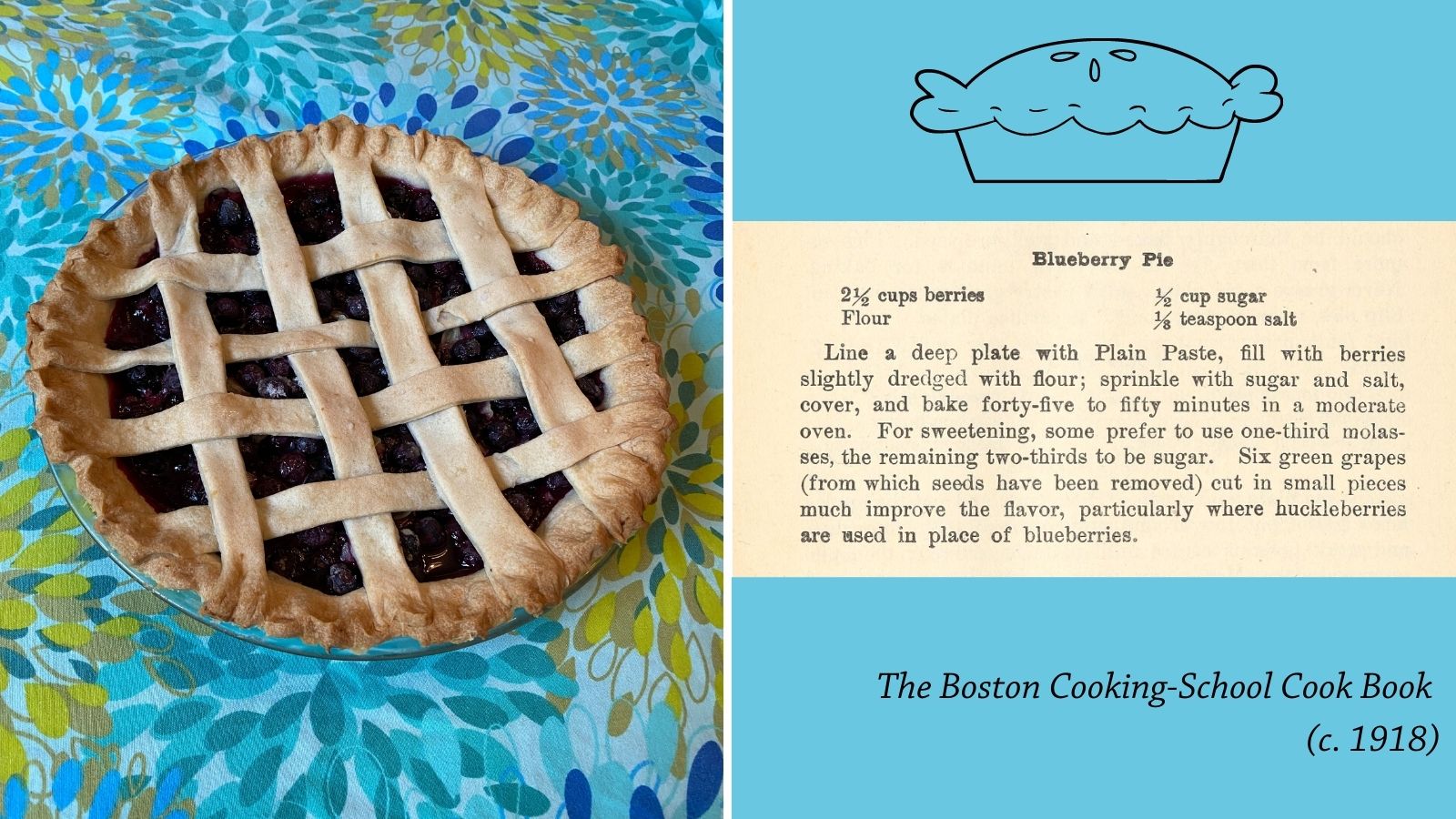 Left: Blueberry Pie. Right: Blueberry Pie recipe from The Boston Cooking-School Cook Book (c.1918).
Baker’s Note: The hardest part of this recipe was managing the crust. Farmer recommends using “Plain Paste” (page 463), which was a bit tricker than the name implies. Unable to find lard at the grocery store, I substituted shortening. I opted not to wash my butter despite Farmer’s recommendation and just used unsalted. Finally, the lamination process of folding and rolling the butter to incorporate it was a floury disaster for me. I ended up chucking all of the ingredients into a food processor and the end result was just fine. Also worth noting: Farmer suggests a “deep plate” for the filling, but this filled a standard pie plate (not deep dish) perfectly. The grapes were an unusual addition but no tasters could tell they were there!
Plain Paste (Pie Dough)
Ingredients:
- 1 ½ cups flour
- ½ teaspoon salt
- 1/4 cup lard (or shortening)
- ¼ cup cold butter, cut into small pieces
- Cold water (about 4-6 tablespoons)
Directions:
- Mix salt with flour.
- Cut in lard/shortening, either with pastry cutter, fingers, or using food processor.
- Add water, a tablespoon at a time, until ingredients form dough.
- Cut in butter using preferred method until evenly distributed.
- Turn out onto floured surface. Divide into half. Form two balls and then roll out to size, using one ball to create lattice pieces if desired.
Blueberry Pie:
Ingredients:
- 2 ½ cups berries
- 6 green grapes, cut into small pieces (optional)
- Flour (about 1 tablespoon)
- ½ cup sugar
- 1/8 teaspoon salt
Directions:
- Line a pie plate with Plain Paste (or your preferred pie crust).
- Slightly dredge berries and grapes with flour. Pour into crust.
- Cover with top crust or decorate with strips.
- Bake 45-50 minutes in a moderate oven (375 F.)
- Allow to cool completely, several hours or overnight, before cutting.
Further Reading:
Eschner, Kat. “Fannie Farmer Was the Original Rachael Ray”, Smithsonian.com (August 23, 2017).
Farmer, Fannie Merritt. The Boston Cooking-School Cook Book (1919).
“Farmer, Fannie Merritt, 1857-1915”, Feeding America: the Historic American Cookbook Project. Michigan State University Libraries.
The Bamboo Expert Who Rediscovered a Missing Grass
Argentine grass expert Dr. Cleofé E. Calderón (1929-2007) collected species, published descriptions of rare and unusual plants, and led workshops that helped shape the field of bamboo taxonomy. Affiliated with the Smithsonian for much of her agrostology career, Dr. Calderón’s legacy can be traced in collections across the Institution, including publications, field books, and photos in Smithsonian Libraries and Archives.
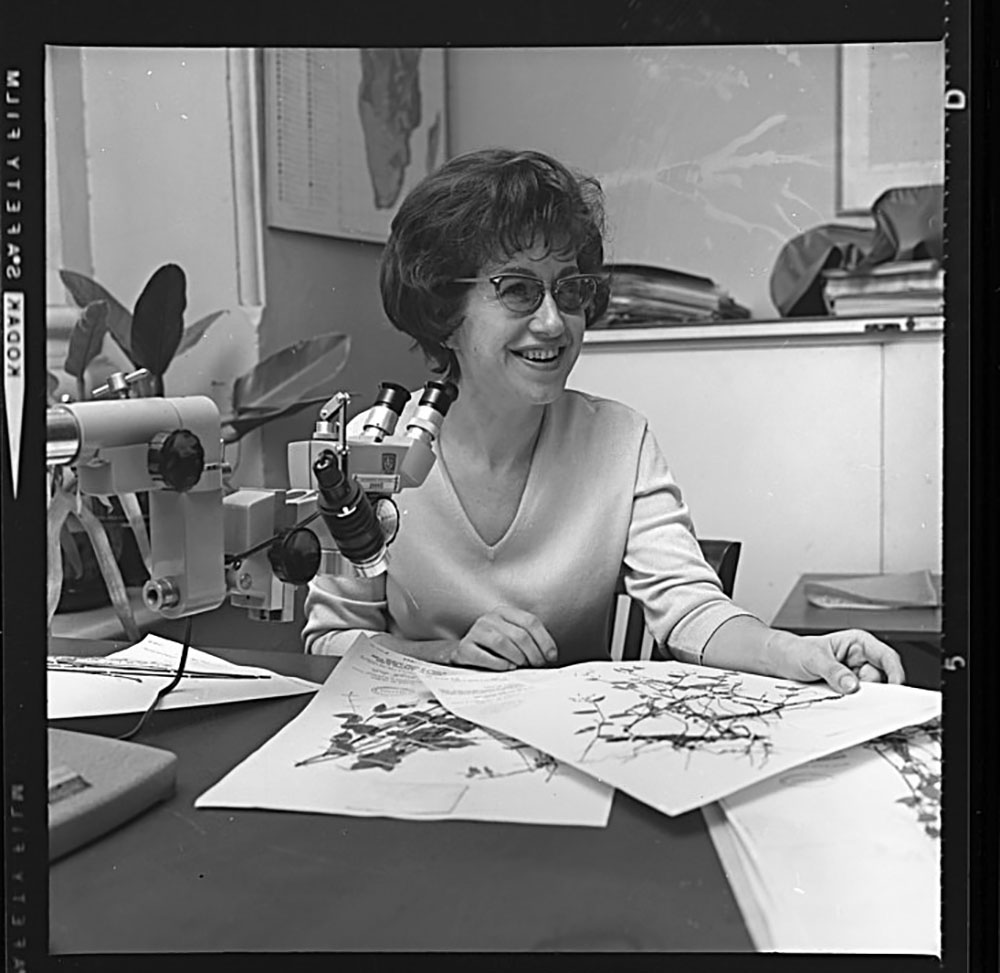 Visiting Argentine botanist Cleofé E. Calderón with plant specimens and microscope. Detail of digital contact sheet. Smithsonian Institution Archives, Acc. 11-008 [OPA-90]Dr. Calderón was a botanist from the University of Buenos Aires who came to the Smithsonian Institution to study bamboo. In the 1960s she visited Washington, D.C. and stopped by the U.S. National Herbarium in the Department of Botany at the National Museum of Natural History. The connections she made during that visit led to a close working relationship with Curator of Grasses, Dr. Thomas R. Soderstrom.
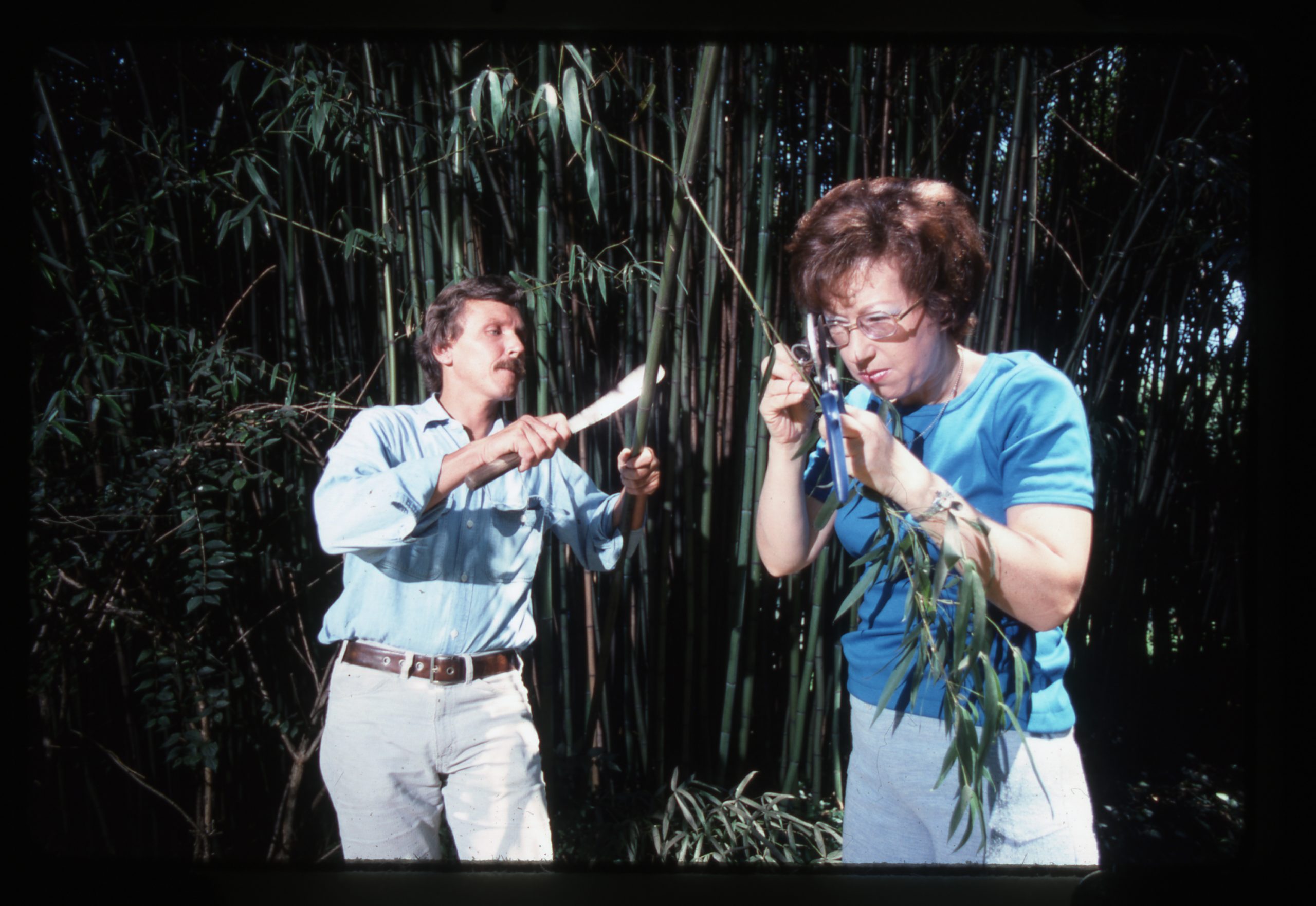 Dr. Tom Soderstrom and Dr. Cleofé Calderón, 1975, by Kjell Sandved, Smithsonian Institution Archives, Acc. 95-013, Image No. SIA2013-04116.
With support from several Smithsonian offices and the National Geographic Society, Dr. Calderón traveled worldwide to research and collect specimens. Her work had a special focus on Central and South America, particularly Brazil. In 1976, she and colleagues spent ten weeks studying and collecting bamboo in the Mata Atlântica forest of eastern Brazil, an area known for its plant diversity. It was during this trip that Dr. Calderón made one of her most important botanical discoveries–observing and collecting Anomochloa, a genus of grass that scientists had not seen living since the 19th century.
 Specimen of Anomochloa marantoidea Brongn collected by Cleofé E. Calderon in Brazil in 1976. National Museum of Natural History.
Dr. Calderón’s field books in our Smithsonian Institution Archives help us understand what she saw during her travels. These 17 field books created between 1967 and 1981 provide context for the many specimens she observed and collected. Her detailed notes were part of her thorough documentation process, which also included capturing photographs with two cameras. Dr. Calderón recorded taxonomic names of specimens, temperatures, altitude/elevation, flowering, and inflorescence. In 2019, Smithsonian Transcription Center volunteers helped transcribe Dr. Calderón’s field books to make them even more useful to modern researchers.
During her work with the National Museum of Natural History, Dr. Calderón contributed about 1,000 plant specimens to the U.S. National Herbarium and was known for her thoroughness and high-quality pressings. Many have been digitized and are available through the Smithsonian’s Collection Search Center. According to her obituary in Bamboo Science and Culture, her specimens “are of great significance to grass systematics due to both their quality and the large number of novelties represented among them.”
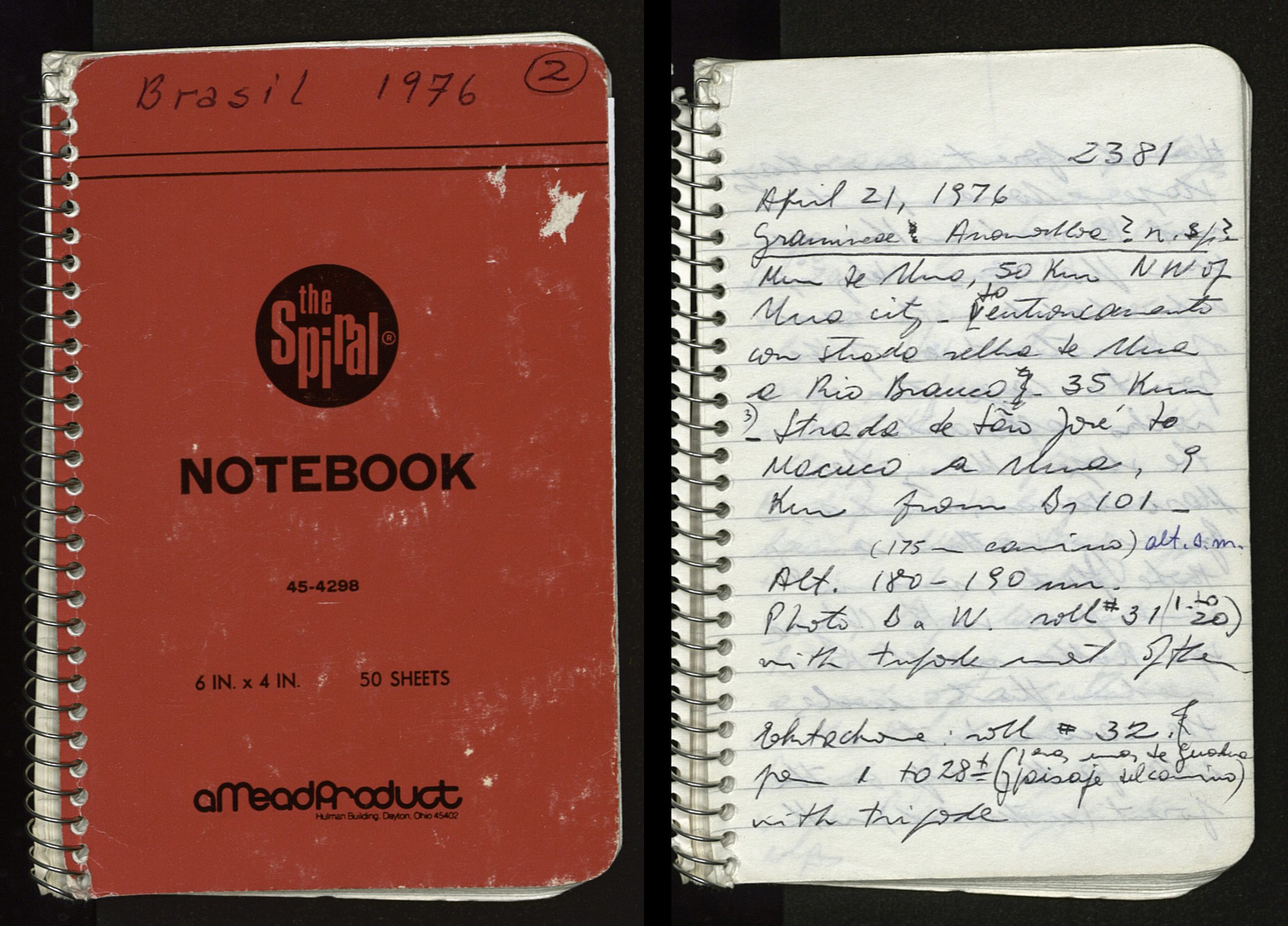 Field book of Cleofé E. Calderon. “Brasil 1976, 2”. Smithsonian Institution Archives, Acc. 12-005.
Left: cover; right: April 21, 1976 entry.
Dr. Calderón also shared her research by co-authoring a number of publications, including two titles in the Smithsonian Contributions to Botany series, available in the Biodiversity Heritage Library. Both “Morphological and Anatomical Considerations of the Grass Subfamily Bambusoideae Based on the New Genus Maclurolyra” (1973) and “The Genera of Bambusoideae (Poaceae) of the American Continent: Keys and Comments” (1980) were written with long-time collaborator Thomas Soderstrom.
 Cover, “The Genera of Bambusoideae (Poaceae) of the American Continent: Keys and Comments” (1980).
Dr. Cleofé Calderón left the field of botany in 1985 and began working for a bibliographic service. By then, she had named 18 grass and bamboo species. In addition, one genus of ornamental grass, Calderonella, was named in her honor by Soderstrom and Henry F. Decker. Her specimens, field books, and publications continue to lend valuable insight to modern researchers.
Further Reading:
Calderón, Cleofé E. Cleofé E. Calderón Field Books, 1967-1981 and undated. Smithsonian Institution Archives SIA Acc. 12-005.
Calderón, Cleofé E. and Thomas R. Soderstrom. “The Genera of Bambusoideae (Poaceae) of the American Continent: Keys and Comments” , Smithsonian Contributions to Botany, No. 44 (1980).
Calderón, Cleofé E. and Thomas R. Soderstrom. “Morphological and Anatomical Considerations of the Grass Subfamily Bambusoideae Based on the New Genus Maclurolyra” Smithsonian Contributions to Botany, No. 11 (1973).
“Cleofé E. Calderón (1929-2007)”, Bamboo Science and Culture: The Journal of the American Bamboo Society 21(1): 1-8 (2008).
Soderstrom, Thomas R. and Henry F. Decker “Calderonella, a New Genus of Grasses, and Its Relationships to the Centostecoid Genera”, Annals of the Missouri Botanical Garden, v. 60 (1973).
Smithsonian Libraries and Archives & Wikidata: Plans Become Projects
This post is part of our Smithsonian Libraries and Archives & Wikidata series.
Over the past two years, Smithsonian Libraries and Archives has embarked on a linked data journey along with many other libraries in the Program for Cooperative Cataloging (PCC) Wikidata pilot project. From October 2020 to August 2021, the Libraries Wikidata team experimented with creating and maintaining name authority in a completely new way, including plans to install a decentralized Wikidata instance (Wikibase) that would meet the Smithsonian policies and best practices. This is the second part in the Wikidata blog post series, be sure to read our previous post for additional information.
Smithsonian Libraries and Archives’ Wiki initiation commenced with a Wikidata workshop held in November 2019 with Andrew Lih, currently the Wikimedian-In-Residence for the American Women’s History Initiative. The outgrowth of the workshop was a name reconciling project using carefully curated name data. During the pandemic, this process was expanded to include additional staff and two name datasets: 1) the Art and Artist Files database and 2) a portion of Smithsonian American Art Museum’s artist names from its database.
For the last two years, the Libraries’ Wiki project has mainly focused on Wikidata and Wikibase, and briefly experimented with Wikimedia Commons for images as part of the Smithsonian’s PCC Wikidata Pilot Projects (Oct 2020- Sep 2021).
Wikidata, launched in 2012, is a global and open knowledge repository of structured data that serves as a hub for linking resources. This linked open data information cloud attracts and integrates authority data from many libraries. Wikidata quickly became the authority knowledgebase of choice in libraries and commercial institutions for names for people, places, etc. Its structured data gives many developers a way to create tools to query and present findings on trending topics, such as the resources which impact or are impacted by the pandemic, COVID-19 (http://coviwd.org)
Wikidata has become a high-demand library authority identifier clearing house. The PCC Policy Committee recognized the platform could play a role in its effort to transform authority control into identity management. In September 2020, called for a pilot among the PCC member libraries. The Smithsonian Libraries and Archives assembled a team to participate in October 2020 as telework projects during the pandemic.
The Wikidata team prioritized the following goals in order to create cohesive processes for names (identity) management for the Smithsonian’s collections,
- The creation and curation of names for CPF (corporate bodies, persons and families), collections, and publications for the Institution.
- Adopting replicable workflows to SI units that would work beyond the Libraries and Archives’ cataloging or metadata professionals.
- Increasing professional curiosity toward descriptive data and what it could offer to users as a service.
- Transitioning to a localized deployment of a Wikidata model (in Wikibase) that meets Smithsonian policy and best practices guidelines.
- Encouraging ingenious API tools development to feature Smithsonian collections.
- Forming collaborative efforts with colleagues within and beyond the SI walls.
The five projects from the Libraries and Archives’ Wikidata team for the PCC Wikidata Pilot Project are as follows:
1) African ethnic groups
Reconcile, edit and/or add African ethnic group names (ca. 250) currently used in local subject headings by the Warren M. Robbins Library of the National Museum of African Art.
 c
c
2) Artist files
Reconcile, edit and/or add the artists descriptive data matched in two SI artists databases (the Libraries and Archives’ Art and Artists Files and Smithsonian American Art Museum’s artists databases), which amounted to 3797 artists.
 c
c
3) Chinese ancestors portraits (primarily royal family members of the Qing Dynasty of Manchu ethnic group)
Review and augment for accuracy Wikidata statements for 90 names matched to the Freer and Sackler Galleries collection of Chinese Ancestors portraits.
 Chinese ancestors portraits organized by date of birth in Chinese scripts, on Histropedia site: http://tinyurl.com/CAPPtimeline.
4) Dibner scientists portraits
Reconcile, edit and/or add the scientists and artists featured in the Dibner Library of the History of Science and Technology’s collection of portraits included on the Scientific Identity website.
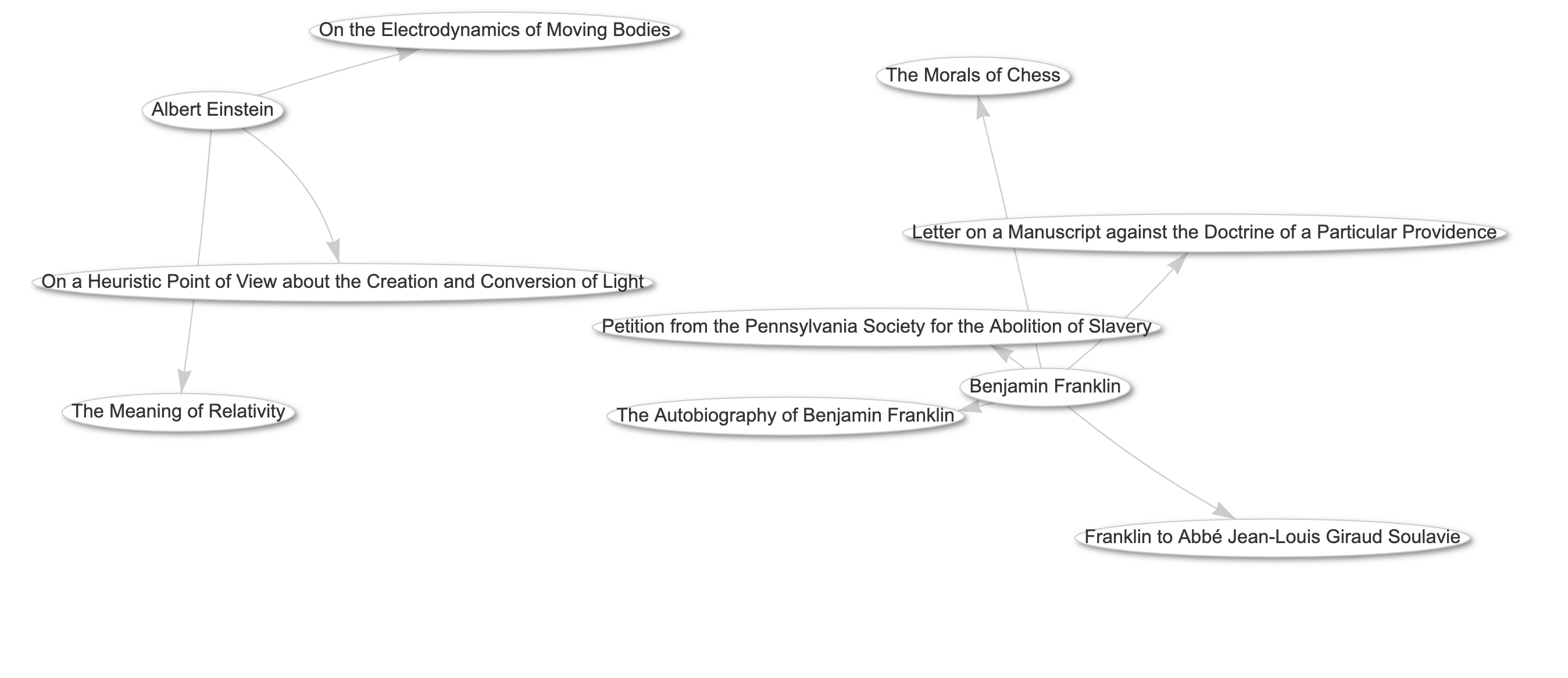 Graph showing scientists’ publications available in Wikisource, an open wiki library for digitized texts.
5) Smithsonian researchers and their publications from the Smithsonian Research Online (SRO)
Reconcile, enhance and/or add names for the notable curatorial and research staff from the Smithsonian Profiles website and review the representation of Smithsonian in Wikidata.
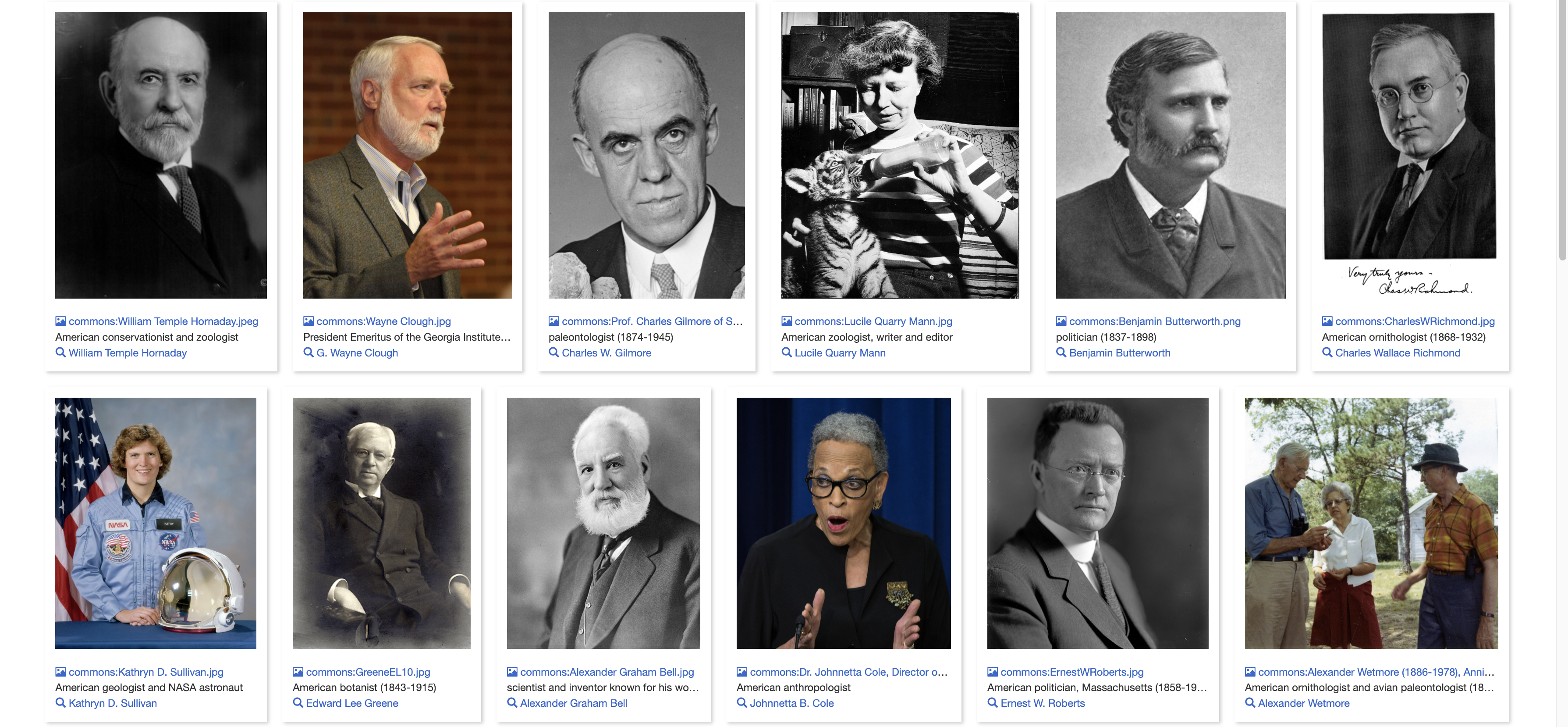 People related to the Smithsonian through employment, affiliation, and membership, (past and present) with images.
Each project identified the specific aspects, focus, and workflows documented on the Smithsonian PCC Wikidata Pilot Page. The project team met weekly; subgroups met bi-weekly on a regular basis or as needed. A team conducted a few samplers to showcase contributions to the overall Smithsonian collections in the Wikidata landscape. These queries were gathered and put together as a dashboard highlighting various characteristics of each individual project in table forms, maps, and graphs.
Wikibase, an extension of MediaWiki, is the software that powers Wikidata. It offers a suite of open source software for creating a collaborative knowledge base. It also allows for localized configuration and an option to federate with other Wikibase installations and Wikidata at-large.
Several institutions have established substantive workflows for deploying a decentralized Wikidata utilizing Wikibase software. Examples include Rhizome’s Artbase, the Digital archive of artists’ publishing (DAAP), the Enslaved.org, Linked Jazz, DNB’s GND, FactGrid, Luxembourg’s Shared Authority File, and Europeana Eagle, etc.
Members of the Libraries and Archives’ team were exposed to the richness and potential of structured data describing the collections that they are passionate about. In addition, participating staff gained new technological skills and new approaches to information organization in a linked and open repository like Wikidata. And they are excited about the potential for deployment of a local Wikibase instance that enables us to better address Smithsonian internal policies and formulate best practices and guidelines for our workflow.
At the writing of this post, the Smithsonian Libraries and Archives has been piloting a Wikibase instance, investigating limited functionalities. To date, the team has created over 200 properties and close to 1590 items, currently only accessible to Smithsonian staff.
The substantial work of the Libraries and Archives’ Wikidata team has been recognized by colleagues around the world. Our team members are part of a larger community helping to shape developments and features of Wikidata and Wikibase. For instance, Smithsonian Libraries and Archives was one of the first organizations that the WikiLibrary Manifesto, spearheaded by the German National Library, invited to sign the initiative. Throughout Fiscal Year 2021, the Wikidata team conducted several presentations illustrating the potential of Wikidata as a viable tool for our collections.
In an effort to further unveil our collections through digital solutions, the Wikidata team is devising future plans to continue wikifying entities for the collections in a localized Wikibase to accommodate Smithsonian policy and best practices, without sacrificing discovery and reuse of Smithsonian data!
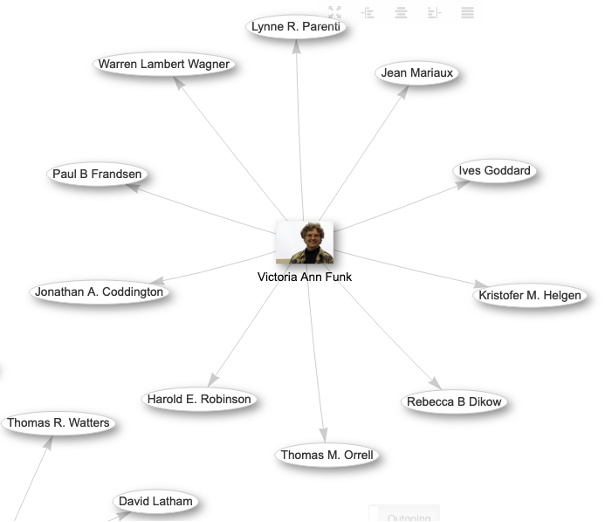 National Museum of Natural History researcher Victoria Funk (1947-2019) co-authorship network, https://w.wiki/4LQv
Further Reading:
- Barbara Fischer. Authority Control meets Wikibase (2019): https://wiki.dnb.de/display/GND/Authority+Control+meets+Wikibase.
- French National Entities file (FNE): project overview (2019): https://www.transition-bibliographique.fr/fne/french-national-entities-file/
- Wikibase site showcases variety of implementations: https://wikiba.se/showcase/
Smithsonian Libraries and Archives’ Wikidata Team presentations:
- Discovery Services Forum on June 23: http://bit.ly/DISC2021Forum0623
- LD4 20201 Conference: https://sched.co/joA8
- Smithsonian Collections Information Management Committee: http://bit.ly/CIMC202109LibWD
Unveiling 1915 Spring Fashion Through Mail Order
Today in the 21st Century, we have several options for shopping. Two options that might immediately come to mind are visiting stores to shop in person or ordering online from home. But one nearly forgotten option is the mail order catalog. With the availability of the internet, we might not receive these as frequently as in the past, but browsing the Trade Literature Collection reveals mail ordering has been around for quite some time.
Generally, when consumers purchase something via mail order, they complete an order blank, or form. The form is typically found inside the catalog. On the order form, they list items, quantity, and specific details relating to the products they want to order. Some catalogs also include a pre-addressed envelope, like the envelope found within John Wanamaker’s Fall & Winter Catalog 1915-16 (1915-1916) highlighted in a past post. Pre-addressed envelopes make it convenient for customers to mail their order form with payment to the company. Another post highlighting a Herr, Thomas & Co. 1907 catalog explores the general mail order process in a bit more detail.
Now let’s examine a mail order catalog, paying close attention to item descriptions and specific details customers might have needed to complete an order form in 1915. This catalog is titled Spring & Summer Catalog (1915) by John Wanamaker.
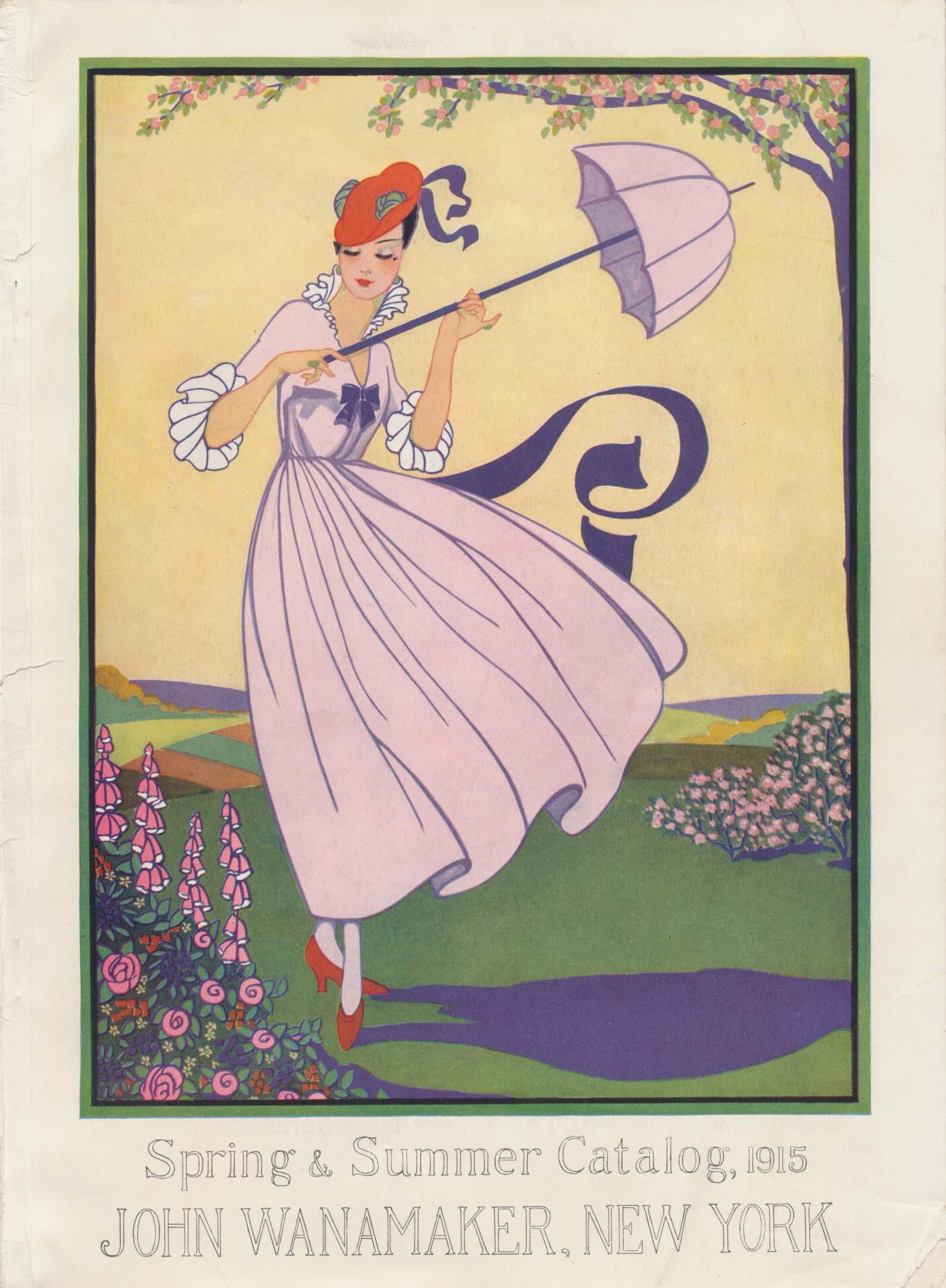 John Wanamaker, New York, NY. Spring & Summer Catalog (1915), front cover.
The clothing section appears to primarily focus on women’s apparel and accessories. Several pages illustrate items for girls and young women, such as a sports suit, pictured below left. This was a two-piece set with matching skirt and coat, both made from homespun mixture. Its flared skirt fastened on the side and included two pockets, as did the coat which was embellished with a high waist belt. The collar of the coat could be worn open, as shown below, or buttoned high.
Keeping the mail order process in mind, let’s study the product description to locate details that a mail order customer might have needed to complete an order form. One of these details is the item or product number used to identify a specific item. We see that this particular sports suit is identified as 143W1.
Most likely, customers also specified on the order form their preference for fabric, design, or color of the article of clothing. This particular suit was available in homespun mixture, as shown in the illustration, but the description notes other options were also available, including black and white check and navy blue or black serge. Sizes appear to be listed by ages such as 14, 16, 18, and 20 years. We will take a closer look at sizes when we turn to another page in the catalog.
One more thing a mail order shopper might have noticed is the weight of the item when packed. This sports suit weighed four pounds packed. Perhaps, this was useful for customers to estimate cost of shipping.
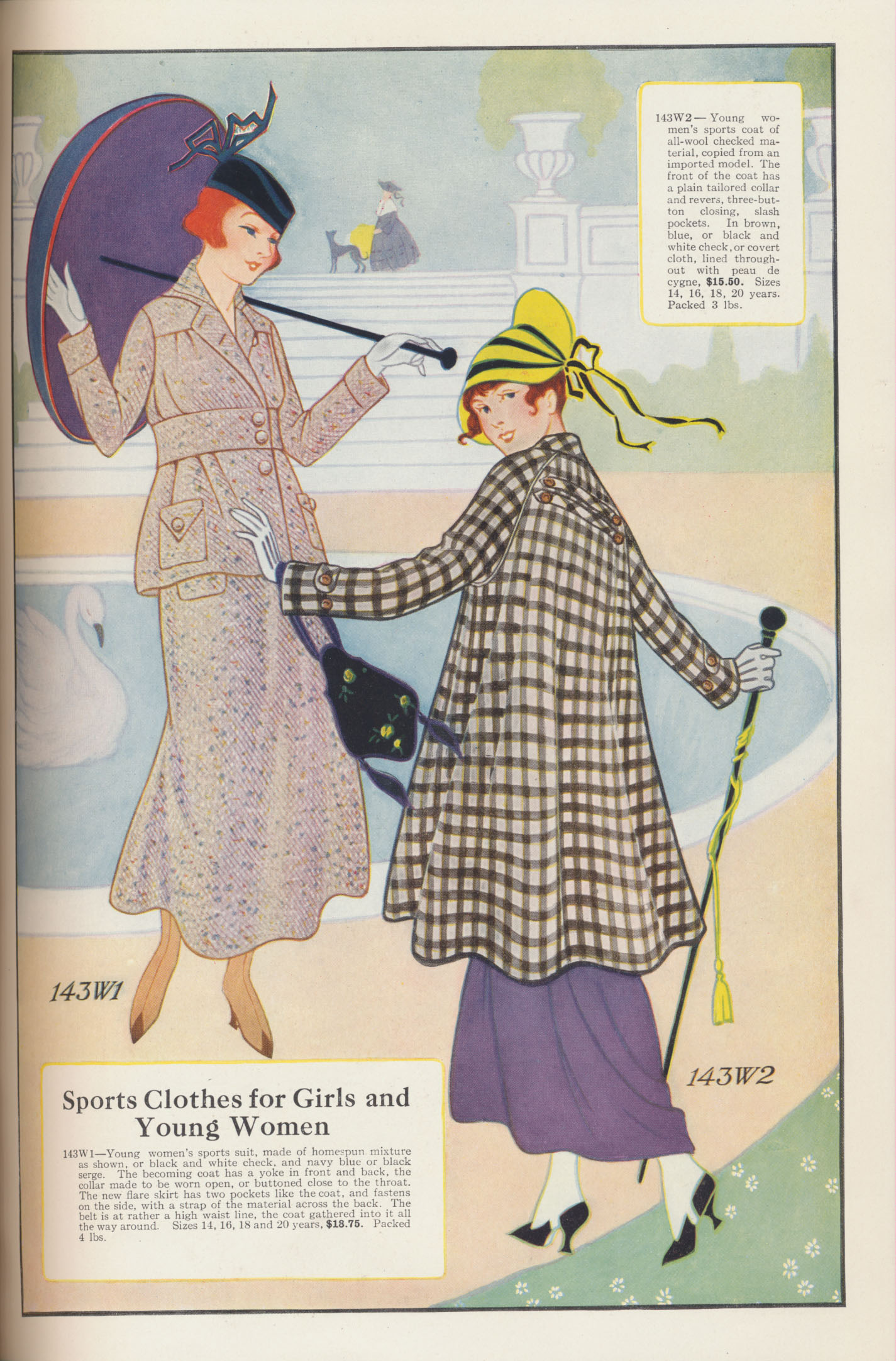 John Wanamaker, New York, NY. Spring & Summer Catalog (1915), page facing page 32, Sports Clothes for Girls and Young Women.
Another page in this Wanamaker catalog also features suits for girls and young women. One of these, shown below right, is described as “a faithful copy of a Jeanne Lanvin suit very recently received by us.” Identified as item/product 143W6, it was a two-piece set consisting of skirt and coat, available in navy blue, Belgian blue, or sand color poplin or black and white check.
The coat featured a belt which appears to begin at the sides, or as the catalog explains, “The belt in front comes from a panel effect on the sides.” This panel effect included two button-trimmed patch pockets on either side, level with the belt. In addition, the coat had two upper front pockets on either side. Other decorative elements were buttoned cuffs trimmed with pieces of poplin fabric and the collar which could be worn open or buttoned high at the neck.
The full skirt was designed with a back gathered in tucks on either side. Though not visible in the illustration below, the description of the skirt mentions a corded belt and pockets to match the coat.
As mentioned earlier, clothing sizes appear to correspond to years, such as 14, 16, 18, and 20 years. This particular page, shown below, includes a size chart. The chart listed sizes, which were labeled as “Young Women – Years,” along with corresponding measurements. This assisted the 1915 mail order shopper in choosing the proper size to place on the order form.
 John Wanamaker, New York, NY. Spring & Summer Catalog (1915), page 27, Suits for Girls and Young Women.
Moving on, we turn to a page illustrating women’s skirts. The skirt identified as item/product 300W75, below left, was described as a “new suspender skirt of velvet corduroy.” Customers had the option of choosing three colors to place on their order form: white, rose, or Belgian blue.
This suspender skirt was fashioned with a high waist and row of buttons down the front and embellished with a wide belt threaded through loops and fastened in the front by two buttons. It conveniently included pouch pockets on either side.
Its wide suspenders crisscrossed in the back, as shown in the miniature sketch below (far left). For customers ordering via mail from home, these miniature sketches provided the ability to view various angles of the clothing.
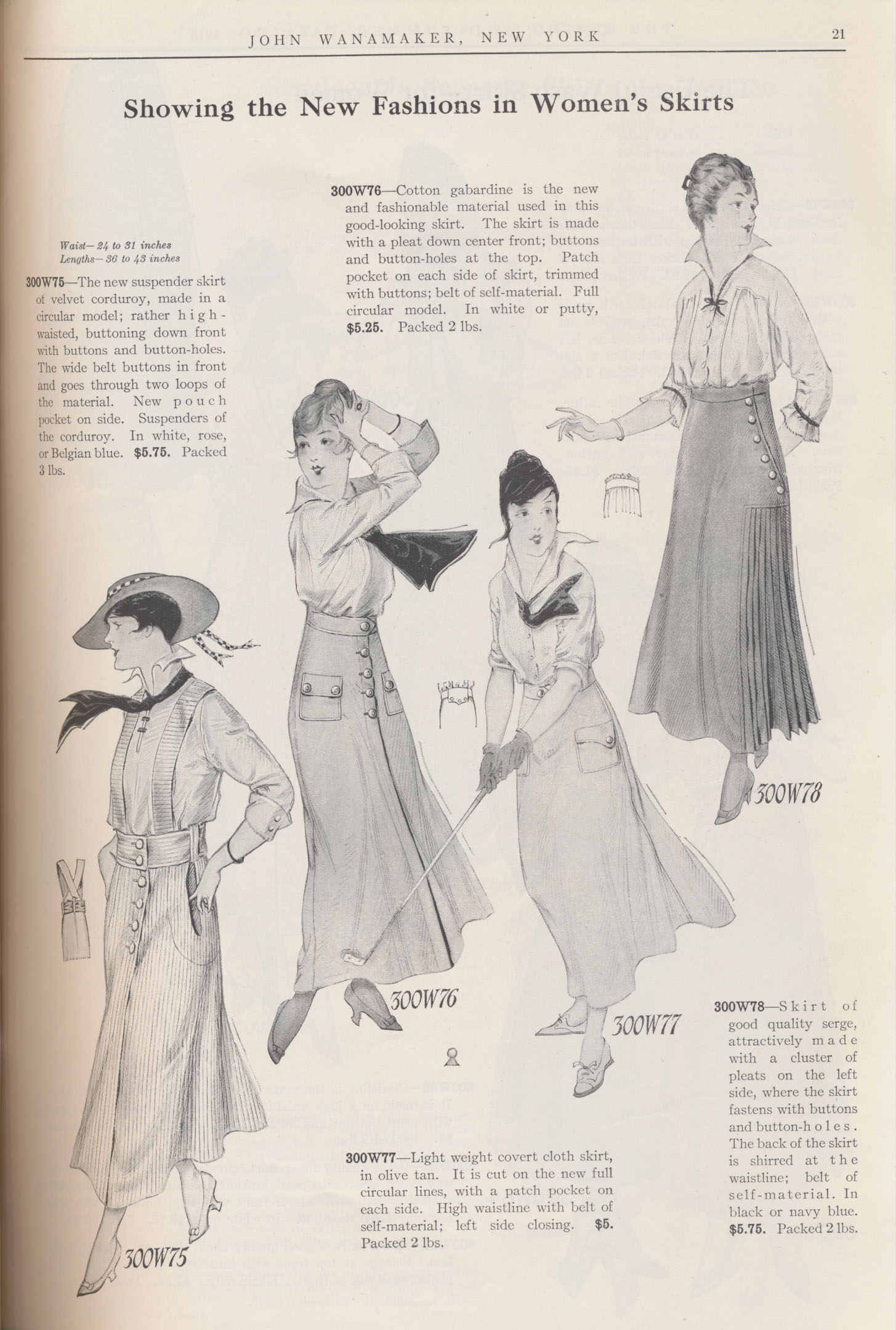 John Wanamaker, New York, NY. Spring & Summer Catalog (1915), page 21, “New Fashions” in Women’s Skirts.
Just like 21st Century online shopping, mail order shopping over 100 years ago included specific descriptions tailored to help consumers make decisions from home. Spring & Summer Catalog (1915) by John Wanamaker is located in the Trade Literature Collection at the National Museum of American History Library.
Explore the Past with a Learning Tool of the Future
When the Smithsonian’s Arts and Industries Building reopened in November 2021, it launched FUTURES, an ambitious, interactive exploration of what lies ahead for humanity. This building-wide exhibition is on view until July 7th, 2022 and highlights artworks, technologies, and ideas that look towards the future. Included in the exhibition is “Women in America: Extra and Ordinary”, an innovative classroom tool developed by Sara Cardello, our Head of Education. Stories from this resource will also be featured in our next online program, Women at Work on February 15th, 2022.
“Women in America: Extra and Ordinary” is part of our Traveling Trunks program. Intended for educators and students, the trunks are immersive, multimedia library kits that connect Smithsonian Libraries and Archives collections with other Smithsonian content around a common theme. The “Women in America: Extra and Ordinary” theme features twenty-four women who lived in America from 1785-2013. Their stories are extraordinary while honoring the strength of the everyday.
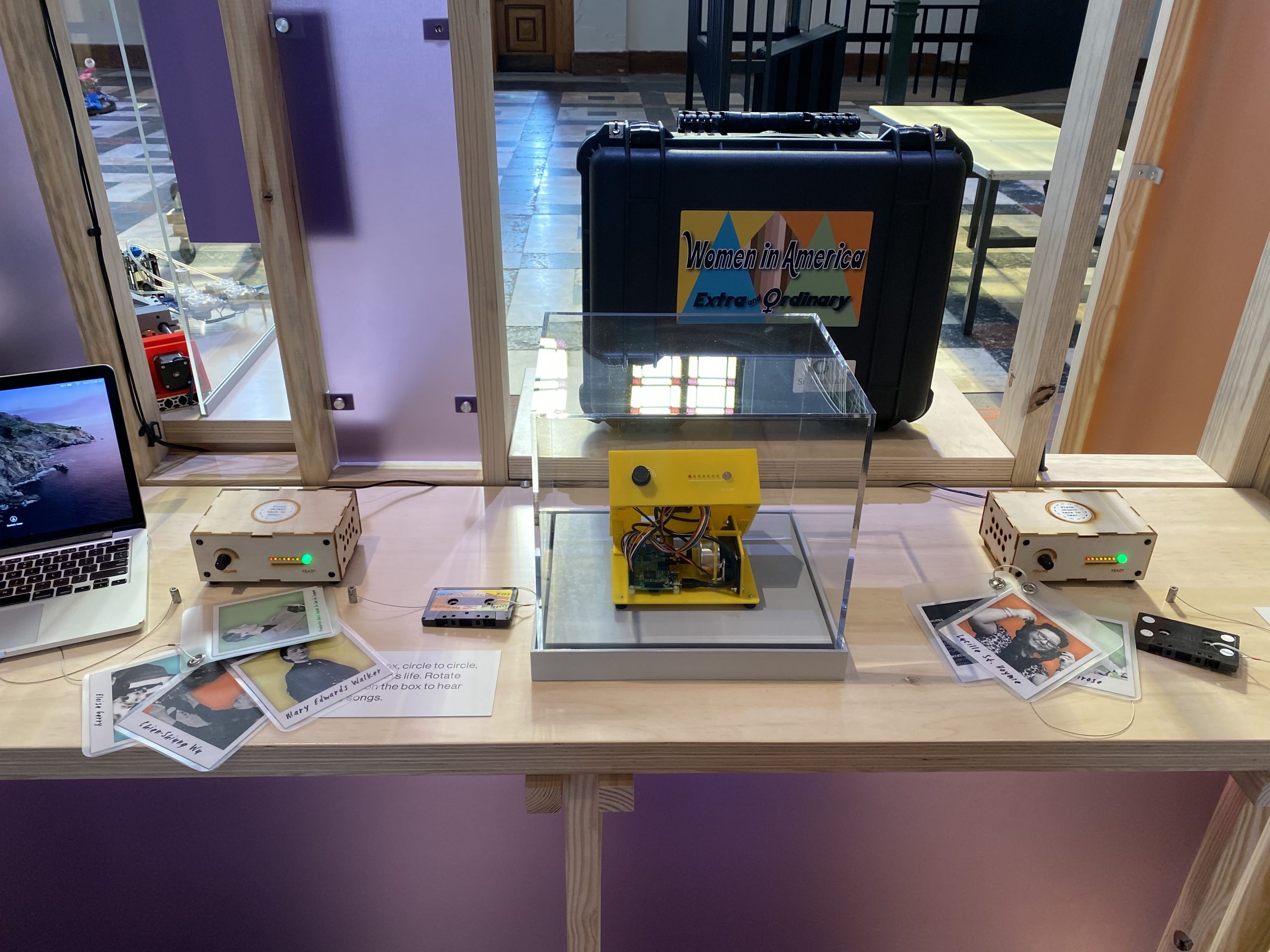 “Women in America: Extra and Ordinary” Traveling Trunk in FUTURES.
In the “Futures that Unite” section of the FUTURES exhibition, you’ll find our “Women in America: Extra and Ordinary” Traveling Trunk, including eight selected stories that celebrate women in science. Each woman is represented by a card. Touching a card to a nearby speaker brings a woman’s story to life with a biographical description. Touching the accompanying cassette tape plays a related song from Smithsonian Folkways.
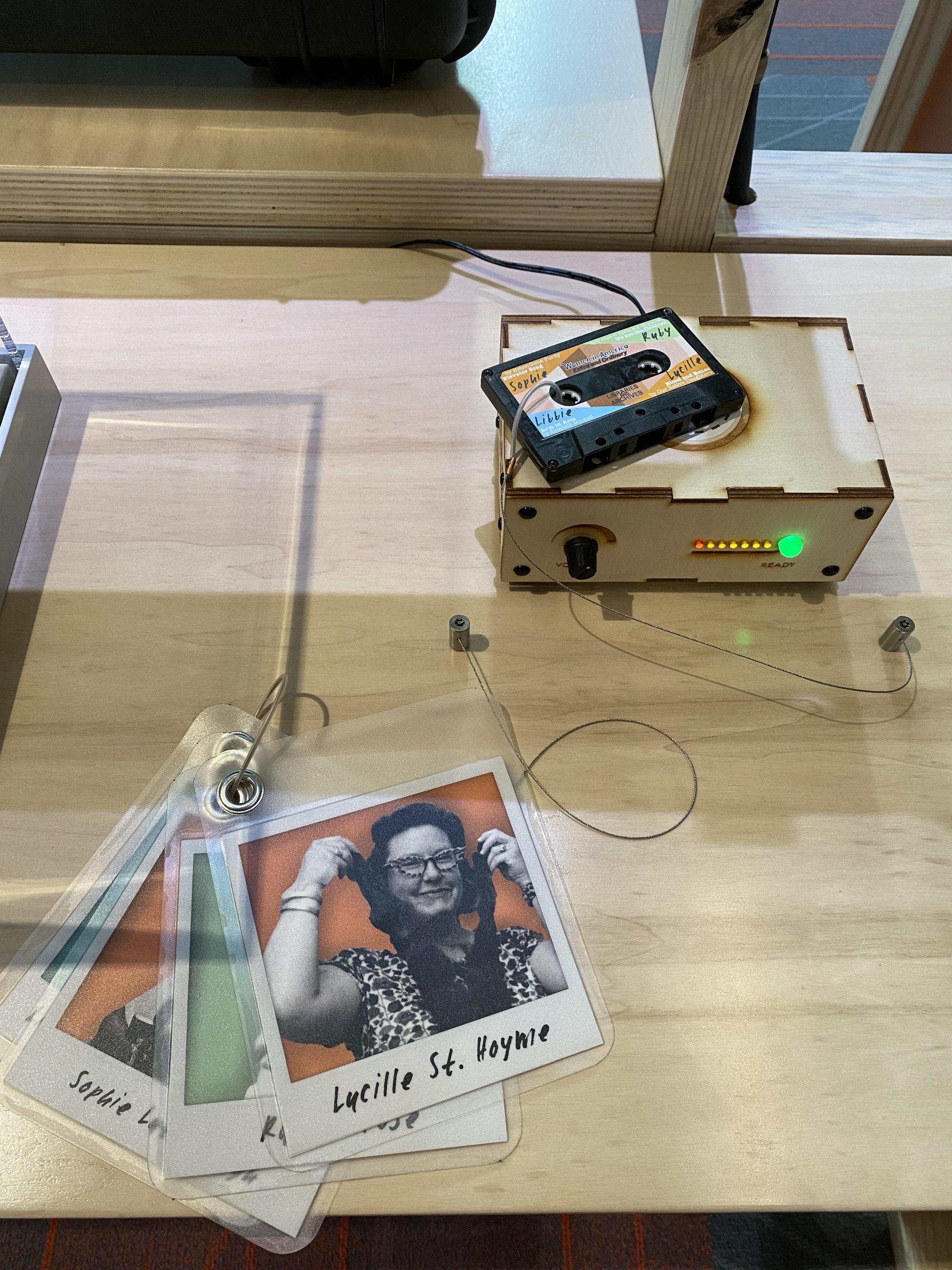 “Women in America: Extra and Ordinary” interactive cards and cassette.
The stories of our past are powerful tools. They can be reminders of our successes and cautions of our failures. Entirely too often our history has been written by and for a single perspective, marginalizing women and people of color. This display helps honor eight lesser-known women in STEM and continue their legacy. You might encounter Eloise Berry, the first female scientist for the Forest. You may hear from Sophie Lutterlough, who rose from an elevator operator to working in the Entomology department in the National Museum of Natural History. Or you may be awed by Chien-Shiung Wu, a nuclear physicist who worked on the Manhattan Project to develop the first nuclear weapons.
 Graphic of Sophie Lutterlough from “Women in America: Extra and Ordinary”.
Our Traveling Trunk program is not currently lending to schools due to the ongoing pandemic. This spotlight in FUTURES allows us to engage with visitors from around the world, sharing these lesser-known stories of women in science from our collections. We hope visitors experience and learn from the extraordinary stories of women, both extra and ordinary.
Interested in hearing more about these remarkable women? Join us on February 15th for our free, online program, Women at Work. Our director, Tamar Evangelestia-Dougherty will explore their legacies as part of a broader conversation about women in STEM.
“Women in America: Extra and Ordinary” received support from the American Women’s History Initiative.
Color Our Collections for 2022
Calling all coloring enthusiasts! #ColorOurCollections is back for 2022 and we have ten new coloring pages just for you. Whether you want to bring polychromatic glory to old black-and-white photos or scribble in vintage fashion plates, you’ll find a little something for everyone in our new packet. Download it now!
During Color Our Collections, organized by the New York Academy of Medicine, cultural institutions from around the world provide inspiration and free coloring sheets for artists of all ages. At-home artists can share their creations on social media by tagging the organization and using the hashtag #ColorOurCollections. Our coloring book uses images that are freely available in our Digital Library, Biodiversity Heritage Library, and Smithsonian Institution Archives collections.
Curious about the stories behind the pictures? Here’s the scoop on the first two pages.
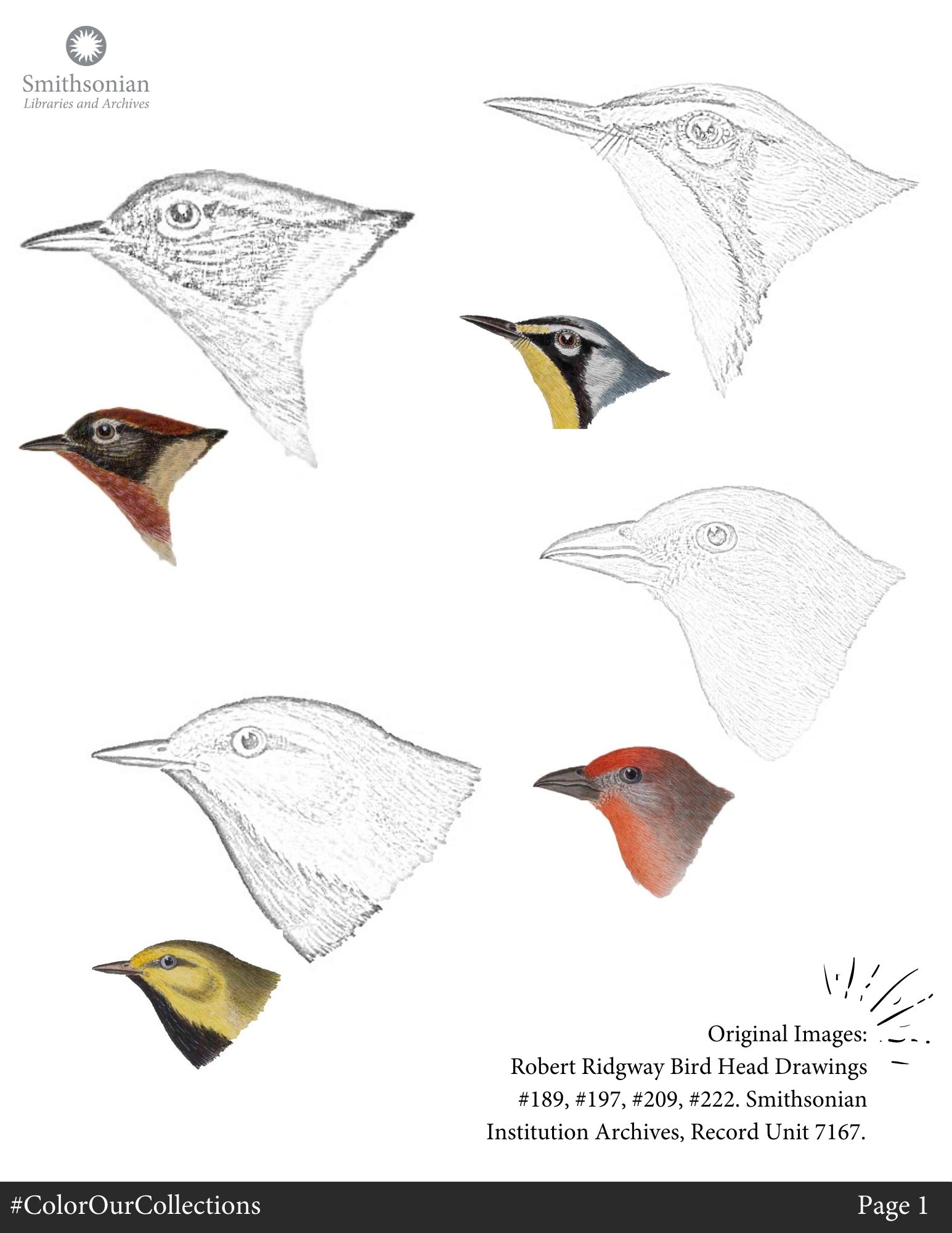 Coloring page featuring Robert Ridgway Bird Head Drawings #189, #197, #209, #222. Smithsonian Institution Archives, Record Unit 7167. Download the full coloring book.
Robert Ridgway Bird Head Drawings #189, #197, #209, #222.
Smithsonian Institution Archives
Record Unit 7167.
These little birdies were illustrated by Robert Ridgway and Henry W. Elliott for publications by Spencer Baird, Dr. Thomas M. Brewer, and Ridgway. A bird expert mentored by Baird, Ridgway was appointed ornithologist on the staff of the United States National Museum in 1874 and earned a role as curator by 1880. Ridgway became a prolific author and illustrator of bird books and developed several guides to help fellow natural history writers accurately depict color.
 Coloring page featuring “Equus marinus monstrus” from Monstrorum historia (1642). Download the full coloring book.
Ulisse Aldrovandi
“Equus marinus monstrus”
Vlyssis Aldrouandi patricii Bononiensis Monstrorum historia
Bononiae : Typis Nicolai Tebaldini, MDCXLII [1642]
This lively merhorse is one of several fantastic beasts in Ulisse Aldrovandi’s Monstrorum historia (1642). The work features illustrations of mythological creatures as well as reported genetic anomalies. Monstrorum historia was gifted to the Dibner Library of the History of Science and Technology by Dr. J. Bruce Beckwith along with 800 works related to teratology. It’s featured in our current exhibition, Magnificent Obsessions: Why We Collect.
You’ll rarely hear us say this but in this instance it’s true: We hope you enjoy coloring in our books! Share your creations via social media and tag us (@SILibraries on Twitter and Instagram). We can’t wait to see what vibrant combinations you come up with.
 Cover of Color Our Collections 2022 coloring book. Download the full coloring book.
Further Reading:
An Interview with Director Tamar Evangelestia-Dougherty, Smithsonian Libraries and Archives
Smithsonian Libraries and Archives recently welcomed Tamar Evangelestia-Dougherty as our inaugural director. Join us as we get to know the new leader of our organization!
1.) What is your earliest memory of either libraries or archives?
I have fond memories of both libraries and archives. When I was a little, libraries played a very important role in my life and that of my family. My mother loved books and saw libraries as a treasure trove of information – and most importantly, they were free. She was a single mom. We were poor and could not afford a lot of books. I was fortunate that we owned a set of encyclopedias – quite rare for being an African American little girl growing up on the West Side of Chicago. No one else I knew had a set.
I remember my mother taking me to the Chicago Public Library to complete a school report on Benjamin Franklin, and also running around looking at books as my brother attended Black Panther meetings in one of the Library’s community rooms.
Therefore, my family saw libraries as an important benefit to us as American citizens. Later on, my mother fell on hard times, and we were homeless for about a year. We were shuffled from shelter to shelter, and from good neighbors to church members, but there were times in between when we slept at the Chicago Public Library for heat, or when the lights got turned off, or to get cool in the heat of summer. Because of this I experienced firsthand that libraries serve a lot of functions in society. I always say that libraries helped raise me.
My first memory of archives and special collections is quite different. My brush with archival research came when I was a sophomore in high school. As a Chicago Public School requirement, every high school sophomore had to enter the Chicago History Fair. Students had to present a history project using Chicago area archival collections and other primary sources. Along with my Von Steuben Metropolitan Science Center partner, Leslie Casimir, we had to consult the collections of the Chicago Historical Society (now Chicago History Museum) in order to research the Aragon Ballroom. I wore gloves and they brought out big archival drawings for my project. So that was a different experience for me; I didn’t understand why I had to put on gloves, or formally check in, or show my ID. It was a completely different process than using regular materials. I also observed the reading room as beautiful, and it all felt very important and ceremonious – with “esteemed” white men pictured on the wall. I remember thinking, “Wow – this is like attending church!”
 Director Tamar Evangelestia-Dougherty stands outside the doors of Smithsonian Libraries and Archives offices.
2.) Tell me about your background in your own words. What attracted you to the field of libraries and archives as a career?
The path to my career was a challenging process. My mother wanted me to be a successful Black woman which in her eyes was to have a respectful career in which I made lots of money. She wanted me to be a doctor, and then when it turned out I was no good at calculus she said, “Well, I guess you need to be a lawyer.” She never really embraced or wholly understood my library career.
However, when I was in high school and college I worked in libraries for extra money and started getting closer and closer to them. I always felt there were smart people in libraries, people who liked to read and were interested in different esoteric things like me – and then I learned about special collections. I realized from my Chicago Historical Society experience that there were curators in libraries. I eased into the profession by working odd and temporary LIS jobs, and then the jobs kept becoming more and more permanent with greater responsibilities. Working as a special collections assistant in Princeton University Library’s Rare Book and Manuscript reading room is what sealed the deal for me for library school. For a time, I did not reveal to my family what I was getting a master’s degree in.
3.) What does being the inaugural director of the Smithsonian Libraries and Archives mean to you? What excites you most about leading a museum libraries and archives system?
I’m still grappling with it being real because I never thought I would find myself in this space. The job is very important to me, but what is most important to me is the staff. I want to be an advocate for the Smithsonian Libraries and Archives staff, getting them resources and achieving job satisfaction to make us a viable organization at the Smithsonian.
I want the Smithsonian Libraries and Archives to be very much in the 21st century and to be called one of the best research libraries in America and a global resource. I am in awe of all the work that has happened before me, from Director Emerita Nancy E. Gwinn and Deputy Director Emerita Mary Augusta Thomas of the (former) Smithsonian Libraries to Director Emerita Anne Van Camp of the (former separate entity) Smithsonian Institution Archives. There is a big opportunity to create something new – a new culture, new ways for people to see what is in our collections. I didn’t even know that archives used to be a separate department from libraries at the Smithsonian. I am fortunate to be here for the integration. It’s exciting to see on Twitter posts from the Archives – that the Smithsonian has archives for itself. The history of the Smithsonian Institution is fascinating.
Additionally, I am excited about the many relationships and collaborations we can continue to build, especially in our pan-Institutional role and among locations within all the Smithsonian’s museums. I previously worked for a museum library at the Whitney Museum of American Art. When people visit an art exhibit and see the paintings on the walls, sometimes they don’t think of the research that goes on behind each art piece or object. I think the Smithsonian Libraries and Archives expands on that charge, that we not only inform the work of the museum curators and researchers but also provide information globally to many different parties; our mission is paramount within the Smithsonian Institution. Every day I am amazed by a new partnership I learn of, such as the Biodiversity Heritage Library or our Adopt-a-Book Program. It’s almost like an amusement park of libraries.
4.) Why do you believe that libraries and archives are important to the Smithsonian?
We are the keepers of history for the entire organization. We have an important mission to provide resources for the research that curators, scholars, and scientists need. Every museum object has a story to tell, but that story may be documented within our archives or put into better context by our library research material. I also believe that we are called upon for a bigger, global mission to provide documentation to society. We have a lot in our collections that speaks to what it is to be America and American. I see us as playing a much bigger role more similar or parallel to the Library of Congress – on that top level. We are America’s library.
5.) Where do you foresee libraries and archives going as organizations, especially in respect to the last two years of the pandemic?
There is no doubt that the pandemic has affected everyone. I consider it to be a trauma that everyone has undergone. We thought the pandemic was going to last a few weeks and now it has been around 700 days that Smithsonian Libraries and Archives staff have not been able to be fully on-site. We are going to need to take some time to recover and reflect. There are some things we have realized during the pandemic that we will keep: we have learned how to work from home and going into continued telework means we will have more flexibility to do our jobs while also paying attention to our domestic lives. We further see the importance of digital assets and scholarship and how much that means to users who cannot visit us in person. Going forward, we will continue to ask and prioritize: how do we deliver more of our wonderful collections into the homes of people all over the world who cannot visit our libraries or our archives?
6.) What is the most notable item you have seen in your archival work?
I will talk about my collective experience, as I cannot pick a favorite. Being able to see the papers of someone you have admired your entire life is incredible. When I was in graduate school at Simmons University, I got to work at the John F. Kennedy Presidential Library. Working with Joseph P. Kennedy Sr.’s diaries and actually touching letters from John F. Kennedy was a moving experience. I worked with the Henry James papers when I was at Harvard University, and the Bancroft copy of the Gettysburg Address while at Cornell University. I handled the F. Scott Fitzgerald papers when I was at Princeton University and during my lunch break, I would call up the collection just to read the letters he wrote to his daughter.
Another emotional moment was when I was at the Schomburg Center for Research in Black Culture at the New York Public Library. I got to go to James Baldwin’s sister’s house to appraise his collection and I was thinking, “Oh my goodness, these are the papers of James Baldwin and I’m touching them and I even get to see his doodles.” It’s documentation that a person’s life existed and that this memory, these words, this documentation is going to continue on for years, for generations – long after I am gone.
7.) Who do you look up to for inspiration or mentorship?
I have a lot of mentors and think everyone should have more than one. It is just like your friends: you have some you call for fun and others you go to for more serious questions. It is the same way with mentors. I have had peer mentors who were on the same level professionally, but we like to be a sounding board for one another. I had mentors when I was an early-career librarian who helped guide me through the profession.
My best mentor, Mark A. Greene, passed away in 2017. Along with Dennis Meissner, he is the creator of MPLP: “More Product, Less Process.” That was a huge movement in archives. Mark always embraced my path as who I am. Sometimes you get mentors who try to mold and shape you into who they are. He never did that with me, and he somehow knew that I would be an administrator one day when I didn’t know that myself. Mark still inspires me.
Jeannette Bastian is another great mentor. She was one of my professors at Simmons University who taught me about collective memory in archives and bringing out marginalized voices in the collections we take care of. I am inspired by Dorothy Berry, digital collections program manager at Harvard University’s Houghton Library and years my junior, who is doing incredible, innovative work with archives. Wesley Chenault, director of the Kheel Center for Labor-Management Documentation and Archives at Cornell University, is another; there are just so many inspiring people and stories out there!
8.) What energizes you outside of work?
I collect antiques – mainly a lot of African antiques. I like things that are handmade by artisans. Just over the weekend I picked up a handmade basket. I like wood; there’s something so organic about it. I collect a lot of wood bowls, baskets, and masks.
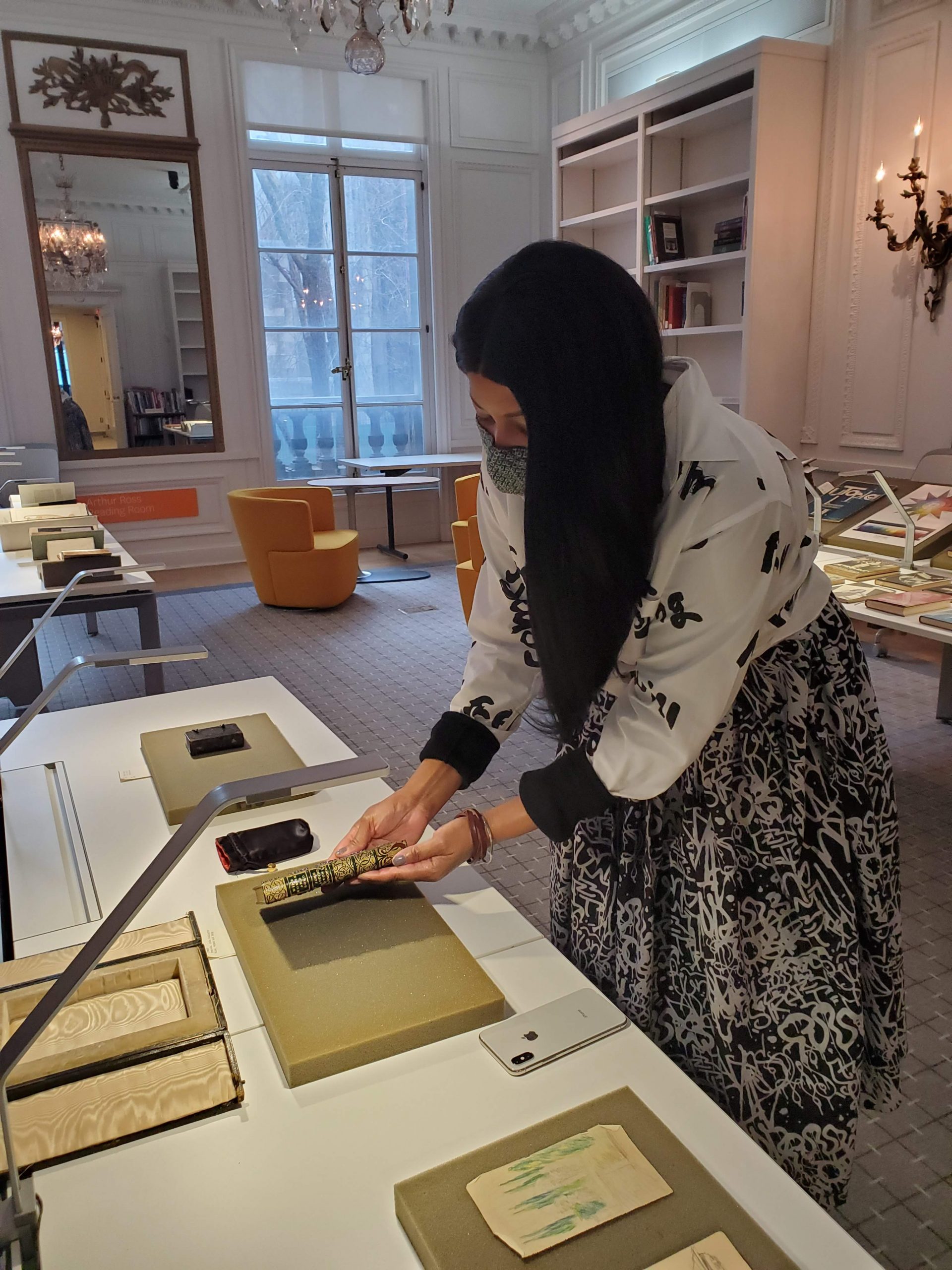 Director Tamar Evangelestia-Dougherty getting to know our collections during a recent visit to the Cooper Hewitt, Smithsonian Design Library.
9.) What is your favorite travel spot and why?
One of the things I am trying to work on is traveling more for pleasure. I have tended to always travel for business, so if I was attending a professional conference somewhere, that would also be my vacation destination. I teach at California Rare Book School at UCLA, so Los Angeles is a place I would visit regularly.
I am trying to work on going somewhere without there having to be a conference attached. A lot of this comes down to money, too – I never really had the money just to take a vacation, but when I did it was always Vermont. I would go to Vermont because of the woodturners and glass blowers that live in the state. There are many antique shops and inimitable craftsmen in Vermont. London is on my bucket list; I have been to Ireland and had a great time. Though I want to do more personal traveling, I know that wherever I end up, I am always going to go to a library or an archive.
10.) What is one food you cannot resist?
Sushi! In college, my minor was Japanese. I joined a Japanese culture club for those who loved everything Japanese. They introduced me to sushi, and I have been hooked ever since. I eat octopus, squid, eel, and sea urchin – the hardcore stuff, not just the rolls! I also love avocados. I am a sucker for French fries and anything made with potatoes in general – baked or mashed. I also love pasta. But sushi is the one thing I must have at least once a week.
11.) Do you have a motto or personal mantra?
I have a new one every year. Some have come from my mother and are very old-school, like “Speak softly and carry a big stick,” which was said by President Theodore Roosevelt. At the same time, my mother would always say, “You can’t have your cake and eat it, too.” When I was a child I would think, “Of course you can have your cake and then eat it, so what do you mean?” I figured out later that, quite literally, if you eat it, then you don’t have your cake anymore. So it’s just these running cliches that go on in my head. “Know who your friends are” – that kind of thing.
12.) What do you like to read? Any favorite books?
I am just going to be truthful here: I like magazines and journals. I don’t read fiction; I haven’t been into fiction since I was a lot younger, reading Beverly Cleary and authors like that. As I get older, I really like periodicals and I subscribe to several foreign magazines, in subjects such as art and architecture. I especially love art magazines in particular – I get a magazine that’s about ceramics, and one about woodturning. So that’s what I enjoy reading, and I know people don’t talk about that a lot, but I’ve never been one who is reading the latest on The New York Times bestseller list. I love bookstores – especially independent ones – and I always go in to look at the periodicals, like Vogue magazines from Japan. I also read library science or museum studies related books. I’m reading one by Jeannette Bastian, Decolonizing the Caribbean Record: An Archives Reader. I will read specific chapters of books and reflect, and then pick them up again later for another chapter – even after a year.
13.) Which Smithsonian museum are you most drawn to?
My favorite two Smithsonian museums are right across from each other – the National Museum of Asian Art and the National Museum of African Art – due to my interests in Japan and both African and Asian art. I also like the National Museum of the American Indian, and just recently briefly visited the National Museum of Natural History for the first time.
I look forward to visiting the National Air and Space Museum. When I have been in DC in the past, I had a limited amount of time. The Smithsonian is so vast that I would always want to visit the African and Asian art museums, and run over to the National Museum of African American History and Culture once it in opened in 2016. You could easily spend two days in any one of the Smithsonian’s museums.
Significant Collection of Arion Press Publications Comes to Smithsonian Libraries and Archives
 Cover with authentic embedded buffalo nickel, American Buffalo by David Mamet, illustrated by Michael McCurdy. Arion Press, 1992
The Smithsonian Libraries and Archives is pleased to announce a significant acquisition of fine press books published by the Arion Press in San Francisco. Thanks to a gift from Dr. Ronnyjane Goldsmith, over a hundred titles will soon be added to the American Art and Portrait Gallery Library.
Arion Press was founded in 1974, but tends much older roots of the former type foundries and presses it has grown from, such as the Grabhorn Press and Mackenzie & Harris. Since its inception, Arion has become one of the most sought-after and noteworthy presses in the United States.
Arion’s publications are handcrafted with fine paper, with hand-cast and handset type, each book individually bound and sewn. With this attention to detail and fine materials, each book is published in editions of only a few hundred copies, many with even smaller deluxe runs.
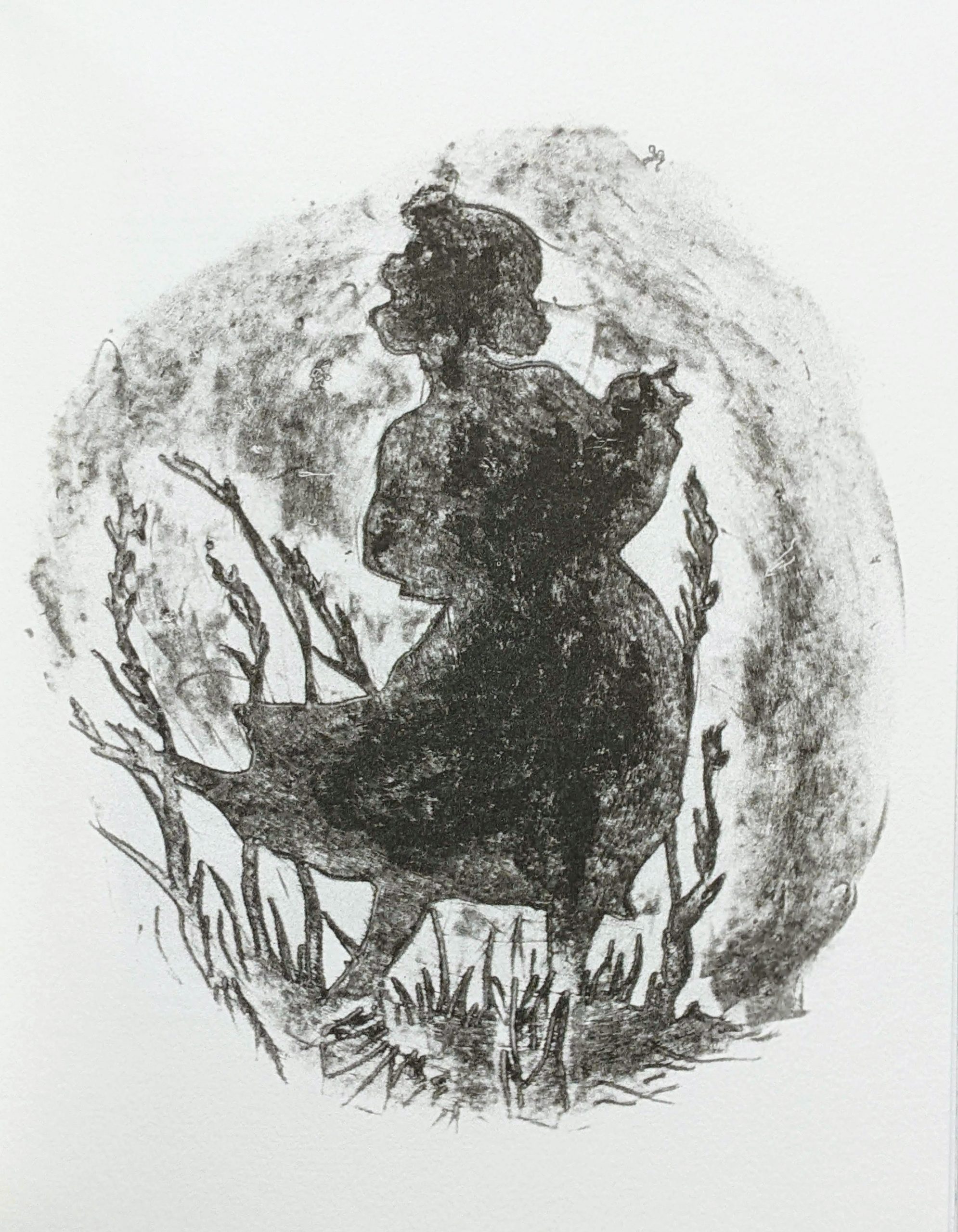 “Clara and baby” illustration by Kara Walker, in Porgy and Bess, Arion Press, 2013
A uniquely interesting aspect of Arion’s work is the collaboration with fine artists, particularly international and American artists who are not generally known for book illustration. Each book is planned and crafted with the artist making a significant contribution to the final design and production, often resulting in interesting uses of materials, bindings and housing, and wholly new illustrations. These artists include Bruce Conner, Richard Diebenkorn, Julie Mehretu, Martin Puryear, Laurie Simmons, Kiki Smith, Wayne Thiebaud, and Kara Walker—many artists whose works are collected at the Smithsonian’s art museums.
 Illustration in The World is Round by Gertrude Stein, illustrated by Clement Hurd. Arion Press, 1986
Arion’s collaborations develop in myriad ways, with the publisher seeking artists and recommending texts, or authors writing new works to engage with a particular artist, or the artists themselves bringing ideas of inspiring texts to illustrate. Many of the artists who have worked with Arion have expressed their joy in the partnership. American artist Jim Dine noted “My association with…Arion Press is so great I want it to go on as long as I live.”[1] Dine has had his work incorporated in at least nine Arion publications, five of which are now in the collection of the Smithsonian Libraries and Archives.
 Stitched cover of Sampler by Emily Dickinson, illustrated by Kiki Smith. Arion Press, 2007
The collection was donated in 2021 by author and entrepreneur Dr. Ronnyjane Goldsmith. Goldsmith began collecting Arion Press publications more than 20 years prior, when she first encountered the Constitution of the United States of America, Arion’s 1987 collaboration with the Library of Congress in celebration of the U.S. Bicentennial. She ultimately bought three copies of Arion’s Constitution, and became a subscriber to the Press, receiving every book they produced during the period. Over time, she sought out previously published works from dealers to complete her collection, with just two dozen left to collect at the time of donation. Dr. Goldsmith has also sponsored a subscription for the Smithsonian Libraries and Archives to continue to receive Arion Press’ new publications in their series. As a collector, Dr. Goldsmith has kept the books in immaculate condition, each with original wrappings, letters, and prospectuses.
Dr. Goldsmith’s gift to the Smithsonian Libraries and Archives includes 103 unique titles from Arion’s official titles in their catalogue, in addition to examples of a title in multiple edition types, such as variant or deluxe, or with associated suites of prints.
 Signed colophon with sketch. Kaddish, White Shroud and Black Shroud by Allen Ginsburg. Arion Press, 1992
The gift of such a significant number of Arion publications adds depth and dimension to the Smithsonian’s already robust collection of American fine print and art history. With the gift, the Smithsonian Libraries and Archives has one of the most complete public collections of Arion’s work in the Washington D.C. area.
[1] “Marrying the Elements of a Handmade Volume Becomes a Fine Art.” 1984. New York Times, Oct 28, 5.
Banner image of printed cotton colorful flags: cover of Porgy and Bess, Arion Press, 2013.
Upcoming Event: Women at Work
The COVID-19 pandemic has had a devastating and disproportionate effect on working women, especially those of color and in the LGBTQ+ community. But even before the pandemic “overtook the globe in early 2020, inequities were holding women back in the workplace.” Yet women have still managed to contribute to America’s most defining moments and will certainly help tackle the biggest challenges we face, whether it’s the ongoing pandemic or the climate crisis. How can we learn from the past to better inform our future? How can we eliminate barriers for women to create a more equitable society for everyone?
In the second program in our Women’s History with Smithsonian Libraries and Archives series, sponsored by Deloitte, historian Hannah Byrne and Director Tamar Evangelestia-Dougherty will share little-known stories from our library and archival collections of historical women at work in STEAM, who, in many cases, dealt with other critical moments in history. Then, Under Secretary for Science and Research Ellen Stofan will moderate a panel of leaders from the Biden administration and Deloitte to discuss their experiences and understanding of the modern situation of women at work and how we can continue to make progress for women.
Tuesday, February 15, 2022 at 5 pm ET
Register for this program
“Women at Work” panelists include:
- Jedidah Isler, PhD, Assistant Director, STEM Opportunity & Engagement, White House Office of Science and Technology Policy
- Jennifer Klein, JD, Co-Chair and Executive Director of the White House Gender Policy Council
- Beth Meagher, US Federal Health Sector Leader, Deloitte
- Julie Su, JD, Deputy Secretary, US Department of Labor
- Moderated by Ellen Stofan, PhD, Under Secretary for Science and Research, Smithsonian Institution
Registration
The event will be hosted as a Zoom webinar, and registration is required. Register here.
How to Join the Live Event
After registering, you will receive a confirmation email from Zoom containing information about joining the program.
We are committed to providing access services so all participants can fully engage in these events. Optional real-time captioning will be provided. If you need other access services, please email SLA-RSVP@si.edu. Advanced notice is appreciated.
This program will be recorded and made available following the event. You will find it on this page and on our YouTube channel.
 Top, from left to right: Sophie Lutterlough, Jackie Cochran, and Louise Daniel Hutchinson. Bottom, from left to right: Adela Gomez, Alixa Naff, and Chien-Shiung Wu.
Smithsonian Libraries and Archives & Wikidata: Using Linked Open Data to Connect Smithsonian Information
This post is part of our Smithsonian Libraries and Archives & Wikidata series.
Libraries have created and curated metadata that describes their collections for a very long time. It is the very essence of the cataloging and metadata profession. This past year, because of the pandemic, the Smithsonian Libraries and Archives initiated a unit-wide pilot project to explore if and how a linked open data platform offered by Wikimedia Foundation could reconceptualize how authority control could be transitioned to identity management.
Propelled by the basic principles prescribed by Tim Berners-Lee, library staff laid the groundwork to transition from a text-centric to a data-centric orientation in 2019. This involves changing bibliographic description to structured data, based on a linked open data standard and preparing the Libraries and Archives’ MARC data, the current standard used for machine-readable cataloging records, for transformation to RDF triples. RDF, or Resource Description Framework, uses URIs (Uniform Resource Identifiers) for objects and property in a structured way. This allows for the creation of rich networks of meaningful data and takes us from the flat world of the textual into a new world of possibilities with linked data.
When news surfaced about the wikifying of the German National Library’s (DNB) GND and the French National Library’s (BnF) FNE authority data, we began investigating Wiki projects as another option for a library linked open data project for name authority data. DNB and BnF have both moved their authority workflow out of their respective integrated library systems and into an open system, by means of a Wiki platform named Wikibase, a powerful MediaWiki software extension. The DNB and BnF Wikibase models performed as a potentially open and global knowledge repository similar to Wikidata. It seemed like their process was replicable for the Smithsonian environment.
Could our library authority data in MARC 21, an early 20th century standard, transition to an open platform that could stand the test of time, such as Wikidata? Our authority data in Horizon (our integrated library system) is well-curated and maintained. However, many of the obstacles to name authority creation for Smithsonian persons in the MARC 21 environment still hinge on the system infrastructure and authority training requirements from the Library of Congress. In addition, authority data is siloed in Horizon and not easily shared, even within the Institution itself.
Many of the authorized names in Horizon represent entities present in collections maintained by other Smithsonian units, namely the databases of the Institution’s various archives, museums, and galleries. Each of these units manages their own name datasets for their carefully curated collections. Each has its own conventions on how names are constructed, based on the standards in the respective communities that the datasets serve. At present, there is no database at the Smithsonian that serves as a central database for CPF (corporate bodies, persons, and families) agents. This situation increases the difficulty for data reconciliation without human intervention. Too often, when human assistance gets involved, inefficiency sets in, and the quantity of work overwhelms the quality of the database.
 Screenshot of a data graph showing network of organizations that are part of the Smithsonian or its constituent parts, from Wikidata.
What if library staff could facilitate the reconciliation of names in all of these Smithsonian databases? With the support of the Discovery Services and Libraries and Archives’ leadership, the telework environment gave library staff an opportunity to embark on an open data project to test this assumption. The project would be similar to those of the DNB and BnF, through the development of a central Wikibase in which units can retain their own preferred name forms tied to a single record for each entity. The Smithsonian currently has no central hosting system for agents/names, which makes connecting names with collections across units so much harder. Though, the Smithsonian has a discovery system for collection metadata. The model presented by Wikidata, which boasts a great number of volunteers (over 12K registered editors worldwide) and an extremely active API developer community generating numerous powerful applications, might serve as the ideal platform to experiment with new approaches in descriptive content for SI collections.
Tune into the second part of this series where we’ll share an overview of the Wikidata projects with the PCC Wikidata Pilot that the Libraries Wikidata team worked on.
Further Reading:
- Barbara Fischer. Authority Control meets Wikibase (2019) https://wiki.dnb.de/display/GND/Authority+Control+meets+Wikibase.
- French National Entities file (FNE): project overview (2019) https://www.transition-bibliographique.fr/fne/french-national-entities-file/
- Wikibase site showcases variety of implementations. https://wikiba.se/showcase/
Libraries Wikidata Team presentations:
- Discovery Services Forum on June 23: http://bit.ly/DISC2021Forum0623
- LD4 20201 Conference: https://sched.co/joA8
- Smithsonian Collections Information Management Committee: http://bit.ly/CIMC202109LibWD
19th Century Furniture Options for Style and Storage
Every dwelling has its own unique qualities. How do you make your space reflect your personality? The furniture, decorations, and wall hangings all combine to make it feel like home. Let’s flip through the pages of a trade catalog and discover the possibilities of furnishing a home long ago.
The trade catalog is titled Illustrated Catalogue and Price List of Hat Racks, Ladies’ Desks, Hanging Racks, Book Shelves, Fancy Stands, &c. (Undated) by Lazier Brothers of Cleveland, Ohio. This piece is undated but we believe it was published sometime in the 1800s. The catalog includes a variety of furniture. There are pieces that musicians might find useful, pieces for those who like to write, those who like to read, and much more.
 Lazier Brothers, Cleveland, OH. Illustrated Catalogue and Price List of Hat Racks, Ladies’ Desks, Hanging Racks, Book Shelves, Fancy Stands, &c., [Undated], front cover.As you walk through your front door, what would you want nearby? Maybe a piece of furniture that is decorative but also functional. Perhaps a place to hang your coat or hat, a place to sit, or somewhere to put down your bag. The No. 38 Hall Rack appears to provide those very things. Illustrated below left, it was rather tall, standing at seven feet in height and measuring 32 inches in width.
For those rainy days, it included an umbrella rack, complete with an iron pan and six solid brass pins, most likely to hold umbrellas upright. It also came with a built-in seat. On either side of the German Plate Glass towards the top, there were several hooks. These might have provided spots for hanging hats or coats. The Hall Rack was available in solid walnut, antique oak, or imitation mahogany finish.
 Lazier Brothers, Cleveland, OH. Illustrated Catalogue and Price List of Hat Racks, Ladies’ Desks, Hanging Racks, Book Shelves, Fancy Stands, &c., [Undated], page 3, No. 38 and No. 26 Hall Racks.As we step farther inside, we might discover a desk for writing correspondence or conducting personal business. The No. 57 Ladies’ Desk, shown below left, was made of antique oak or imitation mahogany. It included a large drawer for storing items along with a cloth cover on top and what appears to be a railing along the back of the desk. This might have been a convenient feature to prevent papers from falling off the edge.
In a musician’s home, a music stand was most likely essential. The No. 56 Music Stand, illustrated below right, was almost three feet tall, measuring 31 inches in height with a 12 x 18 top. It featured two pockets for storing sheet music or other papers. Made of antique oak or imitation mahogany with a polished finish, it was described in the catalog as “new and handsome.”
 Lazier Brothers, Cleveland, OH. Illustrated Catalogue and Price List of Hat Racks, Ladies’ Desks, Hanging Racks, Book Shelves, Fancy Stands, &c., [Undated], page 6, No. 57 Ladies’ Desk and No. 56 Music Stand.How about furniture to display treasured objects? Several stands are illustrated in this catalog. Some of the stands are uniquely shaped, like the No. 17 Clover Leaf Stand (below left). Its clover leaf-shaped top was unfinished. This provided the option of draping a decorative piece of fabric over its top. And just as the name suggests, the No. 46 Flower Stand with a round top (below middle) might have displayed a vase with freshly cut flowers.
 Lazier Brothers, Cleveland, OH. Illustrated Catalogue and Price List of Hat Racks, Ladies’ Desks, Hanging Racks, Book Shelves, Fancy Stands, &c., [Undated], page 13, No. 17 Clover Leaf Stand, No. 46 Flower Stand, and No. 47 Extra Fine Stand.For displaying figurines, picture frames, or other keepsakes, the No. 13 Corner Whatnot (below left) might have been chosen. This particular piece consisted of five shelves and measured five feet in height, but there was also an option for a slightly shorter one, as the No. 14 Corner Whatnot was four feet tall with four shelves.
 Lazier Brothers, Cleveland, OH. Illustrated Catalogue and Price List of Hat Racks, Ladies’ Desks, Hanging Racks, Book Shelves, Fancy Stands, &c., [Undated], page 16, No. 13 Corner Whatnot and No. 24 Corner Bracket.Much more is illustrated in this catalog including bookshelves, pedestals, footrests, and clock shelves. There are even choices for towel racks, as shown below. Some, like the No. 25 Towel Rack (below, top left), included a Glass and incorporated decorative elements while the No. 48 Standing Towel Rack (below, top right) was simply a Towel Rack.
 Lazier Brothers, Cleveland, OH. Illustrated Catalogue and Price List of Hat Racks, Ladies’ Desks, Hanging Racks, Book Shelves, Fancy Stands, &c., [Undated], page 21, No. 21 and No. 25 Towel Racks, No. 48 Standing Towel Rack, and No. 73 Heavy Towel Roller.Illustrated Catalogue and Price List of Hat Racks, Ladies’ Desks, Hanging Racks, Book Shelves, Fancy Stands, &c. (Undated) by Lazier Brothers is located in the Trade Literature Collection at the National Museum of American History Library.
